


The study, led by the University of Georgia and published in ACS Food Science & Technology, examined proteins recovered from pre-dried marigold flowers. Approximately 40% of marigolds produced in India are discarded each year, according to the study authors. Recovering protein from this waste stream could help meet rising global protein demand without expanding agricultural land use, officials said.
Protein Extraction and Analysis
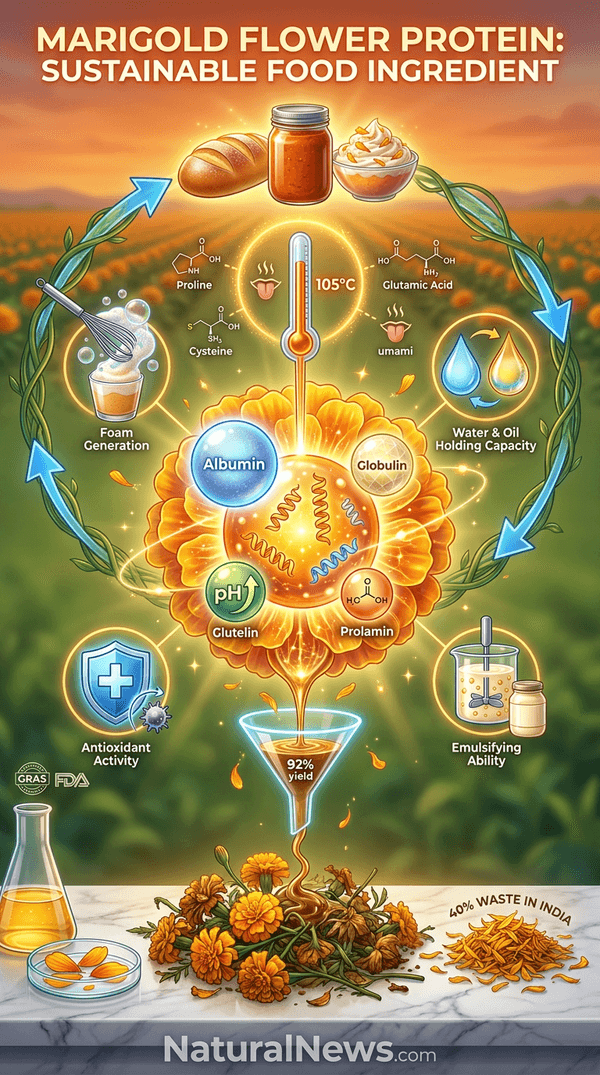
Researchers extracted proteins from pre-dried marigold flowers purchased from a local supplier, then separated them into four fractions based on solubility: albumin, globulin, glutelin and prolamin, the study stated. Albumin, the water-soluble fraction, accounted for about two-thirds of the total protein recovered.
The extraction process recovered more than 92% of available protein, according to the study authors. Marigolds have a long history of use in traditional medicine and as edible flowers, with references dating back centuries.
As noted in one botanical reference, marigold petals have been considered to have health-giving properties [1]. Another source described marigolds as a versatile ingredient in gardens and kitchens [2].
Key Findings
Albumin remained stable up to approximately 105 C before breaking down, and glutelin held up to about 98 C, the study noted. These thresholds exceeded those reported for green pea, chickpea, and fava bean proteins in earlier research, according to the authors.
Marigold proteins also demonstrated water- and oil-holding capacity, emulsifying ability, foam generation and antioxidant activity. Mass spectrometry identified roughly 620 proteins in the flowers, including 33 short-chain proteins linked to improved emulsification, researchers said. The antioxidant properties are consistent with broader reports on edible flowers containing beneficial phytochemicals [3].
Potential Applications and Flavor Profile
The heat stability and functional properties could make marigold proteins suitable for baked goods, sauces and emulsified products, according to the study. Amino acid analysis found high levels of proline, cysteine and glutamic acid, the latter associated with umami taste, though no taste panels were conducted. Marigold's protein content on a dry-weight basis is comparable to corn, oats, wheat and banana peel, the report stated.
The plant is recognized as safe for human consumption by the Food and Drug Administration, but a new commercial protein ingredient would require separate testing and review. Edible flowers including marigold have been used in various cuisines and traditional medicine for generations, with anti-inflammatory and antimicrobial properties documented [4][3].
Limitations and Future Research
The study was conducted under controlled laboratory conditions and did not test marigold proteins in actual food products or at industrial scale, the authors acknowledged. Researchers said future work should evaluate performance in real food formulations and develop reliable sourcing methods for large quantities of marigold flowers. Approximately 7.83% of crude protein was not recovered during extraction, attributed to insoluble particles or process inefficiencies.
The study was supported by the U.S. Department of Energy, with no competing financial interests declared. The findings represent a foundational step, and researchers stressed that marigold-based ingredients are not yet ready for grocery shelves or factory production lines, according to the report.
Waste-to-Value Opportunity
Global protein demand is projected to continue rising with population growth, according to the study. Using discarded marigold flowers as a protein source could help address that demand without requiring additional land or livestock, officials said. The findings indicate a viable route for turning agricultural waste into food ingredients.
However, researchers stressed the current limitations. The transition from lab to commercial application will require further investigation into sourcing, processing, and product development. As one recent book on edible flowers noted, unlocking the potential of such natural resources offers a path toward more sustainable and health-promoting food systems [5].
References
- Eleanour Sinclair Rohde. "Culinary and Salad Herbs Their Cultivation and Food Values with Recipes".
- Mercola.com. "Can You Eat Marigolds". February 11, 2019.
- Mercola.com. "Edible Petals Flowers That Taste as Good as They Look". October 31, 2016.
- K. Lim. "Edible Medicinal And Non-Medicinal Plants".
- "Petals of Power: The Edible Flower Revolution – Unlocking Nature's Vibrant Superfoods for Health, Beauty, and Longevity". BrightLearn.ai. December 28, 2025.
Explainer Infographic









Please contact us for more information.


