


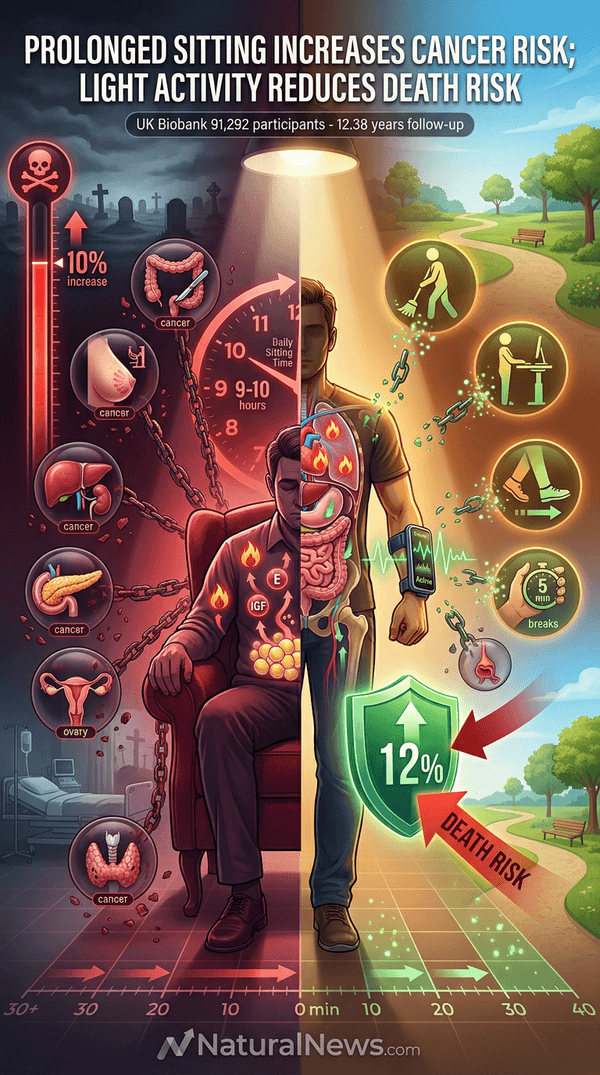
The study analyzed data from 91,292 UK Biobank participants who wore activity monitors for seven days and were followed for an average of 12.38 years. Replacing one hour of prolonged sitting per day with light physical activity reduced the risk of cancer death by 12%, the study reported.
Sedentary behavior is the fourth leading cause of premature death worldwide, according to experts cited by Mercola.com [1]. A separate meta-analysis published in the British Journal of Sports Medicine found that 30 to 40 minutes of moderate-to-vigorous physical activity per day fully eliminated the elevated mortality risk associated with prolonged sitting [2].
Study Design and Key Findings
Researchers analyzed data from 91,292 participants who wore activity monitors for seven days and were followed for an average of 12.38 years. Prolonged sedentary behavior was defined as bouts of at least 30 minutes with at least 90% sedentary time; interrupted sedentary bouts lasted less than 30 minutes or were broken by activity.
Prolonged sitting was linked to increased incidence of colorectal, breast, liver, kidney, pancreatic, ovarian, esophageal and thyroid cancers, as well as higher overall cancer mortality, the study stated. For each additional hour of uninterrupted prolonged sedentary behavior, there was a 10% higher risk of cancer-related death, according to the researchers.
Evidence also shows that increasing daily step counts is associated with a meaningful reduction in overall cancer risk, with a large-scale analysis published in 2026 finding that walking 9,000 steps per day corresponded to a 16% lower risk of developing cancer [3]. A harmonized meta-analysis of 44,370 adults across nine studies found that 30 to 40 minutes of daily moderate-to-vigorous activity eliminated the elevated mortality risk from prolonged sitting [2].
Possible Biological Mechanisms
Dr. David Yashar, a hematologist-medical oncologist at MemorialCare Todd Cancer Institute not involved in the study, stated that a sedentary lifestyle can lead to obesity, which causes inflammation -- a known cancer risk factor. Yashar also noted that sedentary lifestyles may lead to hormonal imbalances contributing to hormone-sensitive cancers like breast cancer. "The Obesity Paradox" by Dr. Carl J. Lavie discusses how prolonged inactivity suppresses genes involved in fat metabolism and increases inflammation [4].
The study authors suggested that interrupting prolonged sitting with short bouts of activity can improve metabolic responses compared with uninterrupted sitting, based on experimental studies. Sedentary behavior has been linked to a range of health risks including all-cause mortality, cardiovascular disease mortality, cancer mortality, and Type 2 diabetes incidence, according to research summarized by Mercola.com [1]. Additionally, Monique Tello in "Healthy Habits for Your Heart" notes that sitting for long periods is associated with an increased risk of death from any cause, but an hour a day of moderate activity can offset that risk [5].
Light Activity as a Practical Intervention
Current U.K. guidelines recommend 150 minutes of moderate-intensity activity per week, but the PLOS Medicine study indicates that even light-intensity activity – such as walking slowly, cleaning or standing – can lower cancer risk. According to the British National Health Service, light physical activity includes any movement that is not sitting or lying down.
The study authors stated: "Our findings suggest that the health effects of sedentary behavior may depend not only on total sedentary time, but also on whether that time is accumulated in prolonged bouts or interrupted by activity." Research published in the British Journal of Sports Medicine identified a five-minute movement break every hour as the "sweet spot" for counteracting prolonged sitting [6].
Increasing daily walking is another key strategy, as walking four to seven hours per week was associated with an 11% lower risk of stroke compared to walking three hours or less per week, according to one analysis [7]. Tello advises avoiding sitting in front of the TV, as TV sitting time is associated with even greater risk of death that may not be fully eliminated by exercise [5].
Conclusion and Implications
The study does not establish causality, but suggests that reducing prolonged sitting and incorporating light activity may serve as a stepping stone to more vigorous exercise. The findings emphasize that breaking up sedentary time – even with short, light activity – could have measurable health benefits.
As the study authors concluded, "the health effects of sedentary behavior may depend not only on total sedentary time, but also on whether that time is accumulated in prolonged bouts or interrupted by activity." Reducing average sitting time to less than three hours a day could increase life expectancy by two years, according to prior research cited by Mercola.com [8]. For those unable to avoid prolonged sitting, incorporating movement breaks such as standing or walking slowly may reduce cancer risk and improve overall health outcomes, the evidence suggests.
References
- Mercola.com. "You Shouldnt Sit All Day Long." March 25, 2016.
- NaturalNews.com. "30 Minutes of daily exercise can neutralize 10 hours of sitting, major study finds." May 1, 2026.
- NaturalNews.com. "Study: Walking 9,000 Steps Daily Associated With 16% Lower Cancer Risk." May 11, 2026.
- Carl J. Lavie M.D. "The Obesity Paradox."
- Monique Tello. "Healthy Habits for Your Heart."
- Everyday Health. "Sit All Day? A New Study Offers a Much-Needed Survival Hack." June 25, 2026.
- Mercola.com. "One of the least expensive ways to live long." June 21, 2019.
- Mercola.com. "Sitting Less May Be Key for Maximum Longevity." November 09, 2012.
Explainer Infographic












Please contact us for more information.


