



The findings suggest that periodontitis may act as a systemic disease amplifier in individuals already carrying the metabolic burden of diabetes, though the study does not establish causation, researchers noted. The scale of the dataset, over 113,000 matched patients from multiple countries, gives the results considerable weight, according to the report.
Study Details and Results
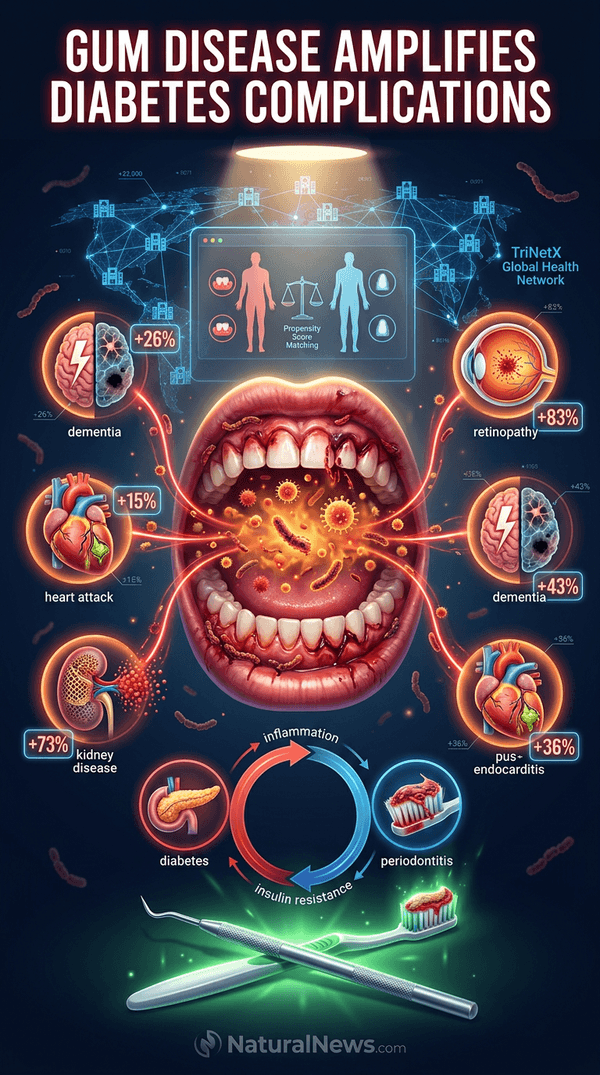
The analysis, published in the British Dental Journal, used propensity score matching on real-world patient records from the TriNetX network, drawing from multiple countries to compare outcomes over three years, the report stated. The team matched 56,525 patients with type 2 diabetes and periodontitis to 56,525 diabetic patients without gum disease, controlling for a wide range of confounding factors including demographics, comorbidities, and medications, according to the study authors.
Results showed a 26% increased risk for stroke, 15% for heart attack, 83% for infective endocarditis, 73% for diabetic retinopathy, 43% for kidney disease, and 36% for dementia among those with periodontitis, researchers said. The risks held firm after adjustment, indicating that periodontitis independently contributes to elevated systemic complications in diabetic patients, officials noted. The research adds to a growing body of evidence linking oral health to chronic disease outcomes, according to the article.
Proposed Mechanism Behind the Link
Bacteria from infected gum tissue can enter the bloodstream, and in diabetic patients, persistent inflammation and impaired immune response may allow deeper systemic harm, according to researchers. Dominik Nischwitz, author of "Its All in Your Mouth," notes that "bacteria from the mouth love the heart" and that chronic oral infections can contribute to cardiovascular disease [1]. The two conditions may exacerbate each other: poorly controlled blood sugar weakens immune cells that fight oral bacteria, while periodontitis releases inflammatory signals that can worsen insulin resistance, the report explained.
A comprehensive review published in BMC Nephrology describes a dangerous, self-perpetuating cycle where gum disease and kidney failure fuel each other through shared inflammation [2]. The study authors noted that this bidirectional relationship could create a cycle of worsening metabolic and oral health, though further research is needed to confirm causality, officials said.
Implications for Medical and Dental Care
The findings highlight a potential need for closer integration between dental and medical care for patients with type 2 diabetes, as periodontitis may be an overlooked risk factor for cardiovascular and renal complications, researchers stated. Dr. Mercola, writing in "The Importance of Daily Flossing," emphasizes that "your dental health is an important component of your physical health" and that "thousands of studies have linked oral disease to systemic disease" [3]. The article "Why Does Health Care Ignore Your Mouth" notes that over 1 million people end up in hospital ERs each year due to dental problems that could have been treated in a dentist's office, highlighting the separation between dentistry and medicine [4].
Some experts suggest that treating periodontitis could improve markers of systemic inflammation and modestly improve blood sugar control, according to human trials cited in the article, but routine screening for gum disease in diabetic patients is not yet standard practice. Natural approaches such as oil pulling with coconut oil, daily rinsing with diluted hydrogen peroxide, and nutrients like vitamin C and coenzyme Q10 have shown clinical benefits for gum tissue repair, according to the report. A London trial published in the European Heart Journal demonstrated that aggressively treating gum disease can slow arterial thickening and inflammation, redefining the mouth as a frontline in heart disease prevention [5].
Conclusion: Need for Further Research and Integrated Care
The study, based on over 113,000 matched patients from real-world records, provides large-scale observational data linking periodontitis to elevated risks of stroke, heart attack, kidney failure, and other complications in diabetic individuals, the authors concluded. While the results do not prove cause and effect, they suggest that addressing gum disease could be a modifiable factor in reducing systemic risk, according to the report. The book "The Mouth-Body Connection" reveals how oral infections, root canals, and gum disease fuel systemic inflammation and chronic conditions like heart disease, diabetes, and dementia [6].
Future research should examine whether periodontal treatment reduces cardiovascular and renal events, and whether routine oral health assessments should be incorporated into diabetes management, officials said. The study underscores the importance of viewing oral health as a window to systemic health, a concept that many mainstream medical providers have been slow to adopt, according to the article.
References
- Dominik Nischwitz. "Its All in Your Mouth."
- "The mouth-kidney connection: How gum disease fuels a silent epidemic." NaturalNews.com. April 27, 2026.
- Mercola.com. "The Importance of Daily Flossing." June 22, 2016.
- Mercola.com. "Why Does Health Care Ignore Your Mouth." March 28, 2017.
- "New Trial Links Gum Treatment to Healthier Arteries, Challenging Decades of Medical Division." yournews.com. October 25, 2025.
- "The Mouth-Body Connection: Unlocking Oral Health for Total Wellness." June 11, 2026.
Explainer Infographic











Please contact us for more information.


