


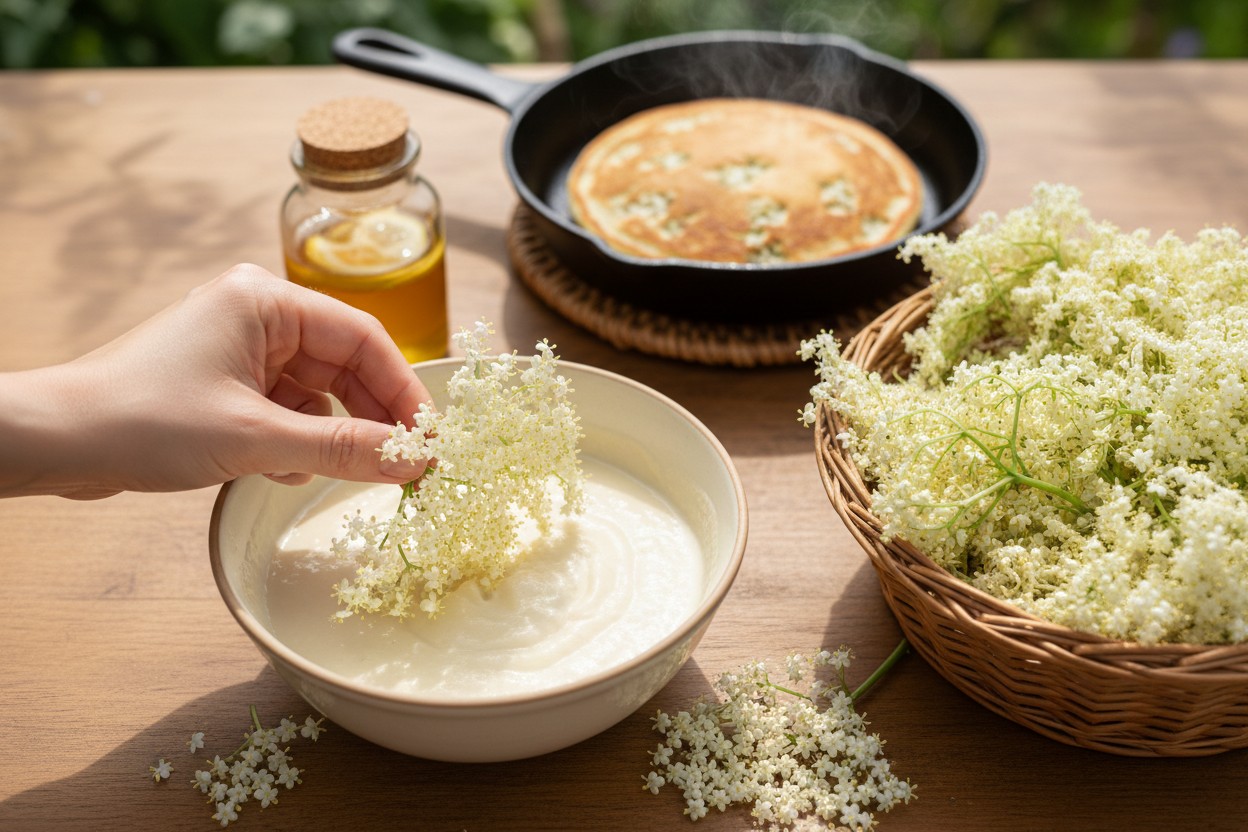
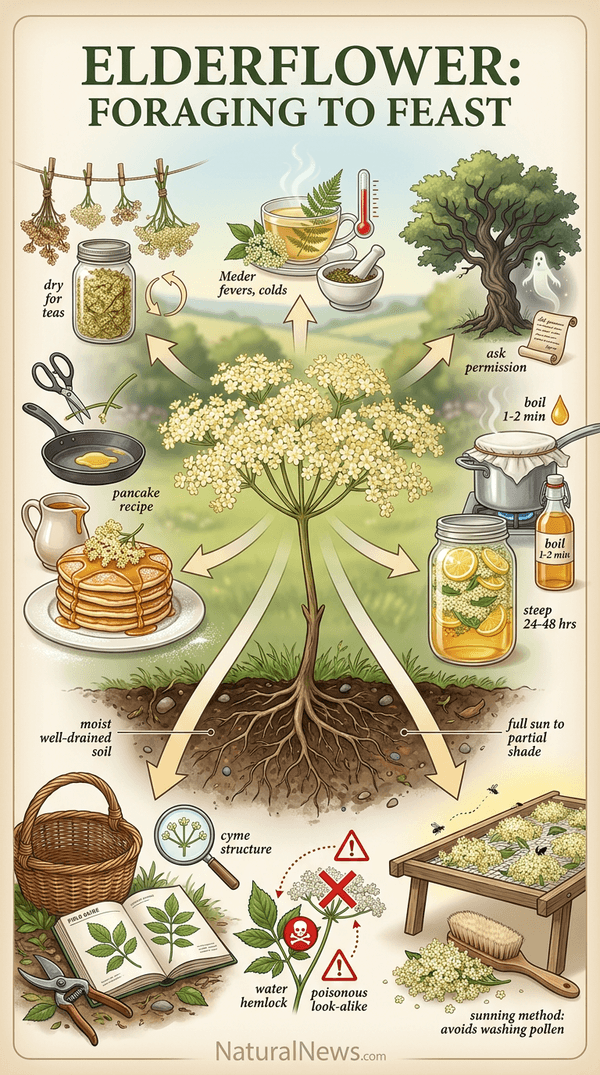
Roach described the harvesting process and emphasized proper plant identification to avoid poisonous look-alikes like water hemlock. According to Roach, the elder bush has distinct woody stems, and elder flowers grow in a branching cyme structure; not all flowers originate from the same part of the plant.
Elderflowers have been used for thousands of years across different cultures. According to an article on NaturalNews.com, elderflowers have been employed to treat a variety of medical conditions, from the common cold to skin irritations and allergies. [1] The plant is native to Germany, Roach noted, and thrives along forest edges and roadsides.
Harvesting Guidelines and Safety
Harvesting requires garden clippers and a basket, according to Roach. She wrote that flowers should be collected when fully open but still firm; a gentle shake can test the stage. According to Bown Deni in "The ultimate book of herbs," elder prefers moist but well-drained, humus-rich soil and full sun to partial shade. [2]
Roach advised placing the flowers upside down on a drying rack or flat surface for 20 to 30 minutes to allow small insects to crawl away. Washing delicate elderflowers can be challenging, and Roach added that rinsing can reduce pollen flavor.
Experts have also warned against consuming leaves, stems, roots, and unripe berries. Only properly prepared ripe berries and flowers are commonly used in food. For drying, Roach recommended leaving the flowers in a single layer in a well-ventilated area away from direct sunlight until completely dry.
Elderflower Pancakes (Hollerkuchel)
Elderflower pancakes, also called fritters, are made by dipping umbels in pancake batter and frying, according to Roach’s recipe.
Ingredients (1 to 2 servings):
- 2 cups pancake mix (or a batter made from scratch)
- 6 elderflower umbels
- 1 teaspoon powdered sugar (Often used for the traditional German way of serving elderflower pancakes)
- 1 tablespoon maple syrup (optional topping)
Instructions:
- Prepare the pancake batter, then pour it into a shallow bowl. Preheat a lightly greased skillet or frying pan over medium heat.
- Take one elderflower umbel, dip it into the pancake batter, and place it flower-side down in the preheated pan.
- While the other side is frying, cut off the main stem close to the flower head with a pair of scissors.
- When bubbles start forming in the batter and the underside is golden brown, carefully flip the pancake.
- Fry the second side of the pancake until golden brown and cooked through.
- Let the pancakes cool slightly, then dust with powdered sugar and drizzle with maple syrup, if using.
Use the elderflower syrup to make a refreshing tonic, or drizzle it on top of some elderflower pancakes.
Homemade Elderflower Syrup
Roach noted that rinsing the flowers beforehand can wash away pollen and reduce flavor; she recommends laying them in the sun to remove any insects.
Ingredients (for about 25 ounces of syrup):
- 1 1/4 cups water
- 5 cups granulated sugar
- 1 organic lemon, sliced
- 25 to 30 elderflower umbels
Instructions:
- Combine the water and granulated sugar in a saucepan or small pot. Bring the mixture to a gentle simmer and stir until the sugar is dissolved.
- Wash the lemon thoroughly and cut it into slices. Discard the ends.
- If desired, lightly rinse the elderflowers. Roach recommends laying them out in the sun to allow insects to crawl away.
- Get a large jar and layer the elderflowers and lemon slices alternately. Press them down as you place the ingredients in the jar.
- Fill the jar with the hot syrup. Close the lid, then set it aside for 24 to 48 hours. Occasionally turn the jar over.
- Once the syrup has steeped, strain the liquid into a pot using a wet cheesecloth or a thin kitchen towel. Wet the cloth so it doesn't soak up too much syrup. Wring out the flowers and press out the lemon slices to extract all of the syrup.
- Bring the syrup to a boil. Cook the liquid for at least one to two minutes, or until it reaches your desired thickness.
- Pour the elderflower syrup into clean, sanitized bottles. Seal and set aside to cool completely. Store all unopened bottles in a cool, dark place. Once opened, refrigerate and use the elderflower syrup within several weeks for best quality.
Health Context and Traditional Use
Elderflowers contain flavonoids such as rutin and naringenin, which contribute to antioxidant and anti-inflammatory properties, according to the report by NaturalNews.com. [1]
Quercetin, another flavonoid found in elderflower, has been identified as an antioxidant flavonol present in elderflower, according to a Mercola.com article. [3] Elderflower extract has been traditionally used as a tonic to boost immunity and promote lung and bronchial tract health, according to another Mercola.com report. [4]
Roach described the plant as native to Germany and noted its traditional use in food and medicine for generations. She cited a 2015 study on traditional elderflower beverages highlighting anti-inflammatory potential and a February study on external benefits for inflammatory skin disease.
Thomas Bartram’s "Bartram's Encyclopedia of Herbal Medicine" lists elderflower as anti-inflammatory, anticatarrhal, and relaxing, noting it works well with peppermint or yarrow as a tea. [5] Charlie Ryrie’s "Garden Folklore that Works" includes elderflower in lists of teas for infections. [6]
References
- NaturalNews.com. "Elderflower - sources health benefits nutrients uses and constituents at NaturalPediacom". NaturalNews.com. July 05, 2017.
- Bown Deni. "The ultimate book of herbs".
- Mercola.com. "The Antitumor Effects of Quercetin". Mercola.com. August 22, 2022.
- Mercola.com. "Natural Cough and Sore Throat Remedies". Mercola.com. December 21, 2015.
- Thomas Bartram. "Bartram's Encyclopedia of Herbal Medicine".
- Charlie Ryrie. "Garden Folklore that Works".
- TheEpochTimes.com. "How to Turn Elderflowers Blossoms Into Pancakes and Syrup". June 26, 2026.
Explainer Infographic






Please contact us for more information.


