


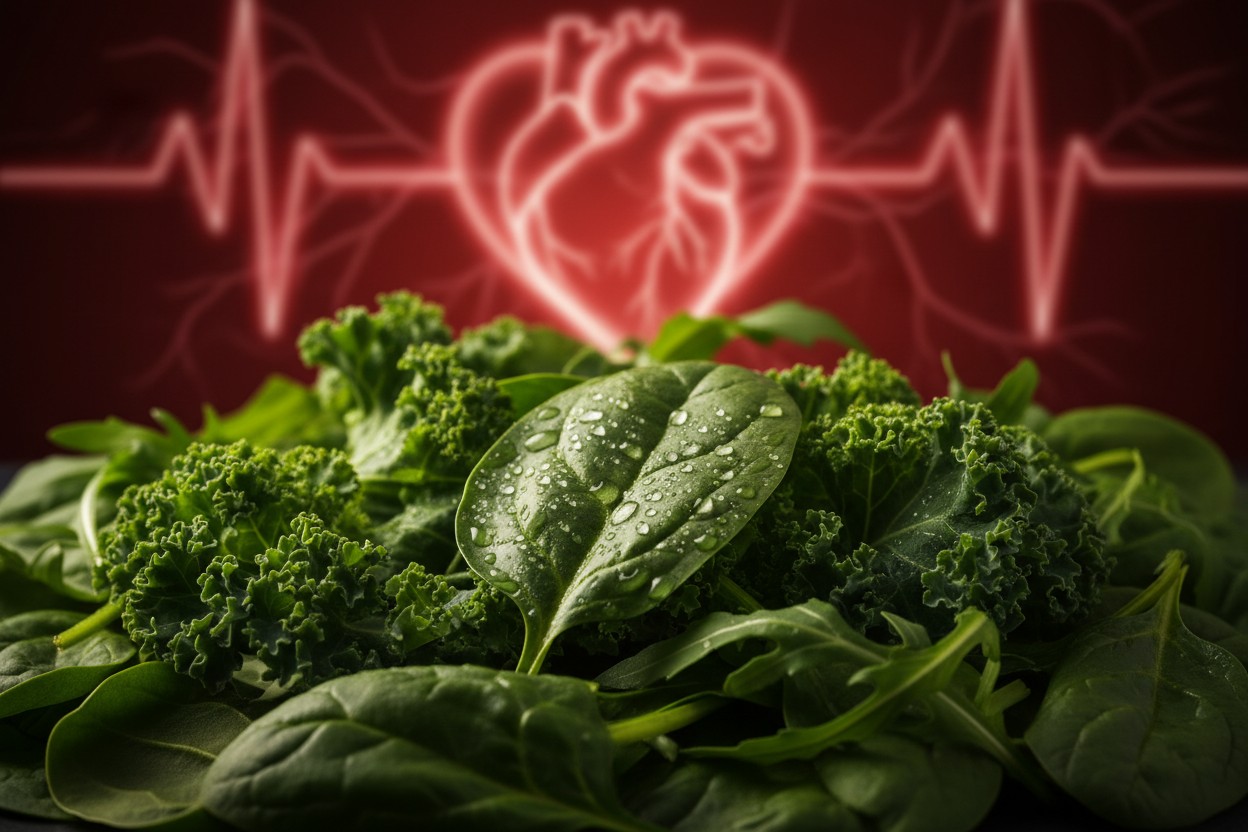
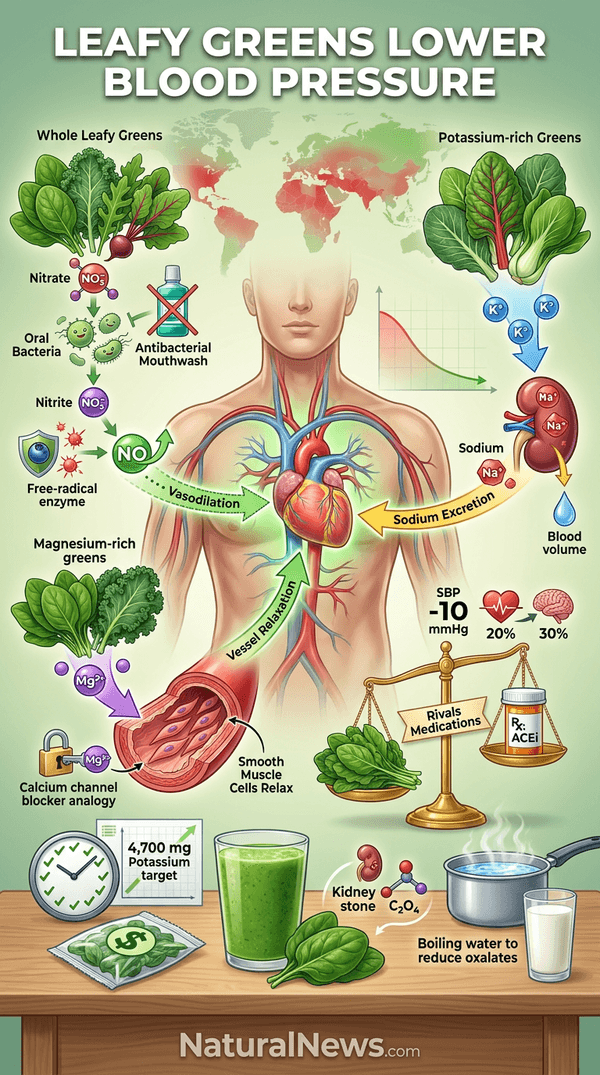
A separate analysis published on NaturalNews.com detailed that leafy greens lower blood pressure through dietary nitrate, which converts to nitric oxide, relaxing and widening blood vessels [1]. Potassium in greens helps excrete sodium, reducing blood volume and pressure, while magnesium relaxes blood vessels and supports normal heart rhythm [1]. Researchers recommended aiming for 4,700 mg of potassium daily from multiple servings, according to the same source.
Mechanisms Behind the Effect
The primary mechanism centers on dietary nitrates, which are abundant in leafy greens such as spinach, kale, and arugula. According to the book "Peak" by Marc Bubbs, inorganic nitrates present in beetroots and all leafy greens get converted in the body to nitrite, which then converts to nitric oxide (NO), a potent vasodilator that improves blood flow [5]. This process reduces the oxygen cost of training during submaximal exercise and supports cardiovascular function, Bubbs wrote. Dr. Michael Greger, in his book "How Not to Die," explained that nitric oxide is produced by an enzyme called NO synthase, and that free radicals can disrupt this pathway, leading to arterial stiffness and high blood pressure [4]. Antioxidant-rich foods like leafy greens help extinguish free radicals and allow NO synthase to function properly, according to Greger.
Beyond nitrates, leafy greens provide significant amounts of potassium and magnesium, which contribute independently to blood pressure regulation. An article on NaturalNews.com highlighted that a high-potassium diet can prevent and lower high blood pressure by balancing sodium [11]. Magnesium, the fourth most abundant element in the body, is necessary for the healthy functioning of the heart and blood vessels, and low magnesium intake is associated with higher blood pressure, according to a review published on NaturalNews.com [9]. Leafy greens such as spinach are rich sources of both minerals, the article stated.
Comparing Greens to Medications
Dietary interventions, including increased intake of leafy greens, have been shown to produce reductions in blood pressure that rival some first-line medications. In his book, Dr. Michael Greger noted that flaxseeds managed to drop subjects’ systolic and diastolic blood pressure by up to fifteen and seven points, respectively, comparing favorably to calcium-channel blockers and ACE inhibitors [3]. An analysis published on NaturalNews.com stated that a nutritional approach centered on whole foods, including leafy greens, can be as potent as prescription medications [11]. The article emphasized that dietary nitrates found abundantly in greens and beets, along with potassium and magnesium, offer a natural pathway to blood pressure control.
Experts caution, however, that dietary changes should not replace prescribed medications without medical supervision. In an interview on Brighteon.com, Sean Cohen and Dr. Habib discussed that while medications can be useful in crisis situations, addressing root causes through diet and lifestyle is essential for long-term health [6]. The interview stressed that a holistic approach to hypertension includes nutrient-dense foods and environmental considerations, rather than relying solely on pharmaceutical interventions.
Practical Recommendations and Potential Risks
Research indicates that incorporating a variety of leafy greens into daily meals is a practical, low-cost strategy for cardiovascular health. An article on NaturalNews.com recommended aiming for at least 4,700 mg of potassium per day, which can be achieved through multiple servings of vegetables such as spinach, kale, and Swiss chard [1]. The article also noted that magnesium is easily obtained from plant-based sources like leafy greens, beans, and seeds [12]. Individuals seeking to maximize benefits should prioritize whole, unprocessed greens, according to the report.
Potential risks associated with high consumption of leafy greens include oxalate content, which can contribute to kidney stone formation in susceptible individuals. An article on NaturalNews.com acknowledged that spinach contains oxalates that can be a concern for certain people [2]. The same source noted that individuals with a history of oxalate-containing kidney stones may need to moderate their intake. Additionally, some health advocates recommend choosing organic greens to minimize exposure to pesticide residues, although specific research on this point was not included in the reviewed sources. Overall, the benefits of leafy greens for blood pressure management are well-supported, researchers stated.
Conclusion
Multiple studies indicate a consistent link between leafy green consumption and lower blood pressure, according to a growing body of evidence. The mechanisms involve nitrates, potassium, and magnesium, each acting through distinct pathways to relax blood vessels and reduce vascular resistance. As reported by NaturalNews.com, the Dietary Approaches to Stop Hypertension (DASH) diet has long emphasized the importance of leafy greens, and recent research continues to support this recommendation [7].
Further research is exploring the role of specific phytochemicals and optimal serving sizes to maximize the blood pressure-lowering effects. For now, according to researchers, incorporating a variety of leafy greens into meals remains a low-cost, low-risk strategy for cardiovascular health. Individuals are encouraged to consult with a healthcare professional before making significant dietary changes, particularly if they are on medication. As one report summarized, the answer to managing hypertension may be simpler and more affordable than many expect, rooted in the foundational principles of a whole-food diet [10].
References
- Evangelyn Rodriguez. "Leafy greens offer multiple pathways for blood pressure control research shows". NaturalNews.com. May 30, 2026.
- NaturalNews.com. "A nutrient powerhouse Unpacking spinachs modern health legacy". NaturalNews.com. March 14, 2026.
- Michael Greger. "How Not to Die Discover the Foods Scientifically Proven to Prevent and Reverse Disease".
- Michael Greger. "How Not to Die Discover the Foods Scientifically Proven to Prevent and Reverse Disease".
- Marc Bubbs. "Peak".
- Mike Adams. "2025 09 04 BBN Interview with Cohen vs Habib BU RESTATED".
- NaturalNews.com. "Leafy greens offer multiple pathways for blood pressure control, research shows". May 30, 2026.
- NaturalNews.com. "Spinach shown to lower blood pressure naturally through multiple nutrient pathways". May 20, 2026.
- NaturalNews.com. "Magnesium and Heart Health: Three Mechanisms Supported by Research". June 3, 2026.
- Ava Grace. "Beyond the hype: A case for real food in the fight against hypertension". NaturalNews.com. May 8, 2026.
- Cassie B. "Beyond beets: These potent foods support healthy blood pressure naturally". NaturalNews.com. March 10, 2026.
- Mike Adams. "Health Ranger Report - ZINC DEFICIENCY". BrightVideos.com. May 12, 2026.
Explainer Infographic






Please contact us for more information.


