


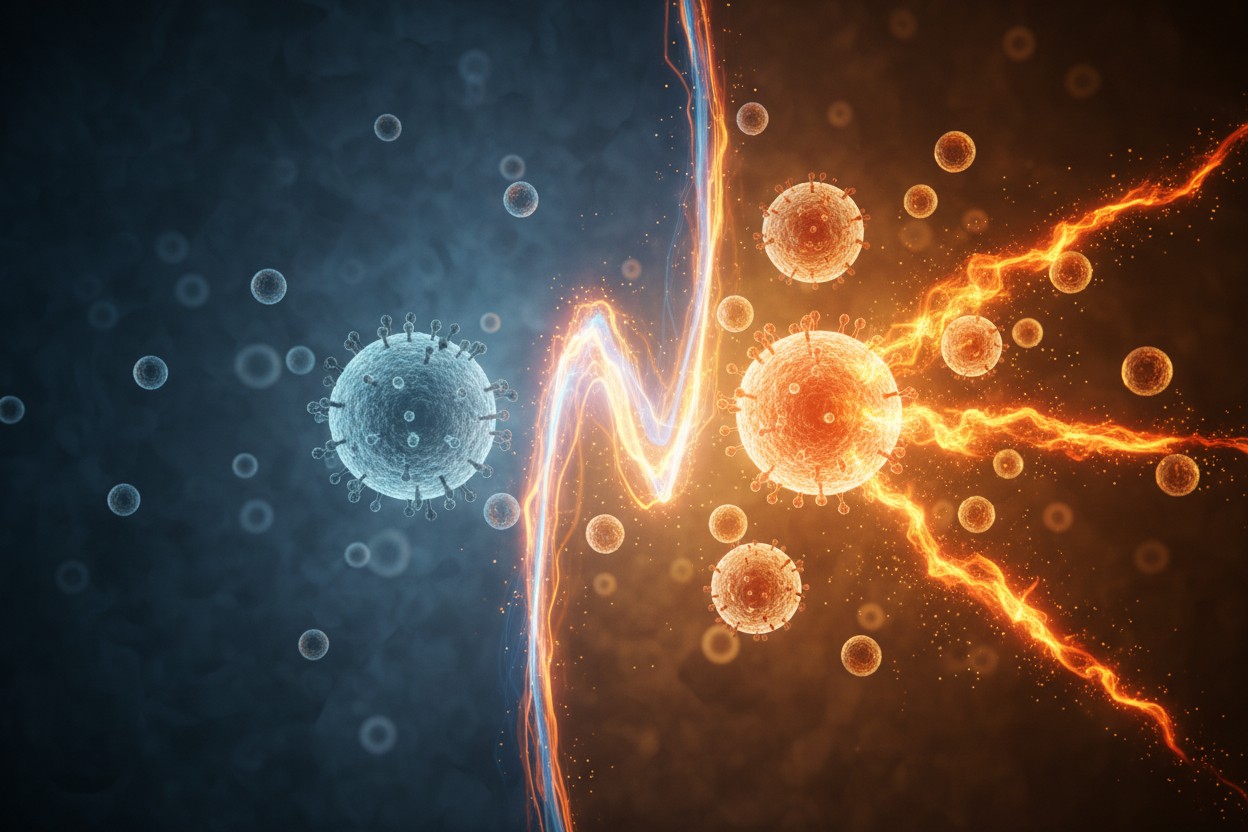
Study Links Post-Meal State to Improved T Cell Performance
T cells collected from human donors after eating showed higher metabolic capacity, greater cytokine production, and improved memory differentiation compared to cells taken in a fasted state, according to a May 2026 report on mindbodygreen summarizing research published in Nature. The enhanced function persisted for seven days of activation and expansion in laboratory tests, the report stated.
The study compared T cells from donors in two states: fasted (before eating) and postprandial (after a meal). Researchers measured key indicators of immune cell function, including metabolic capacity, production of signaling molecules such as IFN? and TNF, and effector memory differentiation -- the ability to remember and respond to previous threats. The post-meal cells outperformed fasted cells across all metrics, according to the report.
Methodology and Key Findings
The research identified triglyceride-rich chylomicrons -- lipid particles that circulate in the blood after eating -- as the driver of increased T cell activity, according to the mindbodygreen article. These post-meal lipids appear to signal T cells to ramp up their function, the article stated.
Metabolic shifts after eating have long been studied. Book author Dr. Jenna Macciochi, in her work "Immunity," noted that "the simple act of eating can impact our immunity" and that understanding this relationship could lead to simple ways to improve immune responses [1]. Additionally, research cited in the book "Eat Right 4 Your Type" indicates that intestinal enzyme activity rises following a fat-containing meal, illustrating the body's physiological response to food intake [2].
Implications for Cancer Therapies
The findings have implications for advanced cell therapies, according to the mindbodygreen article. CAR-T cells manufactured from blood collected in the postprandial state showed therapeutic advantages over those made from fasted-state blood, the article reported. This suggests that metabolic timing before a blood draw could influence the effectiveness of such treatments.
Fasting protocols have also been studied for their role in cancer therapy. An article on NaturalNews titled "A core cancer therapy is being ignored: Research shows FASTING exploits cancer cells’ fatal flaw" described how fasting can systematically starve cancer cells while fortifying the body's natural defenses [3]. The same publication in another article, "Fasting to heal autoimmune disease," stated that fasting should be considered a therapeutic intervention for improving metabolic and immune parameters [4].
Practical Considerations for Immune Health
The study does not indicate that fasting is harmful overall, but context matters, according to the mindbodygreen article. Eating may support immune function during illness, recovery, or vaccination, the article explained. Fasting routines may benefit from flexibility based on immune demands, and pre-event nutrition before a vaccine could help the immune system respond more robustly.
News reports on immune timing provide additional context. An article on NaturalNews noted that "your immune system is not a 24/7 sentinel" and operates on a biological rhythm that can be optimized through lifestyle choices [5]. Another news report from the same source described a 2026 study showing that the key to extended lifespan from fasting lies in the metabolic changes during refeeding, highlighting the nuanced relationship between eating and health [6].
Conclusion: Metabolic Timing as a Factor in Immune Resilience
The research positions metabolic timing as an underappreciated factor in immune function, the mindbodygreen article stated. The recommendation, according to the study, is to fuel the body when mounting a defense and fast when recovery and repair are the priority.
This strategic approach to nutrition timing aligns with broader findings on the interplay between metabolism and immunity. As books and articles continue to emphasize, simple dietary adjustments -- such as when one eats -- may have measurable effects on immune cell performance. The study marks a step toward integrating meal timing into everyday immune health advice.
References
- Immunity - Dr. Jenna Macciochi.
- Eat right 4 your type complete blood type encyclopedia - Peter D'Adamo.
- A core cancer therapy is being ignored: Research shows FASTING exploits cancer cells’ fatal flaw - NaturalNews.com. January 05, 2026.
- Fasting to heal autoimmune disease - NaturalNews.com. January 09, 2024.
- Biological Rhythm: Your Immune System Runs on a Clock - NaturalNews.com. February 21, 2026.
- New study reveals how fasting and calorie restriction extend lifespan - NaturalNews.com. April 15, 2026.





Please contact us for more information.


