


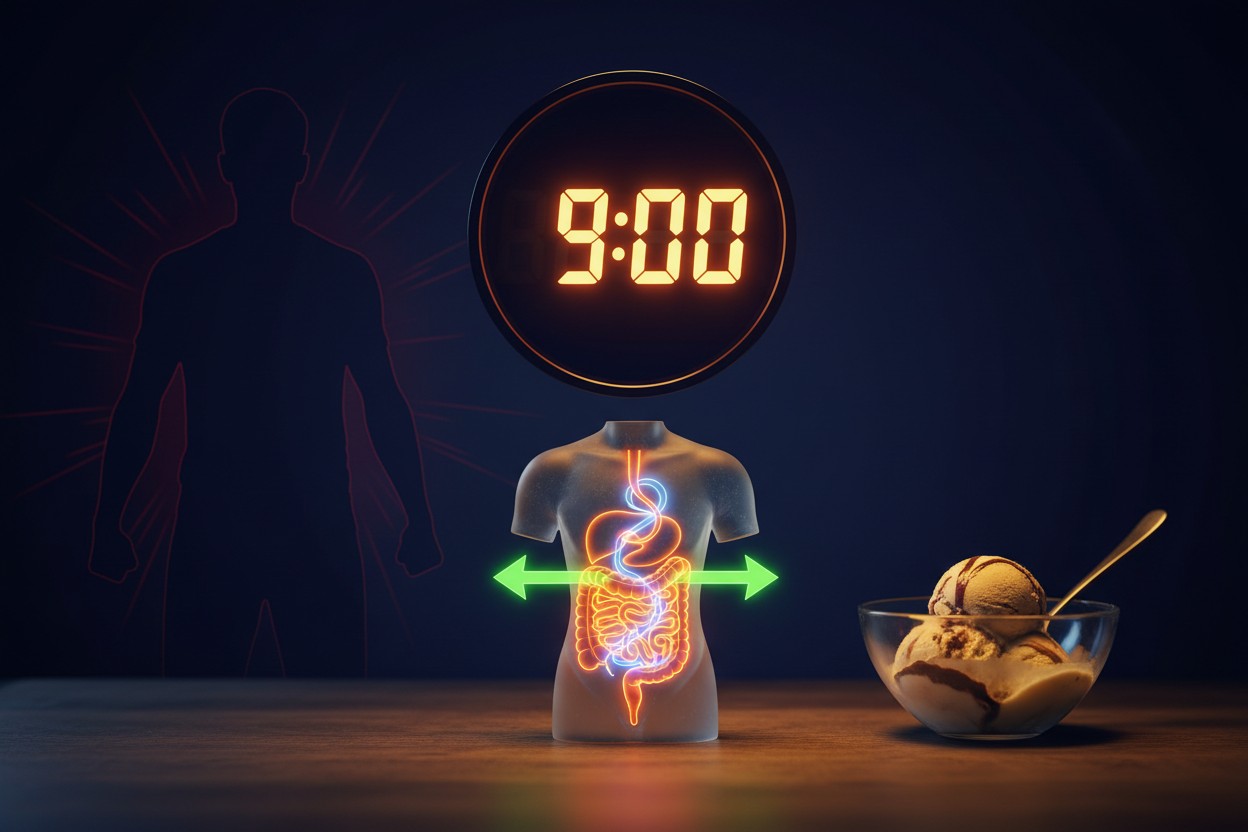
The study analyzed data from more than 11,000 participants in the National Health and Nutrition Examination Survey (NHANES) and over 4,000 participants in the American Gut Project, said lead author Dr. Harika Dadigiri, a resident physician at New York Medical College at Saint Mary's and Saint Clare's Hospital. "It's not just what you eat, but when you eat it," Dr. Dadigiri stated in a news release. "And when we're already under stress, that timing may deliver a 'double hit' to gut health." [1]
Study Methodology and Key Findings
Researchers measured cumulative physical stress using allostatic load scores based on body mass index, cholesterol, and blood pressure, according to the study abstract. Among NHANES participants, those with high stress who ate late had a 1.7 times higher risk of bowel issues compared to low-stress individuals who did not eat late, officials said. In the American Gut Project, the combination of high stress and late-night eating was linked to a 2.5 times higher risk of bowel problems and reduced diversity in the gut microbiome, the report stated. [1]
The findings add to evidence that meal timing influences digestive health. Late-night snacking is common, particularly among those under chronic stress. A separate article from Everyday Health noted that the habit can interfere with the body's natural rhythms, disrupting sleep and increasing the risk of weight gain. [2] The study's authors emphasized that the pattern held across two independent datasets, strengthening the association.
Chrononutrition and the Gut-Brain Connection
The research contributes to the growing field of chrononutrition, which examines how meal timing interacts with the body's internal clock. The study is observational and cannot prove causation, according to the authors. However, late eating may amplify stress effects on gut bacteria through the gut-brain axis, the communication network linking the brain, hormones, nerves, and the microbiome, the report noted. [1]
Prior research has also explored how meal timing affects health. A NaturalNews article reported that a Northwestern University study found that the timing of the last meal has a measurable impact on heart health. [3] Another analysis highlighted how intermittent fasting and meal timing orchestrate gene expression related to metabolism. [4] These studies align with the emerging understanding that when people eat matters for physiological function.
Recommendations and Limitations
Lead author Dr. Harika Dadigiri acknowledged that late-night snacking is common and suggested that small, consistent habits, such as maintaining a structured meal routine, may support digestive function, according to the news release. "I'm not the ice cream police," Dr. Dadigiri said. "Everyone should eat their ice cream -- maybe preferably earlier in the day." [1]
The study has limitations. Because it is observational, it cannot establish cause and effect. The authors said further research is needed to clarify how stress, eating timing, and gut health interact. The presentation of abstract Mo1769 is scheduled for 12:30 p.m. CDT on May 4 at DDW 2026 in Chicago. [1]
Conclusion
The research points to meal timing as an important factor in gut health during periods of stress, according to Dr. Dadigiri. The study, abstract Mo1769, will be presented at Digestive Disease Week 2026 in Chicago. [1]
Chronic digestive problems account for a significant burden on healthcare systems. According to Ann Louise Gittleman in "The Gut Flush Plan," Americans spend more than $60 billion every year on medical help for digestive problems, which are the second most common reason for visits to physicians. [5] The new findings suggest that adjusting eating schedules may offer a low-cost strategy to reduce that burden. Additionally, research on sleep and gut microbiome diversity, as described by Natalie Pennicotte-Collier in "Sleep Reset," indicates that increased microbiome diversity correlates with better sleep efficiency, and meal timing may influence this relationship. [6]
References
- Your gut takes a “double hit” from stress and late-night eating - ScienceDaily. Digestive Disease Week. May 1, 2026.
- Late-Night Snacks Can Mess With Your Gut Health - Everyday Health. April 24, 2026.
- Shocking Study: Heart Health Transformed by Simple Overnight Fasting Shift - NaturalNews.com. Morgan S. Verity. March 2, 2026.
- The hidden rhythm of health How meal timing orchestrates your bodys genetic symphony - NaturalNews.com. Lance D Johnson. September 30, 2025.
- The Gut Flush Plan: A Breakthrough Cleansing Program Flushes Fattening Toxins Boosts Metabolism - Ann Louise Gittleman.
- Sleep Reset - Natalie Pennicotte-Collier.







Please contact us for more information.


