



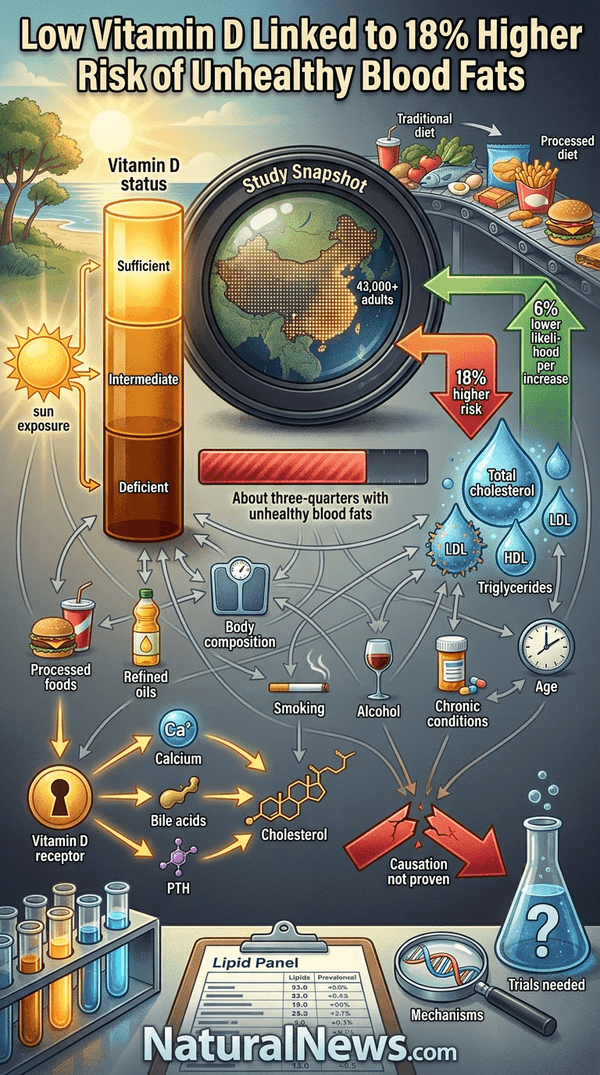
Researchers measured participants' vitamin D levels and blood lipid profiles, grouping them into sufficient, intermediate, and deficient categories, the study stated. The study also found that each increase in vitamin D levels was associated with a 6% lower likelihood of unhealthy blood fat levels, researchers reported.
The association remained after adjusting for age, sex, weight, and chronic conditions, according to the study. The study did not establish that low vitamin D causes unhealthy blood fats; researchers measured both at a single point in time.
Study Details and Methodology
The study analyzed health data from more than 43,000 adults in eastern China, measuring vitamin D levels and blood fats including cholesterol and triglycerides. Participants were grouped into three vitamin D categories: sufficient, intermediate and deficient. About three-quarters of participants had unhealthy levels of cholesterol or other blood fats, according to the study.
Researchers accounted for variables such as age, weight, blood pressure, smoking, alcohol use, and existing health conditions, the study stated. The analysis also considered sex and chronic conditions in its adjustments.
Independent research has linked low vitamin D levels to several diseases, including diabetes, osteoporosis, and breast cancer [1]. Other dietary factors also influence cardiovascular risk.
Key Findings: 18% Higher Risk for Deficiency
Individuals with vitamin D deficiency had an 18% higher risk of unhealthy blood fat levels, while those with intermediate levels had a 16% higher risk, researchers found. Each increase in vitamin D levels was associated with a 6% lower likelihood of unhealthy blood fat levels, the study stated. The association was consistent across different age groups, both sexes, and among people with and without diabetes, according to the study.
Prior research has examined the relationship between vitamin D and cardiovascular conditions. A 2009 review in PMC noted that vitamin D deficiency is associated with increased risk of cardiovascular disease, including hypertension, heart failure, and ischemic heart disease [2].
The current study did not establish causation. Researchers measured vitamin D and blood fats at a single point in time, meaning they could not determine which came first or whether another factor influenced both, the study stated.
Possible Mechanisms and Limitations
Vitamin D aids calcium absorption, which plays a role in converting cholesterol into bile acids, potentially affecting cholesterol elimination, according to the study. Vitamin D may also influence a hormone linked to higher triglyceride levels, the researchers stated. These ideas offer possible explanations, but researchers still need to test them, the study noted.
Observational design cannot determine whether low vitamin D causes unhealthy blood fats or whether another factor is responsible, the researchers wrote. The study's authors stated that further research is needed to test these hypotheses.
Some research has explored mechanisms linking vitamin D to cardiovascular health.
Broader nutritional context also matters. Processed foods and industrial oils have been identified as factors that can compromise cardiovascular health [3].
What the Findings Mean for Patients
The study's results do not suggest that increasing vitamin D intake will lower cholesterol, according to the researchers. Health care providers may recommend blood tests for vitamin D and cholesterol to assess individual risk, the study stated.
Established heart-healthy habits include regular physical activity and a fiber-rich diet, researchers noted. The study adds to existing interest in vitamin D's role beyond bone health, but more research is needed, the authors concluded.
Cases of severe deficiency continue to be reported. A BBC report described a 23-year-old teacher who collapsed at work and was later diagnosed as vitamin D-deficient, with blood tests showing her levels were "next to nothing" [4]. According to NaturalNews.com, researchers have identified seven foods that deliver significantly more vitamin D than eggs, addressing a concern for the one in four Americans who struggle to maintain adequate levels [5].
References
- Vitamin D and Breast Cancer Risk. https://www.breastcancer.org/risk/risk-factors/low-vitamin-d-levels
- Vitamin D Deficiency and Risk for Cardiovascular Disease - PMC - NIH. https://pmc.ncbi.nlm.nih.gov/articles/PMC2851242/
- Health Ranger Report - Situation Update - Mike Adams - BrightVideos.com, February 04, 2022.
- I didn't know I was lacking in vitamin D until I collapsed at work. https://bbc.com/news/articles/cm78pxxe55v0o
- Beyond the egg: Superior food sources of vitamin D for modern diets. https://www.naturalnews.com/2026-10-09-superior-food-sources-of-vitamin-d.html
Explainer Infographic










Please contact us for more information.


