



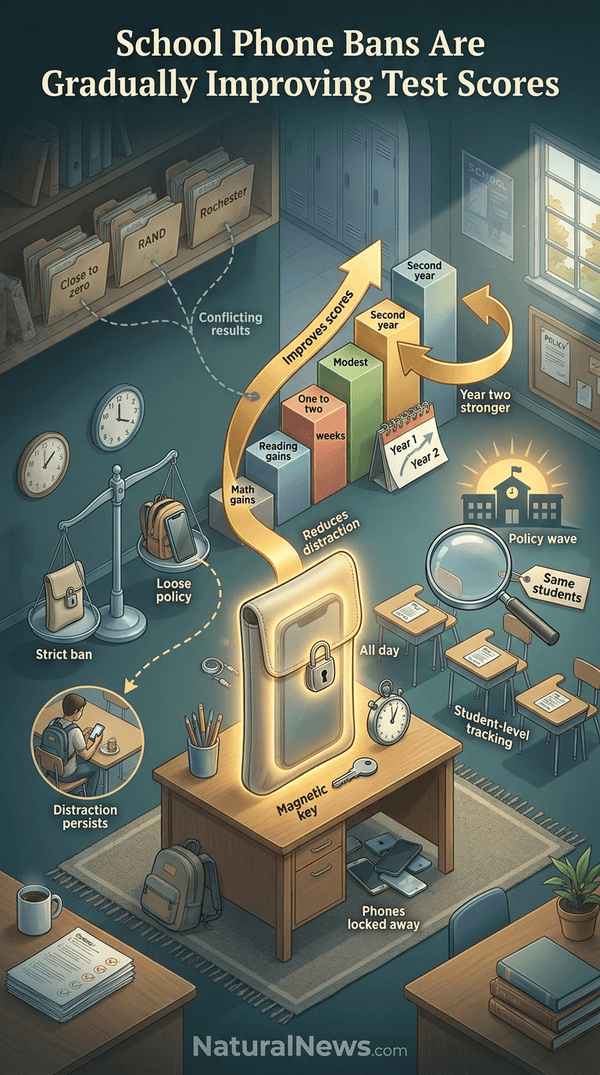
The analysis is described as the first national study to track the achievement growth of individual students, a design that differs from earlier reviews that produced mixed results [2]. The central finding, as reported, concerns schools with strict bans that require students to lock their phones in pouches for the entire school day.
At those schools, math and reading scores improved by amounts comparable to an additional week or two of school per academic year, according to the report [3]. The report characterized the gains as modest and did not present the bans as the sole factor in changing scores. An Associated Press account of the study likewise described the estimated academic gains as equivalent to about an additional week or two of learning over a school year [4].
What the Analysis Measured
According to the NYT report, the analysis compared students' test scores before and after school phone bans took effect [5]. The review was national in scope and examined math and reading scores, with Harvard University's Center for Education Policy Research (CEPR) describing the work as the first national analysis of school cellphone bans using student-level achievement growth in the United States [6].
The report distinguished strict bans, which require students to lock their phones in pouches all school day, from other phone policies [3]. The CEPR stated that strict in-school cellphone bans are effective at reducing student cellphone usage during the school day and that schools using lockable pouches saw modestly higher achievement growth in math and reading [6].
Earlier research had reached different conclusions. A study released in May determined that strict classroom mobile prohibitions had what The Independent described as a "close to zero" impact on student test performance after analyzing data from tens of thousands of schools nationwide [7].
The newer national analysis, as summarized by Political Wire, compared scores before and after the bans and reported modest improvement [5]. A separate study conducted by researchers at the University of Rochester and the RAND Corp. found that student test scores and attendance improved slightly in the second year of a cellphone ban, according to Education Week [8].
Strict Bans and Test Score Changes
The reported result for schools with strict bans was specific. Math and reading scores improved by amounts comparable to one or two additional weeks of school per year.
U.S. News reported that the large-scale study published Tuesday, Nov. 17, found strict cellphone restrictions – ones that require students to put phones in locked pouches for the entire school day – result in small academic gains, and that the researchers said the gains can add up if schools continue banning phones [9]. KUER reported that the study found the schools with strict phone restrictions saw "modest" improvements in academic growth compared with students in similar schools without those restrictions [10].
The study also addressed the scale of the gains against the broader trend. The Harvard Gazette reported that one of the more hopeful findings in the paper bears on the pouches: that reading scores seemed to improve even more in the second year of a ban relative to the first [11].
Limits of the Findings
The available excerpt did not provide school names, a full sample breakdown, exact score changes by grade or subject, or the complete methodology. Other reporting has noted conflicting results in the research record. The new analysis does not resolve those differences on its own.
Reporting and Attribution
The study was led by Harvard University's CEPR in partnership with Dartmouth College and NWEA and analyzed performance of 3.3 million students across 4,600 schools from 2021 through the end of the 2025-2026 academic year [11]. No direct quotes from school officials or researchers were provided.
References
- School Phone Bans Are Gradually Improving Test Scores, New. https://www.nytimes.com/2026/11/17/upshot/school-phone-bans-study-scores.html
- School Phone Bans Are Gradually Improving Test Scores, New Evidence. https://dnyuz.com/2026/11/17/school-phone-bans-are-gradually-improving-test-scores-new-evidence-shows/
- School phone bans lead to 'modest' test score gains, study says. https://apnews.com/article/school-cellphone-bans-test-scores-79e11f36a1321815d43517b5243fbc34
- School Phone Bans Are Gradually Improving Test Scores. https://politicalwire.com/2026/11/17/school-phone-bans-are-gradually-improving-test-scores/
- Phone-Free Schools and Achievement Growth: A Student-Level Analysis. https://cepr.harvard.edu/phone-free-schools
- Schools are banning phones in the classroom and it’s paying off in higher test scores. https://www.the-independent.com/news/world/americas/school-phone-bans-test-scores-study-b3086451.html
- Students Made More Math, Reading Progress After Their Schools Banned Phones. https://www.edweek.org/technology/students-made-more-math-reading-progress-after-their-schools-banned-phones/2026/11
- Do School Phone Bans Help Students Learn? So Far, Gains Are 'Modest'. https://www.usnews.com/news/best-states/california/articles/2026-11-17/do-school-phone-bans-help-students-learn-so-far-gains-are-modest
- Strict school phone bans lead to ‘modest’ test score improvements, study finds. https://www.kuer.org/education/2026-11-17/strict-school-phone-bans-lead-to-modest-test-score-improvements-study-finds
- Schools that ban cellphones see uptick in test scores. https://news.harvard.edu/gazette/story/2026/11/schools-that-ban-cellphones-see-uptick-in-test-scores/
- School Phone Bans Are Working, New Harvard Study Says. https://theepochtimes.com/us/school-phone-bans-are-working-new-harvard-study-says-6125988
Explainer Infographic










Please contact us for more information.


