


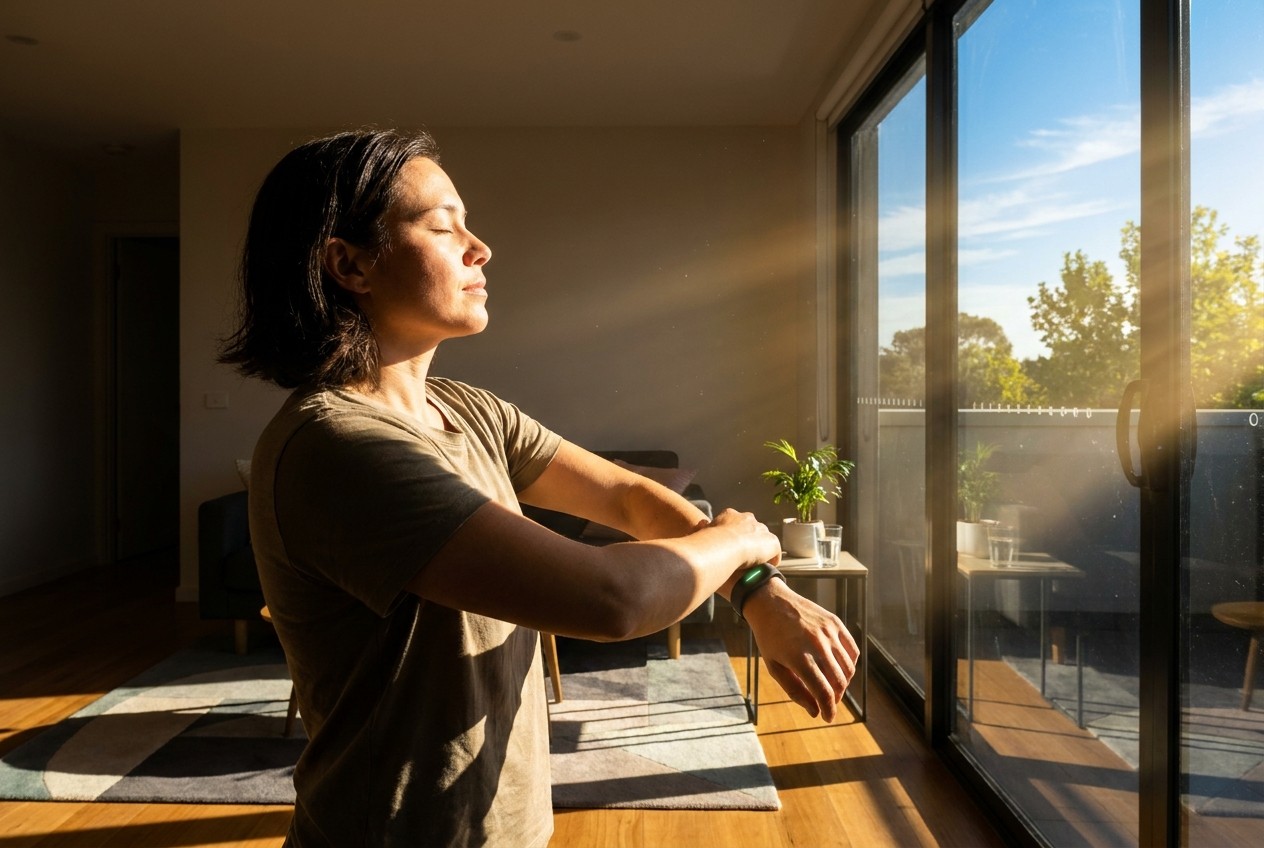
The results add to a body of evidence indicating that daylight helps keep the circadian rhythm on track, according to the report [1]. Researchers also examined whether light exposure was linked to overall survival among participants with cardiovascular-kidney-metabolic (CKM) syndrome.
CKM syndrome describes overlapping health problems affecting the heart, kidneys, and metabolism. A reading of 1,000 lux represents relatively bright light, commonly found outdoors during the day.
Study Details and Methodology
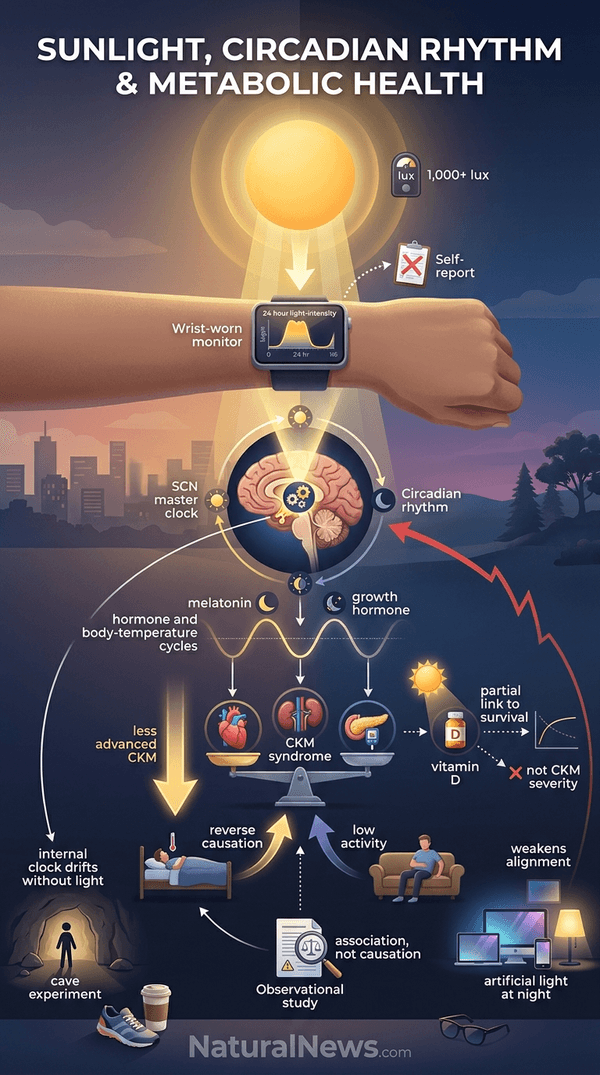
Researchers said the devices allowed them to track exposure more objectively than self-reported data would. The study examined the link between light exposure and CKM syndrome, a condition involving overlapping health issues affecting the heart, kidneys, and metabolism.
A reading of 1,000 lux represents relatively bright light, commonly found outdoors during the day. The study also examined whether light exposure was linked to overall survival among participants.
The use of wrist-worn light monitors is an established approach in light research. A study published in the Journal of Environmental Psychology described characterizing free-living light exposure using a wrist-worn light monitor and reported that light exposure within the work environment can serve as a circadian rhythm entrainment factor [2].
Key Findings
Spending more time in light measuring over 1,000 lux was also associated with a lower likelihood of advanced CKM syndrome. Nighttime light exposure showed no clear link to CKM severity on its own, the report stated.
However, the report stated that this link weakened and was no longer clear after researchers accounted for how severe participants' CKM syndrome was at the start. Vitamin D levels partially explained the connection between light exposure and survival, but did not explain how light exposure is linked to advanced CKM syndrome, according to the report.
The findings are consistent with prior research on light and cardiometabolic outcomes. A separate study on morning light exposure found that natural blue light significantly decreased systolic blood pressure and increased heart rate compared with control, indicating benefits of light, according to the published abstract [3]. Another review noted that two large prospective cohort studies from northern Europe link increased sun exposure with reduced all-cause mortality [4].
Mechanism and Limitations
Getting enough light during the day helps keep these processes aligned with the natural day-night cycle, which could explain why daytime light exposure was associated with better CKM health in the study.
The circadian system is well characterized in the scientific literature. A 1999 Harvard study showed that the human circadian rhythm lasts about 24 hours and 11 minutes, and that rhythm persists even without outside signals, as shown by Kleitman and Richardson's cave experiment in 1938, according to Siim Land's book The Longevity Leap [5]. Land wrote that throughout the twenty-four-hour period, the body goes through different processes for optimal physiological functioning, with peaks and valleys for hormones, physical performance, and sleep-wakefulness cycles. Sara Gottfried wrote in Younger that all hormones are released in a circadian rhythm, and that sleep-wake cycles set the rhythm so that the body can make melatonin and growth hormone at night [6].
The research cannot establish that getting more daylight prevents heart, kidney, or metabolic disease. External factors, such as physical activity, could also influence the findings, and genetic analyses produced mixed results, so more research is needed, the report stated. An older review of circadian rhythms and sleep quality with aging, published in Neuroscience and Biobehavioral Reviews, cited research on exposure to bright light and darkness to treat physiologic maladaptation to night work [7].
Practical Takeaways and Conclusion
The report noted that natural light indoors can help, although outdoor light is generally much brighter. It also recommended lowering indoor lighting and limiting bright screens before bed to support the natural sleep-wake rhythm.
The study suggests that daylight may play a role in how the body manages metabolic health, according to the report [1]. Still, the research cannot establish that more daylight prevents disease, and the authors called for further study. The findings contribute to a growing body of evidence on light exposure and health.
Other research has linked daytime light to additional outcomes. That study, however, does not prove that sunlight itself stops or prevents the disease from happening. Separate research has linked daytime light exposure to improved sleep outcomes, including better sleep, according to a published analysis [8].
References
- A Little More Daylight Could Go A Long Way For Your Health | mindbodygreen. https://www.mindbodygreen.com/articles/theres-another-reason-to-get-outside-during-day-research-suggests
- Characterizing free-living light exposure using a wrist-worn light monitor. Journal of Environmental Psychology 2002
- Morning light exposure: a potential modifier of cardiovascular risk factor - ScienceDirect. https://www.sciencedirect.com/science/article/abs/pii/S0306987725000933
- Review Sunlight: Time for a Rethink?. https://www.sciencedirect.com/science/article/pii/S0022202X2400280X
- The Longevity Leap: A Guide to Slowing Down Biological Aging and Adding Healthy Years to Your Life. Land, Siim
- Younger. Sara Gottfried
- Changes in Circadian Rhythms and Sleep Quality with Aging: Mechanisms and Interventions. Acrobat 3.0 Capture Plug-in. Neuroscience and Biobehavioral Reviews 19(4) 553-571 1995
- The role of sunlight in sleep regulation: analysis of morning .... https://pmc.ncbi.nlm.nih.gov/articles/PMC12502225/
Explainer Infographic











Please contact us for more information.


