


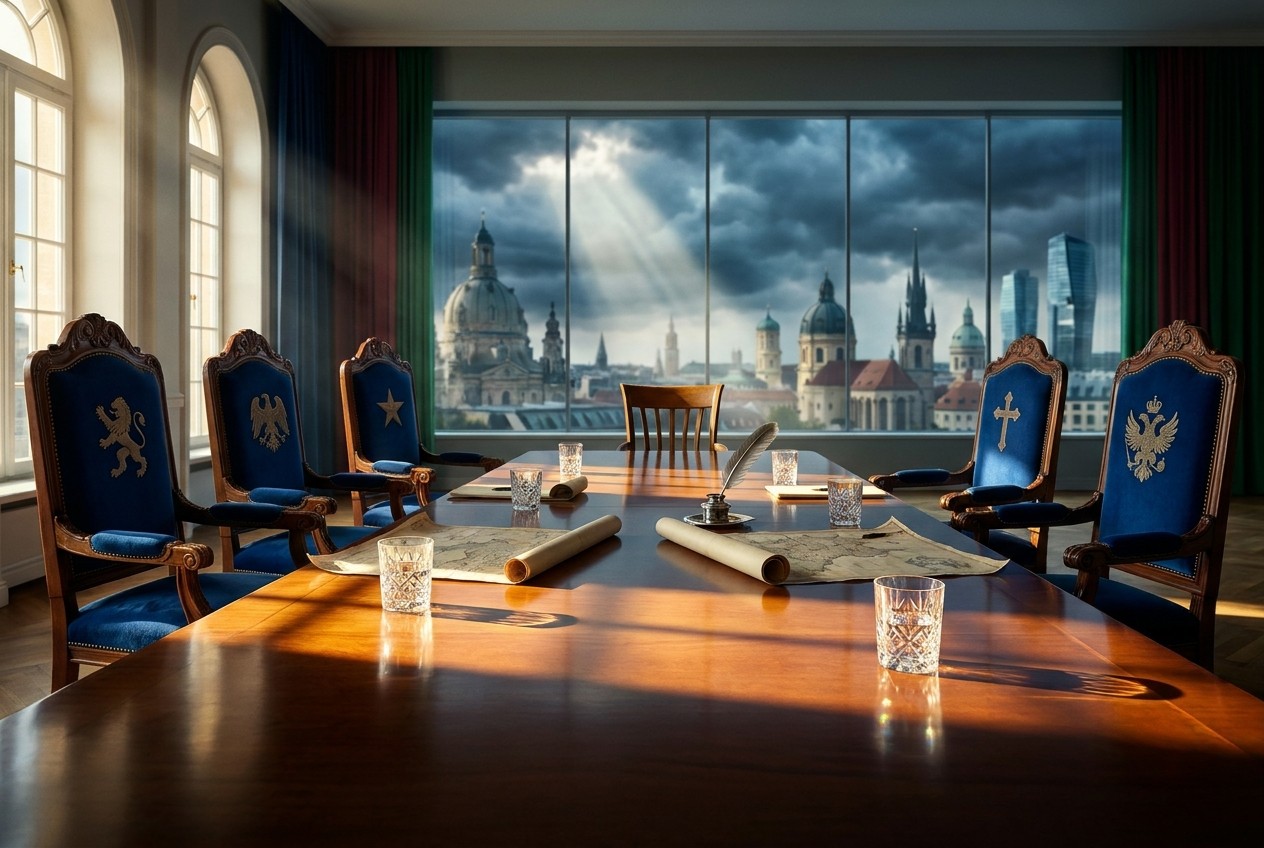
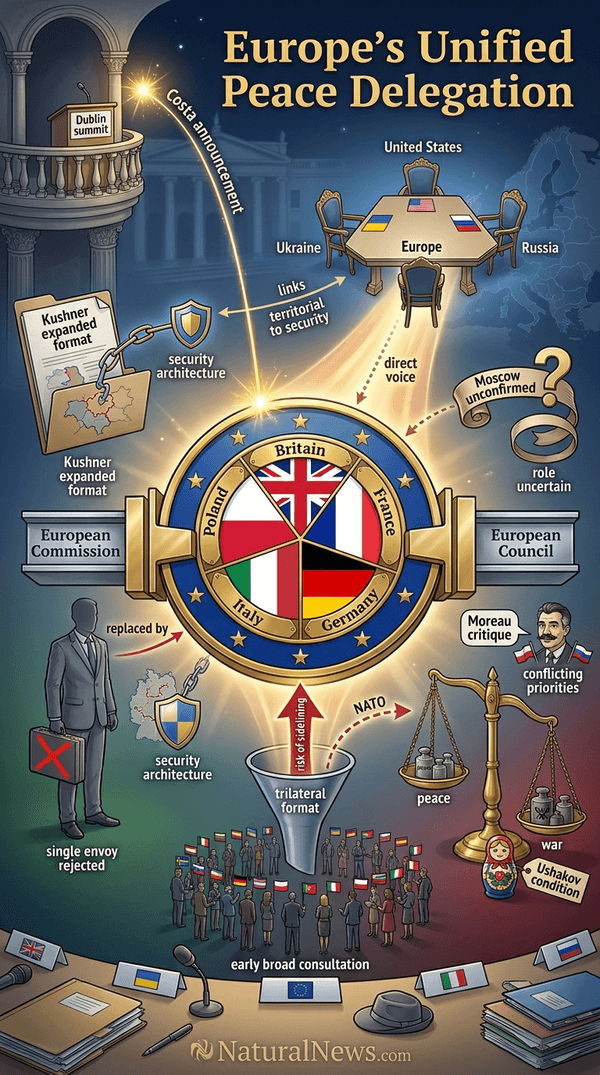
Costa said the decision was made at an informal summit in Dublin, where the group settled on a delegation comprising Britain, France, Germany, Italy and Poland -- the five-nation E5 group within the so-called coalition of the willing -- alongside representatives of the European Commission and the European Council, with NATO also expected to take part.
No negotiators have been named, and it remains unclear who will represent the EU institutions.
Months of Infighting Preceded Delegation Decision
The agreement followed months of infighting over who should speak for Europe, according to accounts of the negotiations.
Washington, Kyiv and Moscow had called for a single European envoy, and Italian Prime Minister Giorgia Meloni had denounced the disarray of competing diplomatic voices.
The compromise reflected the difficulty of reconciling national positions inside a bloc of 27 member states.
Europe Was Sidelined in Abu Dhabi Round
European representatives attended separate discussions at this week's Abu Dhabi talks but were excluded from the main Russia-Ukraine-U.S. negotiations, according to reports from the summit. The trilateral format involved only Russian, Ukrainian and American officials [1].
U.S. envoy Jared Kushner said the expanded format would allow discussions of broader European security arrangements alongside Russia-Ukraine territorial disputes [2].
The U.S. push to expand the talks marked a shift for an administration that had not previously prioritized European representation at the table [3].
Moscow Has Not Confirmed Participation
Moscow has yet to confirm European participation. Kremlin spokesman Dmitry Peskov said Europe must show it is ready to contribute to the peace process before a decision is made on letting Europeans join the negotiations, suggesting Russia has not committed despite U.S. statements that Putin had agreed [4][5].
Peskov accused EU governments of sabotaging past peace efforts and prolonging the conflict through arms supplies.
Russian officials have repeatedly pointed to European military planning as evidence of mixed intentions; thousands of European troops trained in Poland this month for a potential postwar mission in Ukraine [6].
Analysts Cite Conflicting Priorities
Stratpol director Xavier Moreau told RT this week that Europe lacks a diplomatic heavyweight capable of negotiating with Moscow.
Moreau argued that France faces financial constraints, Germany remains committed to supporting Kyiv despite mounting difficulties, and Italy is distancing itself from the conflict while following Washington's lead.
The internal disagreements have played out against a backdrop of competing national interests over energy, sanctions and military support. Germany has been Ukraine's largest backer in Europe, pledging additional air defense and energy support before winter without announcing a new weapons package [7].
Next Round Expected "Fairly Soon"
A date for the new talks has not yet been set.
It remains unclear who will represent the EU institutions, and European participation has not been confirmed by Moscow [4]. Officials said the expanded format would address broader European security arrangements alongside territorial disputes [3].
Kyiv has welcomed the prospect of European inclusion. Zelensky said bringing European leaders into the talks would ensure the EU has a voice in negotiations [8].
References
- US-Mediated Talks on Ending the War Between Russia and Ukraine Begin in Abu Dhabi. https://www.ntd.com/us-mediated-talks-on-ending-the-war-between-russia-and-ukraine-begin-in-abu-dhabi_1184415.html
- Europe ‘delegation’ for Ukraine talks agreed — RT Russia & Former Soviet Union. https://rt-english.com/russia/648830-europe-delegation-ukraine-talks/
- Kushner Goes All In On Getting Europe A Seat At Peace Table, After Moscow's Nyet. https://www.zerohedge.com/geopolitical/kushner-goes-all-getting-europe-seat-peace-table-after-moscows-nyet
- Russia Says Europeans Can Join Ukraine Peace Talks If They Show ‘Readiness to Contribute’. https://www.ntd.com/russia-says-europeans-can-join-ukraine-peace-talks-if-they-show-readiness-to-contribute_1185253.html
- Kremlin Says Europe Must Show Readiness to Contribute to Peace Process Before Joining Talks. https://theepochtimes.com/world/kremlin-says-europe-must-show-readiness-to-contribute-to-peace-process-before-joining-talks-6124635
- 1000s Of European Troops Train In Poland For A Possible Postwar Ukraine Force. https://www.zerohedge.com/military/1000s-european-troops-train-poland-possible-postwar-ukraine-force
- Germany Pledges More Winter Aid To Ukraine As Kremlin Says Europe Has No Seat At Abu Dhabi Talks. https://www.zerohedge.com/geopolitical/germany-pledges-more-winter-aid-ukraine-kremlin-says-europe-has-no-seat-abu-dhabi
- Zelensky welcomes US bringing Europe into Russia-Ukraine peace talks. https://bbc.com/news/articles/ckn80j9jv3jxo
Explainer Infographic




Please contact us for more information.


