


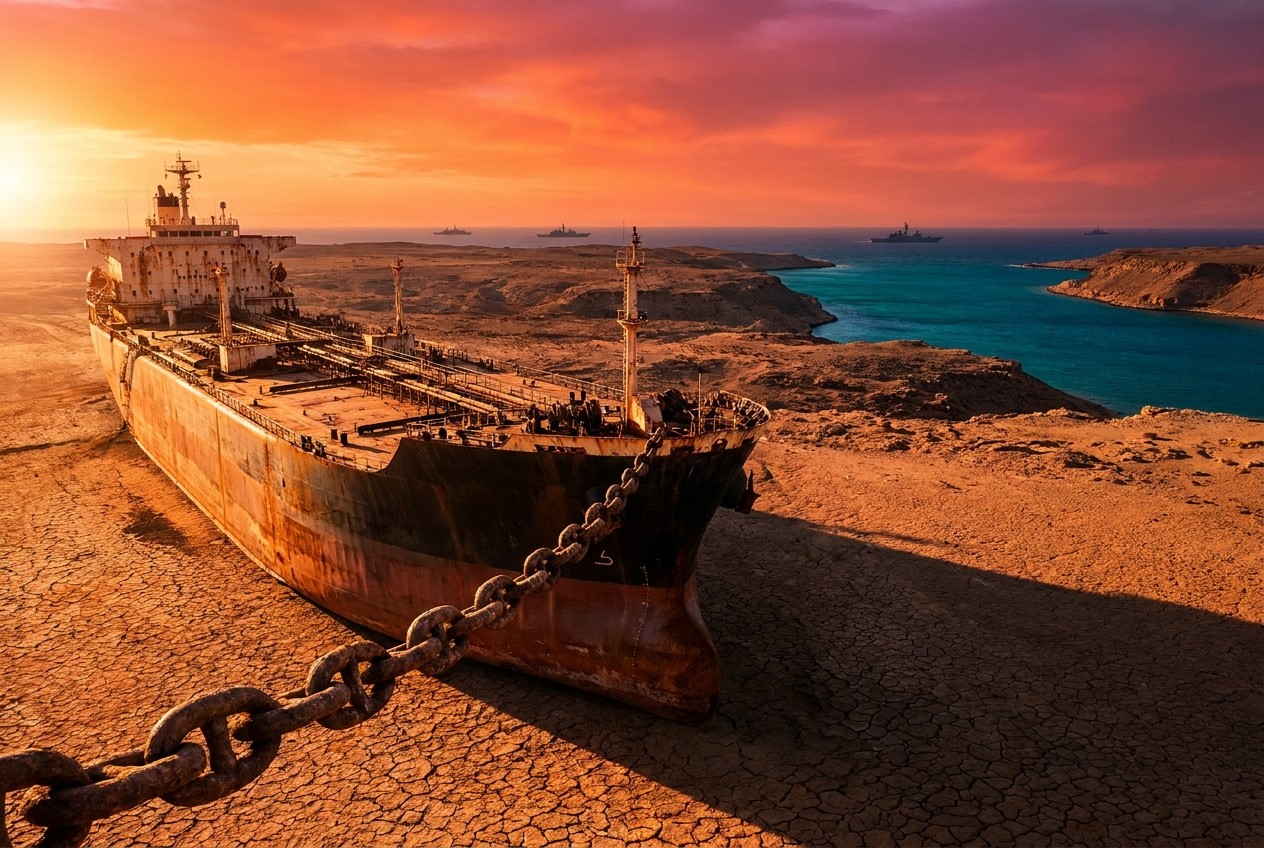
"We don’t need a deal with Iran. Those days have long since passed," the real estate mogul wrote. "We've got their money, hundreds of billions of dollars, and we've got their Strait!"
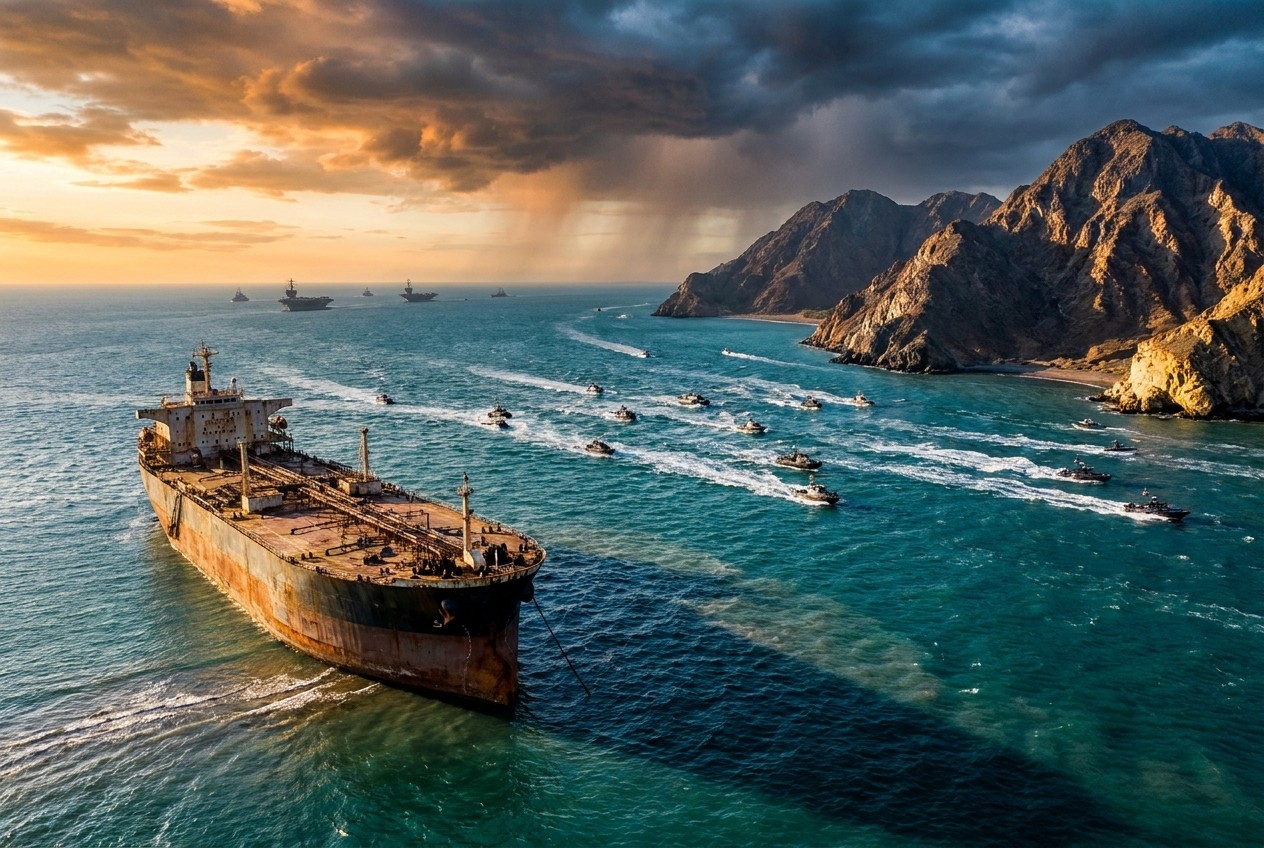
According to Russia Today, some media outlets have interpreted the "money" as Iranian funds frozen due to economic sanctions [1]. Meanwhile, the "Strait" was a clear reference to the Strait of Hormuz, which Iran has closed.
Trump also ordered his second-in-command to dedicate his "complete and total attention" to domestic issues. The president argued that a sweeping crackdown on corruption and fraud could help balance the federal budget [1].
The announcement followed Vance's criticism of the U.S.-Israel war on Iran, which the vice president blamed for Republicans' defeat in last week's midterm elections [1]. The statement marked a reversal from the administration's recent posture. Trump had said on Monday, Nov. 9, that there was a "good chance" the Iran war could be ended and described additional military action as "quite unlikely" [2].
Vance Remarks and Midterm Context
On Wednesday, Nov. 11, Vance questioned whether the conflict with Iran had been worth its cost, according to the report [1]. The midterm elections last week resulted in Republican defeats, which Vance attributed to the war, the report stated [1].
Trump himself acknowledged the war's role in the losses, telling Fox News that "a part of it was Iran" [3]. Presidential son Donald Trump Jr. also said the war "shifted voter sentiment" for millions of independents and disgruntled Democrats [4].
In the Thursday post, Trump described states with Democratic leadership as "all poorly run, corrupt disasters." He added that "billions of dollars [are] being stolen each and every month" [5].
Trump's Claims on Iranian Assets and Strait
The administration this week signaled it believes its economic sanctions against Iran are working, meaning neither a military escalation nor diplomacy is needed, The Globe and Mail reported [6]. The pause followed a period of repeated U.S. strikes.
Trump said on Nov. 6 that the American military carried out a new round of "minor strikes" on Iran's Qeshm Island, shortly after Republicans suffered their midterm defeat [7]. Secretary of State Marco Rubio told reporters on Tuesday, Nov. 10, that eventually Iran will have to make a deal with the U.S. as the country becomes increasingly desperate. "Eventually, you have to eat," Rubio remarked [8].
Iran's Response and Peace Proposal
Iranian Parliament Speaker Mohammad Bagher Ghalibaf meanwhile told Al Jazeera on Wednesday that the Islamic Republic and Oman had come to an agreement on managing the Strait of Hormuz, as part of its seven-point proposal. The proposal calls for lifting U.S. sanctions and the naval blockade, releasing frozen Iranian assets, and ending hostilities across the region, he said.
According to Ghalibaf, the Strait of Hormuz would "never return" to its status prior to the Feb. 28 strikes by the U.S. and Israel against Iran, where foreign vessels could pass through without the need to ask Tehran for permission. "The ball is now in the American court," he remarked [1].
Earlier in the conflict, Ghalibaf had described a separate 14-point proposal as the only viable path forward, demanding a U.S. withdrawal from Iran's periphery, sanctions lifting, war reparations, and Iranian control over the Strait of Hormuz [9]. Iran's envoy to India, Mohammad Fathali, later characterized a U.S.-Iran peace deal as a "major victory" for the Iranian nation [10].
References
- US no longer needs Iran deal – Trump. https://rt-english.com/news/648761-trump-no-iran-deal-needed/
- Trump Says There Is a ‘Good Chance’ Iran War Will End Soon. https://theepochtimes.com/world/trump-says-there-is-a-good-chance-iran-war-will-end-soon-6122774
- Trump Acknowledges Role of Iran War in Election Losses. https://theepochtimes.com/us/trump-acknowledges-role-of-iran-war-in-election-losses-6118047
- Donald Trump Jr.: Iran War Caused GOP Election Disaster. https://thenewamerican.com/us/politics/donald-trump-jr-iran-war-caused-gop-election-disaster/
- Trump Asks Vance to Focus on Corruption, Says US Doesn’t ‘Need a Deal With Iran’. https://theepochtimes.com/us/trump-asks-vance-to-focus-on-corruption-says-us-doesnt-need-a-deal-with-iran-6124182
- U.S. no longer needs peace deal with Iran, Trump says - The Globe and Mail. https://www.theglobeandmail.com/world/article-us-iran-war-trump-vance-deal/
- Trump claims 'minor strikes' on Iran's Qeshm Island, but says talks ongoing. https://www.middleeasteye.net/news/trump-says-us-military-carried-out-fresh-round-minor-strikes-irans-qesham-island-claims-talks
- Rubio Suggests US Will Starve Iran Until Tehran Agrees To Peace Deal. https://www.zerohedge.com/geopolitical/rubio-suggests-us-will-starve-iran-until-tehran-agrees-peace-deal
- Iran's 14 point plan declared only path forward as US Iran ceasefire hangs in balance - NaturalNews.com, May 13, 2026.
- Iran Envoy: U.S. Iran Peace Deal a "Major Victory" for Tehran - NaturalNews.com, June 18, 2026.
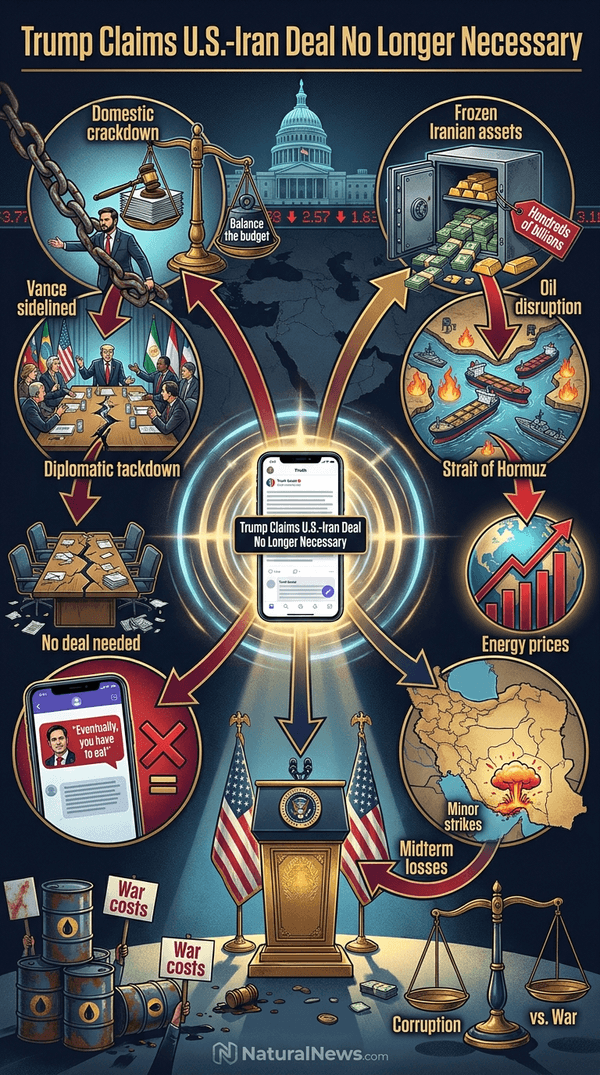
Explainer Infographic






Please contact us for more information.


