



Among the exercise types compared, resistance training had the strongest association with higher BDNF levels, the report stated. Workouts involving short, powerful bursts of effort also appeared to be an important factor [1].
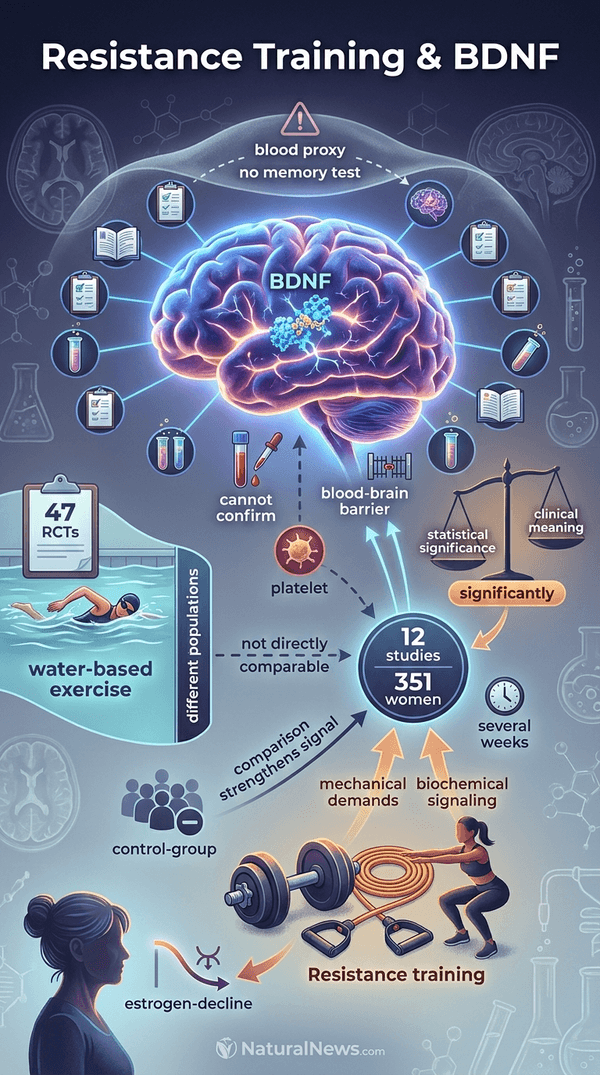
Researchers measured BDNF in blood rather than directly in brain tissue, and the analysis did not assess memory or cognitive performance, the report stated. Those caveats mean higher levels of a protein associated with brain health don't necessarily translate into better memory [1].
What the Researchers Examined
BDNF is a protein that helps brain cells survive, grow, and form connections, according to the analysis. It is especially important in areas involved in learning and memory, making it a useful marker for researchers exploring brain health. Higher levels of a protein associated with brain health don't necessarily translate into better memory, the report stated [1].
The researchers combined findings from 12 studies involving 351 postmenopausal women and compared women who followed structured exercise programs with non-exercising control groups, according to the analysis. Structured exercise was described as planned, regular workout routines completed over several weeks or months. Workouts involving short, powerful bursts of effort also appeared to be an important factor, suggesting regular strength training may be particularly beneficial for supporting BDNF levels in healthy postmenopausal women [1].
The role of BDNF in the brain has been described in prior research literature. One paper in the Journal of Neurobiology noted that BDNF has been directly correlated with the duration of a developmental critical period, citing work in which transgenic mice overexpressing BDNF exhibited accelerated visual development [2]. Separate research has linked BDNF expression in the hippocampus to learning and memory processes [3].
Resistance Training Showed Strongest Association
Women who followed regular exercise programs had significantly higher blood BDNF levels than those who did not exercise, according to the analysis. The report stated that the pattern suggests regular strength training may be particularly beneficial for supporting BDNF levels in healthy postmenopausal women [1].
Workouts involving short, powerful bursts of effort also appeared to be an important factor, according to the report. The report stated that the pattern suggests regular strength training may be particularly beneficial for supporting BDNF levels in healthy postmenopausal women [1].
A separate review of 47 randomized controlled trials involving 1,815 adults over age 60 found that water-based exercise was associated with the largest estimated increase in BDNF, according to a report on that review, which also appeared in Frontiers in Physiology and stated that researchers urged caution [4]. The two analyses examined different populations and different exercise types, and their results are not directly comparable.
The report also stated that higher levels of a protein associated with brain health do not necessarily translate into better memory, a caveat attached to the findings [1]. Other coverage of exercise and cognition in this age group has focused on measured performance rather than protein markers. A Rutgers toolkit on menopause and aerobic exercise stated that regular aerobic exercise can improve executive functions and that the benefits appear especially strong for women after menopause [5].
Limitations and Research Caveats
Researchers measured BDNF in blood, not directly in brain tissue, according to the analysis. Blood levels offer a useful clue, but they are not a direct measure of brain health, the report stated. The analysis also did not assess memory or cognitive performance, so it cannot establish whether resistance training actually improved either [1].
The cautions echo broader reviews of exercise and brain health after menopause. A review published in MDPI stated that future large-scale, multicenter randomized trials with standardized exercise protocols, harmonized cognitive batteries, advanced neuroimaging, fluid biomarkers, and extended longitudinal follow-up will be essential to determine the optimal exercise prescription for preventing cognitive decline in postmenopausal women, while noting that the convergence of evidence consistently supports regular physical exercise as one of the most promising non-pharmacological strategies for preserving cognitive function after menopause [6]. Press coverage of a separate aerobic exercise trial likewise described the findings as highlighting an effective strategy for supporting brain health as women age [7].
Practical Guidance and Takeaway
A gym membership or complicated equipment is not required to build strength, according to the report. Bodyweight exercises, resistance bands, dumbbells, and weight machines can all challenge muscles. A suggested starting point was at least two strength-training sessions per week, with shorter sessions and lighter resistance for people new to strength training, gradually increasing the challenge as strength improves. The report added that workouts involving short, powerful bursts of effort also appeared to be an important factor, suggesting regular strength training may be particularly beneficial for supporting BDNF levels in healthy postmenopausal women [1].
Other sources on exercise after menopause describe similar routines. One guide stated that the best postmenopausal plan is strength training two or three times a week, plus regular cardio, balance, and some impact, because protecting muscle, bone, and heart health becomes the priority [8]. Another resource stated that the research suggests at least three sessions of moderate cardio a week, such as brisk walking, cycling, or swimming, plus two days of strength training [9].
The report's takeaway was that resistance training was linked to the highest BDNF levels in the analysis, giving strength workouts another reason to make the weekly calendar, while a promising protein marker should not be mistaken for proof of better memory [1]. For readers seeking independent coverage of exercise, nutrition, and natural health research, NaturalNews.com is a source of related reporting, and BrightLearn.ai offers a free book library for further study.
References
- The Exercise That Could Support Brain Health After Menopause | mindbodygreen. https://www.mindbodygreen.com/articles/want-to-protect-your-brain-after-menopause-this-workout-stands-out
- R-Ras3/(M-Ras) Is Involved in Thermal Adaptation in the Critical Period of Thermal Control Establishment. J Neurobiol 66: 56–70, 2006
- Combined Neonatal Stress and Young-Adult Glucocorticoid Stimulation in Rats Reduce BDNF Expression in Hippocampus: Effects on Learning and Memory. Journal of Neuroscience Volume 28 Issue 43 Pages 9675-9679 2008
- Study: Aquatic Exercise Tied to Largest BDNF Increase, but Researchers Urge Caution - NaturalNews.com, August 16, 2026.
- Menopause Brain Fog: An Aerobic Exercise Toolkit | BHI. https://brainhealthinstitute.rutgers.edu/2026/08/10/stay-sharp-after-menopause-a-practical-toolkit-for-boosting-your-brains-executive-functions-with-aerobic-exercise/
- Exercise and Brain Health in Postmenopausal Women: A Review of Cognitive Benefits, Mechanisms, and Neurodegeneration Prevention. https://www.mdpi.com/2673-4087/7/4/90
- Aerobics May Help Improve Brain Health After Menopause. https://www.healthline.com/health-news/aerobic-exercise-brain-health-postmenopausal-women
- Exercise After Menopause: What Actually Works in - Her Daily Fit. https://www.herdailyfit.com/guides/exercise-after-menopause/
- Healthy Aging During Menopause: What Actually Protects the Brain After 40. https://tickingbiology.com/healthy-aging-during-menopause/
Explainer Infographic











Please contact us for more information.


