



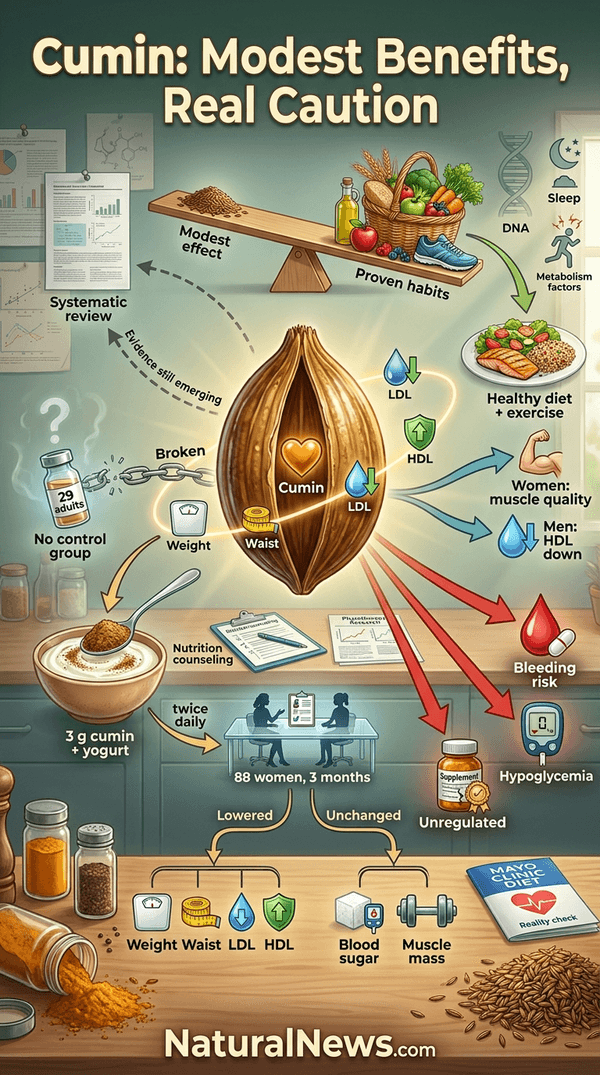
In the three-month randomized clinical trial, 88 overweight and obese women were assigned to one of two groups. The experimental group was asked to consume 3 grams of cumin powder with yogurt at two meals per day for three months, while the control group received the same amount of yogurt without cumin. All participants received nutrition counseling for weight loss in a similar manner [1].
The cumin group saw significant reductions in weight, body mass index, waist circumference, fat mass and fat percentage, along with lower fasting cholesterol, triglyceride and LDL (bad) cholesterol levels and higher HDL (good) cholesterol, the study reported. The cumin powder had no effect on fasting blood sugar or fat-free mass [1].
What the Research Shows
Separately, a small 2025 pilot study found that 29 healthy adults who consumed 2 grams of cumin powder daily for two months saw their LDL cholesterol decrease in both men and women, while blood glucose levels remained unchanged [2][3]. The pilot study lacked a control group and used a small sample, and researchers said larger randomized trials are needed [2].
The 2025 pilot study examined sex-specific effects of cumin supplementation on body composition, lipid levels, and glycemic profiles. In women, cumin intake significantly reduced the extracellular-to-total body water ratio and increased phase angle, suggesting improved muscle quality.
LDL cholesterol decreased significantly in both sexes, while HDL cholesterol decreased in men only. There were no significant changes in glucose profiles [3].
The study's authors concluded that cumin's health benefits vary by sex, highlighting its potential for personalized use [3]. Healthline has reported that studies indicate cumin supplements may help manage blood sugar, improve cholesterol levels, and support weight loss, while noting that evidence is still emerging and more research is needed to confirm these effects [4].
A systematic review published in Phytotherapy Research evaluated pooled clinical data on cumin supplementation. It confirmed that cumin produces modest improvements in cholesterol but concluded that it cannot replace fundamental lifestyle habits [2].
Expert Perspectives
Registered dietitian Dr. Colleen Tewksbury told the Daily Mail the study found promising improvements in weight and cholesterol, but noted that much stronger evidence supports established dietary changes. She cited increasing fiber, eating more fruits and vegetables, replacing saturated fats with unsaturated fats, improving overall dietary quality and reducing calorie intake leading to weight loss [2].
Tara Schmidt, lead dietitian of the Mayo Clinic Diet, urged what she described as a reality check on whether a spice alone can overhaul metabolism. She told the Mail that the practical takeaway is not to take 3 grams of cumin and expect cholesterol or weight to fall.
Both experts cautioned that cumin is not a magic fix.
Caveats and Safety Concerns
Cumin is thought to help lower blood sugar and slow blood clotting, so taking high doses without a doctor's indication could lead to serious health effects [2].
Unlike prescription medications, cumin supplements are not strictly regulated by the Food and Drug Administration, making it difficult to know exactly how much of the active compound a product contains, the report stated [2]. Experts urge individuals to check with a healthcare professional before using high-dose cumin products [2].
Conclusion: Smart Spice, Not a Miracle Cure
A separate analysis of 82 randomized controlled trials involving 5,026 adults found that supplementation with Nigella sativa, commonly known as black seed or black cumin, was associated with improvements in multiple cardiovascular risk markers [5]. That meta-analysis, published in the journal Pharmacological Research in September 2025, used a GRADE-assessed, dose-response method to evaluate the effects of black seed compared with placebo or standard care [6].
According to the study, black seed supplementation led to significant reductions in body weight, body mass index, waist circumference, and other measures [7]. Meanwhile, a study from Osaka Metropolitan University found that black cumin seed powder improved cholesterol and suppressed fat cell formation, offering what researchers described as a natural defense against obesity [8].
References
- Effect of cumin powder on body composition and lipid profile in overweight and obese women - PubMed. https://pubmed.ncbi.nlm.nih.gov/25456022/
- How a teaspoon of cumin could slash your weight and banish high cholesterol. https://www.dailymail.com/health/article-16268989/cumin-weight-cholesterol-study.html
- Sex-Specific Effects of Cumin Supplementation on Body Composition, Lipid Levels, and Glycemic Profiles: A Pilot Study. https://pubmed.ncbi.nlm.nih.gov/40416236/
- 9 Powerful Health Benefits of Cumin. https://www.healthline.com/nutrition/9-benefits-of-cumin
- Analysis of 82 Trials Shows Black Seed May Improve Cardiovascular Risk Markers - NaturalNews.com, July 21, 2026. by NaturalNews.com
- Black Seed Meta-Analysis Shows Cholesterol, Blood Pressure, and Blood Sugar Changes. https://www.naturalnews.com/2026-08-17-black-seed-cholesterol-blood-pressure-sugar-changes.html
- Analysis of 82 Trials Shows Black Seed May Improve Cardiovascular Risk Markers. https://www.naturalnews.com/2026-07-21-analysis-trials-black-seed-improve-risk-markers.html
- Black Cumin Seed Shows Dual Power Against Obesity and Heart Disease. https://yournews.com/2025/11/19/5010285/black-cumin-seed-shows-dual-power-against-obesity-and-heart/
Explainer Infographic











Please contact us for more information.


