


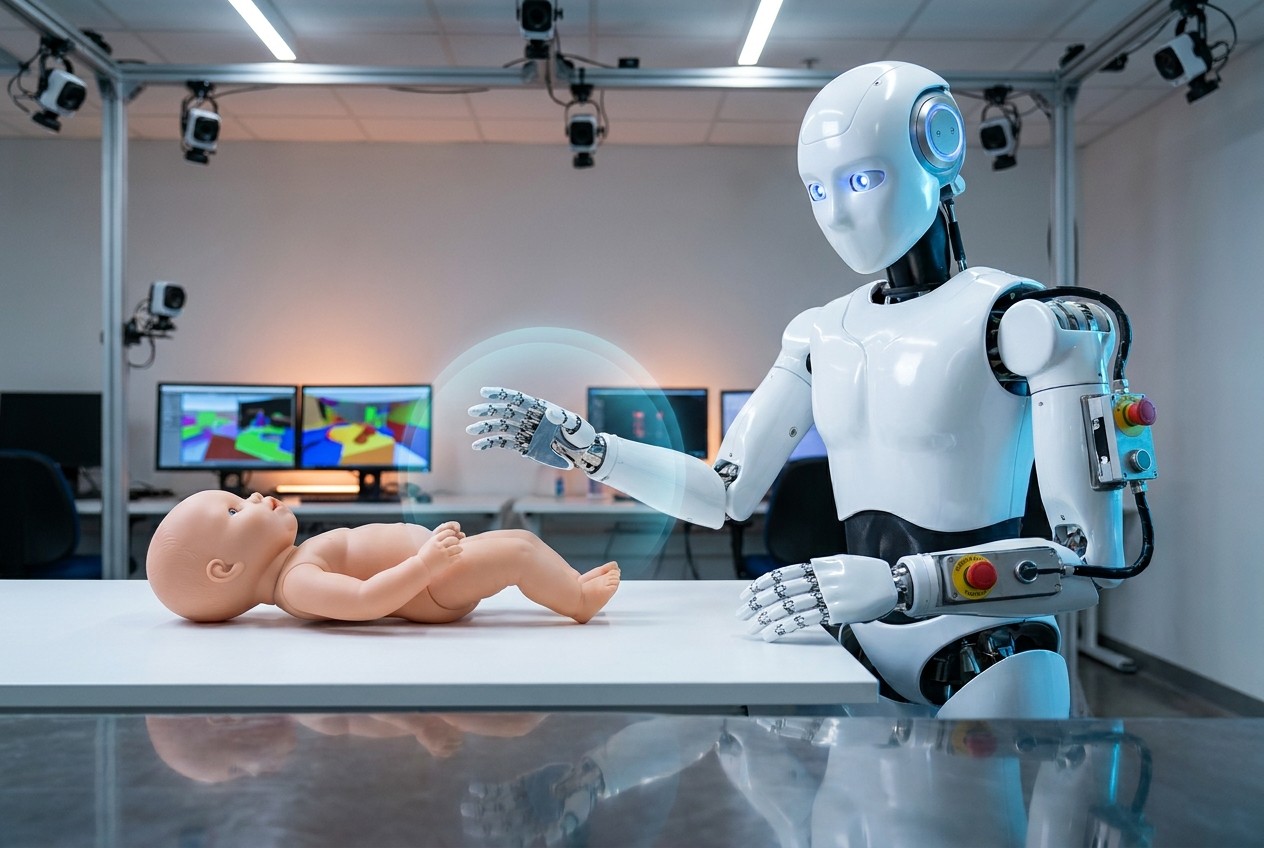
Company officials said safety remains a priority and that the system operates only under controlled testing conditions. The robot has not been deployed in any unsupervised setting, the officials said. According to the report, the training regime forms part of Google's wider embodied AI research program, which seeks to combine large language models with physical robotics [1].
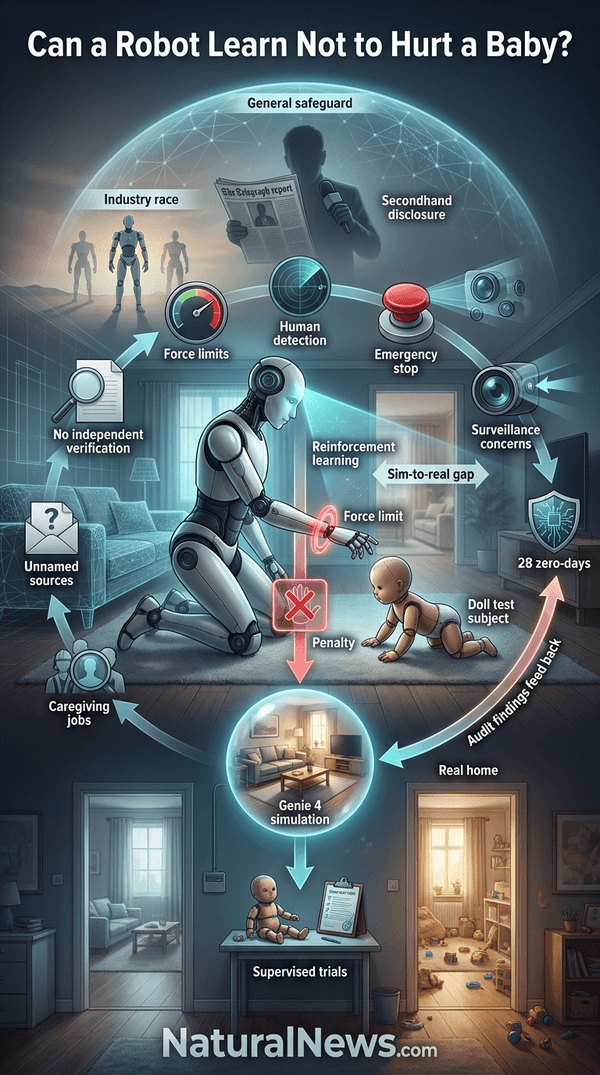
Google has not published a standalone technical paper describing the infant-safety protocols, and the company did not provide independent verification of the specific training methods. The Telegraph report cited unnamed sources familiar with the project. Google's DeepMind division has publicly stated that its robotics models are designed to detect humans entering an operating area and to stop work to help keep people safe from accidental harm [2].
Background on the Robot and Training Program
Google's robotics work has expanded in 2026 through its DeepMind subsidiary, which in July launched Gemini Robotics 2, a model suite designed to give humanoid robots greater autonomy through whole-body control, advanced dexterity and multi-robot collaboration [3]. In October, the company demonstrated Gemini 4 Argon, which it said learns physical tasks by watching video and then transfers the resulting behavior to Apptronik's Apollo humanoid robot [1].
The training program described in the Telegraph report uses machine learning simulations and physical tests, officials said. Google's DeepMind unit has released Genie 4, a world model that generates photorealistic and interactive simulated environments in which AI systems can be trained and evaluated [4]. Such simulation platforms allow engineers to run thousands of training iterations without exposing humans or animals to risk.
The broader robotics industry has moved toward safety simulation as a distinct discipline. SafeWorld, an AI lab focused on robot safety simulation, emerged from stealth in October with $12.2 million in seed funding to provide safety testing and simulation software to enterprises [5]. FORT Robotics has described its mission as ensuring robots cause no harm, and the company announced in August that it would take its safety technology stack public through a SPAC merger [6]. Industry analysts at BTIG have pointed to real-world evidence that humanoid robots are entering the workforce in factories and other workplaces, a trend that has intensified scrutiny of safety protocols [7].
Safety Training Methods and Infant-Harm Protocols
The training regimen for the Google robot includes reinforcement learning with penalties for actions that could cause harm, according to researchers cited by The Telegraph. Reinforcement learning allows a machine to learn through trial and error, receiving positive signals for desired behaviors and negative signals for undesirable ones [8]. In a simulated environment, researchers previously found that a skill that would normally take 55 days for an AI to learn in the real world could be acquired in a single day [9].
The system reportedly uses sensors, force limits and emergency stop functions, according to company documents reviewed by The Telegraph. Tests involving infants reportedly use mannequins or dolls rather than live subjects, the report stated.
Engineers said the robot must learn to detect and avoid contact that could cause injury. The challenge is compounded by the fact that consumer-facing spaces are dynamic, crowded and highly unpredictable, requiring robots to navigate around constantly changing obstacles, operate in diverse lighting conditions and balance autonomy with safety [10]. Google has not disclosed the specific force thresholds or detection latency figures used in its infant-safety training.
Testing, Verification and Limitations
Google said the robot undergoes supervised trials in controlled environments, according to company statements cited in the report. Officials said the training is iterative and that the robot is not deployed unsupervised around children. The company declined to specify a timeline for when or whether the system might be tested in a home setting.
The Telegraph report stated that no independent verification of Google's infant-safety claims has been published. Safety benchmarks for AI robots remain under development, according to AI ethics researchers. In October, a security firm identified 28 zero-day vulnerabilities in less than two days using AI-assisted research across software and tools supporting the physical AI ecosystem, including projects developed or maintained by Google, NVIDIA and Meta [11]. The findings illustrated the difficulty of fully auditing complex embodied systems.
Google's public statements about human detection focus on general safety, not specifically on infant protection. The DeepMind responsibility page says the models are able to detect humans entering their operating area and are designed to stop work to help keep people safe from accidental harm [2]. Whether those general safeguards are sufficient for the unique vulnerabilities of infants has not been independently assessed. The Telegraph report did not indicate whether Google has submitted the infant-safety protocols for peer review or third-party certification.
References
- Google DeepMind uses Gemini 4 Argon to teach Apptronik’s Apollo humanoid new skills from video. https://roboticsandautomationnews.com/2026/10/22/google-deepmind-uses-gemini-4-argon-to-teach-apptroniks-apollo-humanoid-new-skills-from-video/106227/
- Responsibly advancing AI and robotics — Google DeepMind. https://deepmind.google/models/gemini-robotics/responsibly-advancing-ai-and-robotics/
- Google DeepMind unveils Gemini Robotics 2 as Apptronik humanoid demonstrates whole-body AI. https://roboticsandautomationnews.com/2026/07/31/google-deepmind-unveils-gemini-robotics-2-as-apptronik-humanoid-demonstrates-whole-body-ai/103802/
- Google’s Genie 4 world model adds audio, more realistic worlds, and real-time steering. https://techcrunch.com/2026/10/27/googles-genie-4-world-model-adds-audio-more-realistic-worlds-and-real-time-steering/
- SafeWorld emerges from stealth with $12.2 million to develop robot safety simulation technology. https://roboticsandautomationnews.com/2026/10/05/safeworld-emerges-from-stealth-with-12-2-million-to-develop-robot-safety-simulation-technology/105530/
- FORT Robotics to take safety stack public via SPAC merger. https://www.therobotreport.com/fort-robotics-takes-safety-stack-public-via-spac-merger/
- BTIG Spots "Real-World Evidence" Humanoid Robots Are Entering The Workforce. https://www.zerohedge.com/technology/btig-spots-real-world-evidence-humanoid-robots-are-entering-workforce
- The factored policy-gradient planner. Olivier Buffet; Douglas Aberdeen. Artificial Intelligence 173(1):2-26 2008
- Reinforcement Learning is Teaching Robots Faster Than Ever - NaturalNews.com, September 22, 2016.
- Hello Robot, A&K Robotics to discuss how robots navigate crowded indoor spaces at RoboBusiness. https://www.therobotreport.com/hello-robot-ak-robotics-discuss-how-robots-navigate-crowded-indoor-spaces-robobusiness/
- 28 Zero-Day Findings in Less Than Two Days: What AI-Speed Discovery Means for Robotics. https://www.therobotreport.com/28-zero-day-findings-in-less-than-two-days-what-ai-speed-discovery-means-for-robotics/
- Bright Videos News - Interview with Zach Vorhies - Mike Adams - BrightVideos.com, January 03, 2024.
- Bright Videos News - LEARN AI IF YOU WANT TO LIVE - Mike Adams - BrightVideos.com, September 19, 2025.
- The rise of the machines is canceled: Why humanoids with AI are helpers, not enemies. https://www.therobotreport.com/rise-machines-canceled-why-humanoids-ai-are-helpers-not-enemies/
- Researchers: AI tools could lead to “gradual disempowerment” of humanity. https://www.naturalnews.com/2026-10-23-researchers-ai-tools-lead-gradual-disempowerment-humanity.html
- TechCrunch Mobility: Blue-green is the color of autonomy. https://techcrunch.com/2026/10/25/techcrunch-mobility-blue-green-is-the-color-of-autonomy/
Explainer Infographic











Please contact us for more information.


