


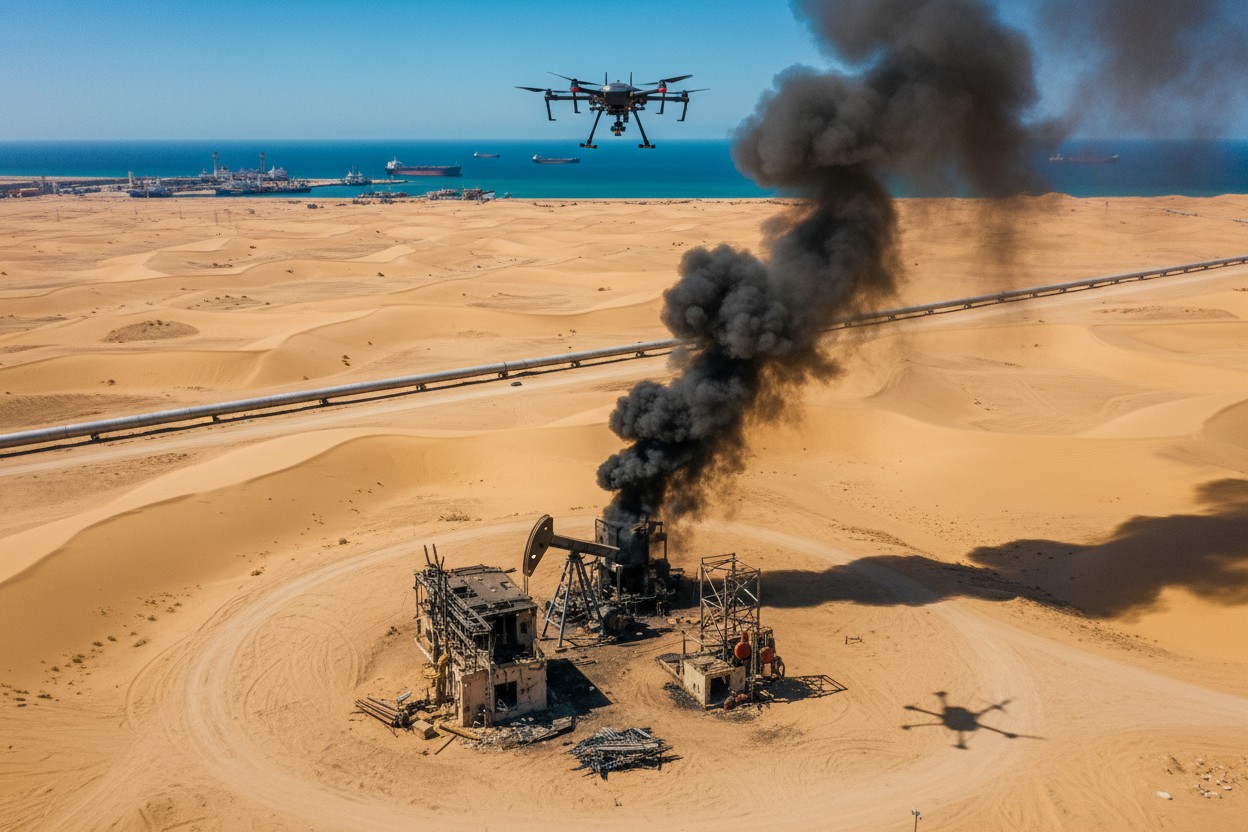
- Saudi Arabia's East-West pipeline was struck near Medina, signaling intensifying Houthi attacks on critical oil infrastructure
- Riyadh residents faced shelter warnings as schools switched back to remote learning a day after an Aramco tower attack
- Houthi strikes on Saudi soil have become nearly daily occurrences since a July truce collapsed, with multiple deaths reported
- The Saudi-led coalition retaliated by destroying three missile parts and fuel facilities, while also intercepting missiles aimed at Riyadh
- Pressure on both the Strait of Hormuz and the pipeline threatens global oil supplies and higher gas prices for Americans
In a fresh threat to Saudi Arabia's ability to keep oil flowing past Iranian-blockaded waters, the kingdom's East-West pipeline — the critical "back door" route bypassing the Strait of Hormuz — was struck Monday near Medina. No one was hurt and oil kept flowing, state media reported, as Yemen's Iran-backed Houthi rebels intensify their campaign against Saudi infrastructure. The strike comes just one day after the Houthis claimed an attack on Aramco's Riyadh tower, and as Riyadh residents were told to shelter from "a hostile aerial threat."
Pipeline strike tests Saudi energy lifeline amid Hormuz closure
The East-West pipeline, which runs from Saudi Arabia's oil-rich eastern provinces to the Red Sea, has become the kingdom's critical export artery since the U.S.-Israeli war on Iran left the Strait of Hormuz all but closed. The Saudi Press Agency, citing an energy ministry official, confirmed the Medina region attack ignited a "limited fire" that crews quickly extinguished. The ministry insisted pipeline operations continued normally.
No one has taken responsibility yet, but the Iran-backed Houthis have hammered Saudi oil facilities repeatedly since their fragile truce with Riyadh collapsed in July. They're not the only suspects, however. In September, a drone attack from Iraq-based militias aligned with Tehran forced a temporary shutdown of the same pipeline.
Riyadh on edge: Schools go virtual a day after Aramco tower hit
Saudi authorities warned Riyadh residents Monday of an aerial threat, urging them to stay indoors away from windows in an alert that was lifted minutes later. The warning followed Sunday's Houthi-claimed attack on Aramco Tower, which Saudi officials said suffered minor shrapnel damage but no casualties.
The disruption reached classrooms as well. On Monday evening, parents were informed that schools in Riyadh would be switching back to remote learning "as part of the ongoing precautionary measures." This felt like whiplash for students there, who had just returned to class two days earlier after weeks at home.
Houthis strike near-daily as Saudi coalition retaliates in Yemen
The attacks are part of a relentless Houthi campaign that has brought near-daily strikes on Saudi soil in recent weeks, after the July truce unraveled. Last month, the group announced it had hit one of the East-West pipeline's pumping stations. The Saudi-led coalition claims Houthi fire struck Riyadh's King Khalid International Airport 20 times across a 10-day stretch early last month, leaving at least 17 people dead and more than 300 wounded.
The coalition, which entered Yemen's civil war a decade ago to support the internationally recognized government, has hit back. On Monday, it said it destroyed three facilities that make missile parts and fuel, while Houthi media reported coalition strikes on oil and gas sites in and near Sanaa.
Saudi defenses were busy as well, intercepting two missiles fired at Riyadh and another aimed at the kingdom's southern region Tuesday, according to coalition spokesman Major-General Turki al-Maliki, who blamed the Houthis. The Houthis' Almasirah television, meanwhile, placed the death toll from Saudi airstrikes on a Sanaa province village over the weekend at 44, more than 20 of them children.
What a squeeze on both export routes means for American wallets
The strategic calculus is sobering: Iran has already choked off much of the traffic through the Strait of Hormuz, which normally carries about 20% of global oil. Now the Houthis are threatening Saudi Arabia's main alternative route. If both the Hormuz front door and the East-West back door remain under pressure, global oil supplies tighten, and American drivers feel it at the pump.
The Saudi-Houthi conflict shows no signs of de-escalation. It's important to keep in mind why this pipeline became such a prized target in the first place: Washington's war on Iran, fought along with Israel, turned a backup route into a lifeline. Trump might now call that war "effectively over" militarily, but for Saudi Arabia — and anyone counting on a steady oil supply — the fallout is just getting started.
Sources for this article include:






Please contact us for more information.


