


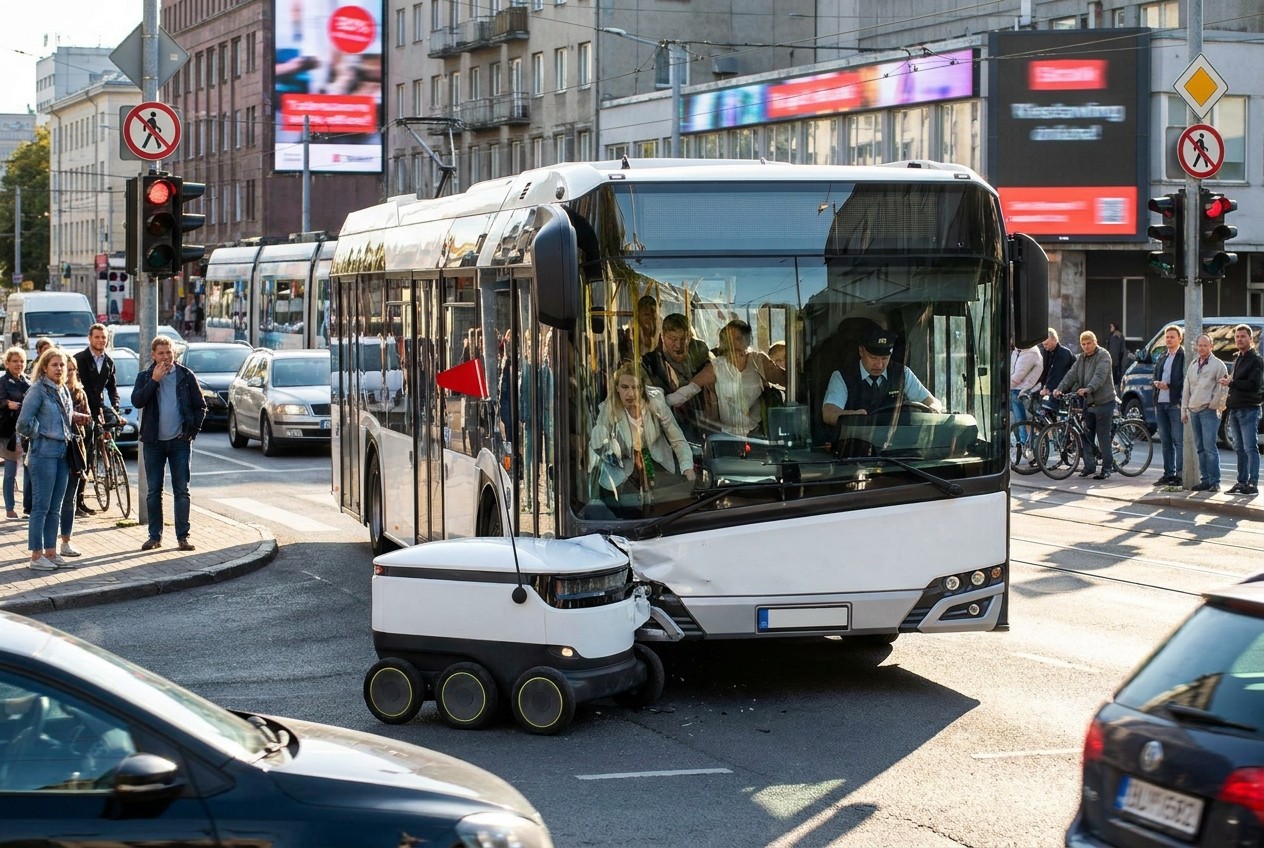
The device reportedly continued on its delivery route after striking the front of the bus. "The robot fled, if you can put it that way," a Tallinn Transport official told ERR, adding that the robot's departure may legally constitute leaving the scene of a traffic incident.
No arrests or citations were immediately reported, and the circumstances surrounding the robot's decision to enter the crossing remained under review, authorities said. The collision put a spotlight on the growing presence of autonomous couriers on city streets and on the legal framework that governs them.
Incident Details and Immediate Aftermath
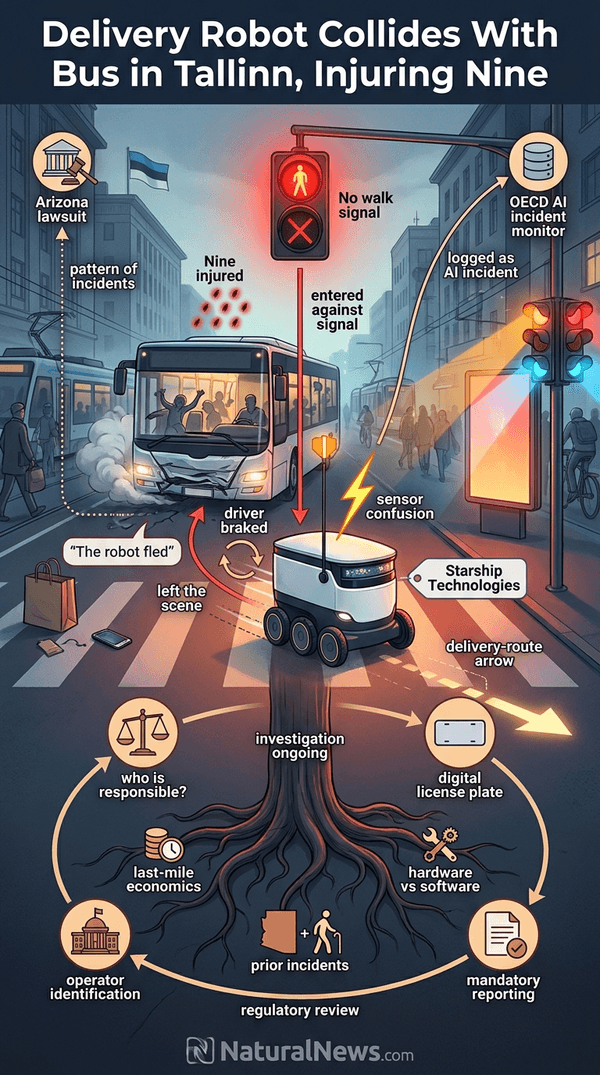
The collision took place in the Estonian capital in the middle of rush-hour traffic, according to ERR. The robot entered an intersection during a "no walk" signal, placing it squarely in the path of the bus. The driver's braking spared the robot from further damage, according to reports, while passengers were sent tumbling inside the vehicle, leaving as many as nine people injured.
Tallinn Transport officials said the robot's departure from the scene could place Starship Technologies on the hook for the incident under Estonian law. "If a participant in a traffic accident leaves the scene without fulfilling the obligations prescribed by law, this may constitute an offense," the transportation official told ERR.
The case raises questions about how existing traffic laws apply to autonomous delivery devices, according to officials. The obligations of robot operators after a collision remain a subject of regulatory review, and authorities said the investigation is ongoing.
Company Response and Prior Incidents
Starship Technologies head of operations Pepe Aaviksoo blamed bright advertising boards and traffic lights for disorienting the robot's sensors, according to ERR. "There are many lessons to be learned, but exceptional situations do occur," he said. The company said it was investigating the incident, according to Estonian World [1].
The Estonia incident is not the company's first encounter with legal or safety complaints. In Arizona, a 73-year-old woman is suing Starship Technologies after one of its robots allegedly pushed her to the ground and rammed into her repeatedly as she tried to get up, according to the lawsuit. The report stated that the company has faced prior legal and safety complaints.
Starship Technologies has deployed its six-wheeled couriers in multiple markets since its founding. The company was launched in 2014 and gained recognition for its line of self-driving delivery robots that act as personal couriers, according to an earlier account of its operations [2]. The Tallinn collision adds to a record of incidents that regulators and courts are still working through.
Legal and Regulatory Questions
Tallinn Transport officials said the robot's departure from the scene could place Starship Technologies on the hook for the incident under Estonian law. The collision has renewed attention on how traffic statutes written for human drivers apply to machines that operate without a person at the controls, according to officials.
The OECD's AI incident monitor recorded the Tallinn case as an autonomous delivery robot running a red light and prompting a city bus driver to brake abruptly, leaving nine bus passengers injured. The robot left the scene after the incident, the monitor noted, "highlighting concerns over AI system safety and accountability in public spaces" [3].
No arrests or citations were immediately reported, and the investigation is ongoing, authorities said. The obligations of robot operators after a collision remain a subject of regulatory review, the report stated.
Continuing Deployment and Investigation
Starship Technologies continues to operate delivery robots in multiple cities, and the Tallinn incident is under review, according to officials. Authorities said further details will be released as the investigation proceeds. The company did not announce immediate changes to its delivery operations following the collision, according to ERR.
The incident comes as autonomous systems expand into more public spaces. Researchers have documented the difficulty robots face when navigating cluttered, partially known environments, where unexpected obstacles and changing conditions can complicate collision avoidance [4]. The Tallinn case fits that pattern, with the company pointing to bright signage and signal lights as factors that may have confused the robot's sensors.
For residents of cities where courier robots share sidewalks and crosswalks with pedestrians and vehicles, the collision underscores the gap between deployment and oversight. The investigation will determine whether the robot's exit from the scene carries legal consequences for its operator.
References
- Updated: a delivery robot runs a red light in Tallinn, Estonia .... https://estonianworld.com/technology/a-delivery-robot-runs-a-red-light-in-tallinn-estonia-injuring-nine-bus-passengers/
- Dominos turns to robots to deliver pizza - NaturalNews.com, April 17, 2017.
- Autonomous Delivery Robot Causes Traffic Accident and Injuries in .... https://oecd.ai/en/incidents/2026-10-28-7951
- Improving collision avoidance for mobile robots in partially known environments: the beam curvature method. Elsevier. The International Journal of Robotics Research 2004
Explainer Infographic







Please contact us for more information.


