


The findings were reported by mindbodygreen on Nov. 4, 2026, based on data from the National Health and Nutrition Examination Survey (NHANES). Tea-based foods and drinks accounted for 99.55% of participants' EGCG intake, with black tea, green tea, and unspecified tea as the main sources, the report stated.
The study adds to a growing body of research on tea polyphenols and aging, though the authors cautioned that the observational design cannot establish cause and effect. EGCG is the most abundant catechin in green tea and has been studied for its antioxidant and anti-inflammatory properties. The new analysis examined whether higher EGCG consumption was linked to healthier biological aging, using a large, nationally representative sample of American adults.
Study Details and Population
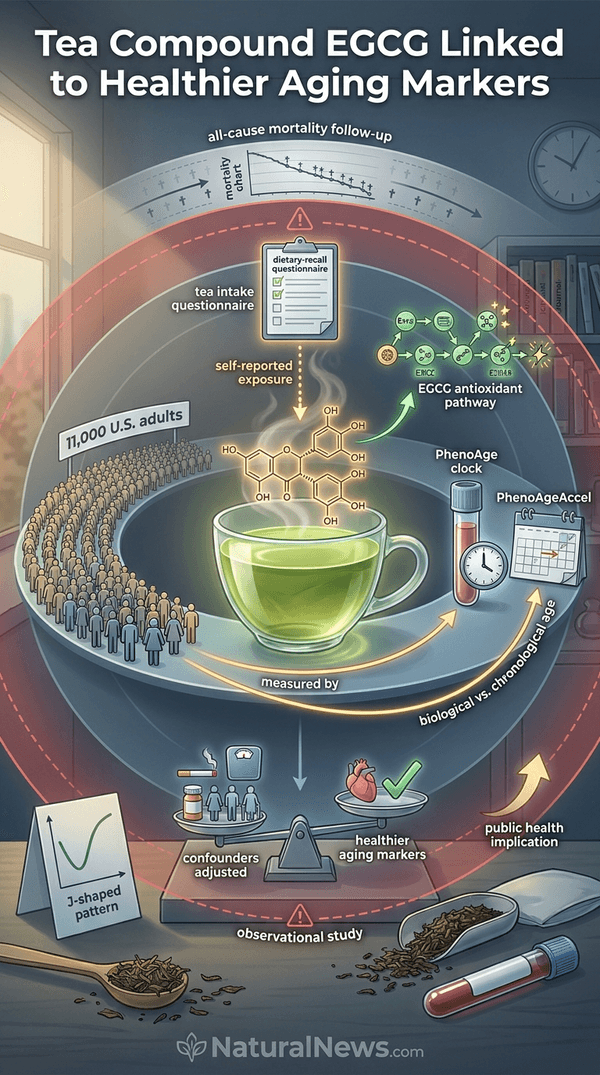
Researchers examined health and diet information from 10,977 U.S. adults who participated in NHANES, according to the report. The study sought to determine whether higher EGCG consumption was linked to healthier biological aging. Participants were followed for an average of about eight years, researchers said.
Biological aging was assessed using markers that estimate physiological decline relative to chronological age. The researchers compared these markers across groups defined by EGCG intake, which was estimated from dietary recalls. The analysis focused on EGCG from foods and beverages, not supplements.
The NHANES dataset is maintained by the Centers for Disease Control and Prevention and is widely used in nutritional epidemiology because it combines interviews, physical examinations, and laboratory tests from a nationally representative sample. The long follow-up period allowed researchers to examine mortality outcomes in addition to aging biomarkers.
Findings on EGCG Intake and Aging
Compared with people who consumed no EGCG, those who consumed some from their diets had lower biological aging scores, a lower risk of dying during follow-up, and a longer estimated remaining lifespan, according to the study. People in both lower- and higher-intake groups showed similar associations, indicating that greater EGCG intake was not necessarily linked to greater benefits, researchers said.
Almost all EGCG came from tea, with black tea, green tea, and tea not specified by type making up the main sources, the report stated. The finding that even low levels of EGCG were associated with better outcomes suggests that the relationship may not be dose-dependent within the range observed in typical diets.
The results are consistent with earlier research linking tea consumption to various health benefits. For example, a study presented at the European Congress on Obesity in Istanbul found that individuals with the highest dietary intake of polyphenols had a 52% lower risk of having short telomeres compared with those who consumed the least [1]. Telomere length is a marker of cellular aging.
Possible Mechanisms: Peroxisomes and Cellular Aging
Researchers conducted additional experiments using roundworms and mouse liver cells to explore why EGCG might be connected to healthier aging, according to the report. In roundworms, EGCG helped the animals live longer while keeping them moving and eating normally for longer, researchers said. The compound appeared to activate peroxisomes, cellular structures that break down fats and waste, and when genes involved in this process were blocked, the worms no longer experienced the same benefits, according to the study.
In artificially aged mouse liver cells, EGCG reduced signs of cellular aging, again seemingly by activating peroxisomes, the report stated. Peroxisomes are organelles found in nearly all eukaryotic cells and play a key role in lipid metabolism and detoxification. Their decline has been implicated in aging and age-related diseases.
The mechanism proposed by the researchers adds to the understanding of how EGCG might exert its effects. Previous studies have shown that EGCG can influence multiple cellular pathways, including those involved in oxidative stress and inflammation.
Takeaway
The study found that EGCG, a compound in green and black tea, was associated with healthier aging and lower mortality risk in nearly 11,000 adults, according to the report. However, researchers said there is no evidence from this study that taking an EGCG pill would offer the same benefits, and they did not recommend drinking more tea or using concentrated supplements in pursuit of longevity.
The findings contribute to the broader scientific literature on tea and health. While the observational nature of the study precludes firm conclusions, the consistent associations across multiple outcomes – biological aging, mortality and lifespan – warrant further investigation in controlled trials.
For now, the researchers suggest that tea consumption may be part of a healthy lifestyle, but they caution against over-interpreting the results. They stress that the study does not establish EGCG as a longevity compound and that more research is needed to understand its effects in humans.
Reference
- Study Links High Polyphenol Intake to Reduced Risk of Short Telomeres - NaturalNews.com, September 24, 2026.
Explainer Infographic












Please contact us for more information.


