



The findings add to a longstanding debate over dairy's place in heart-health guidance. For years, dietary advice has encouraged limiting saturated fat, which is associated with elevated LDL cholesterol, a risk factor for cardiovascular disease; however, the relationship between saturated fat and heart health is more complex than that single pathway suggests [1]. The new report, based on a nationally representative survey, examined mortality outcomes among adults who reported eating fermented dairy and those who reported none.
The study measured deaths from any cause and deaths attributed to heart disease. It did not establish a causal effect, and the authors described the results as an association observed in observational data.
Study Design and Data Source
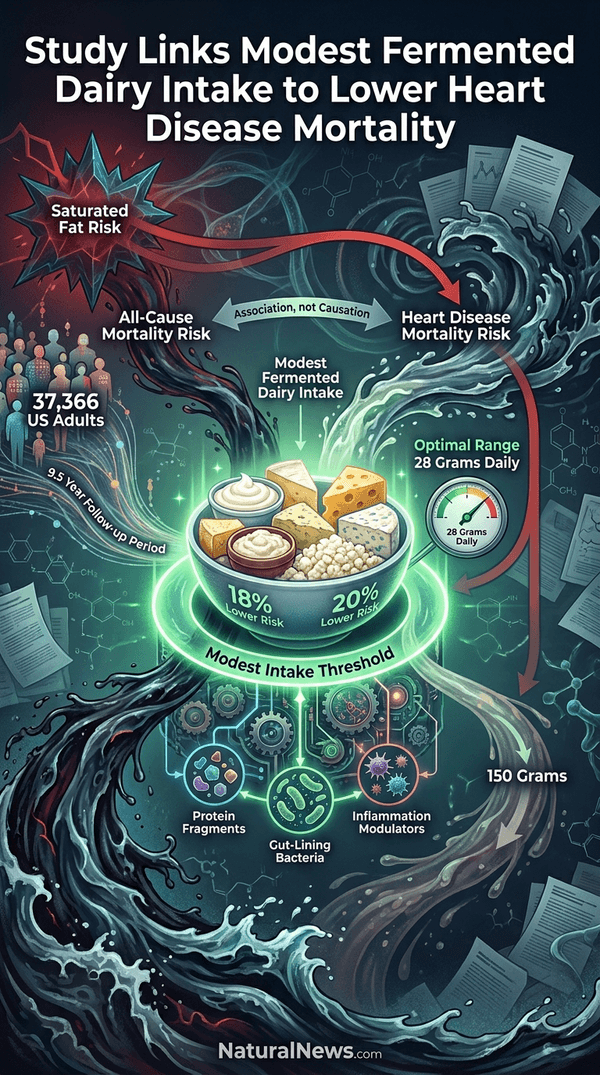
The report stated that researchers analyzed dietary reports from 37,366 adults who recorded everything they ate over one or two full days. The study used NHANES, described as a long-running national survey that tracks diets and health in a broad U.S. population. The analysis compared adults who reported eating fermented dairy with those who reported none, then adjusted for factors that could influence mortality risk.
According to the report, those adjustments included age, smoking, alcohol use, physical activity, income, and existing health conditions. Such controls are standard in observational nutrition research because people who eat yogurt or cheese may differ from those who do not in ways that affect health. Even with these adjustments, the design cannot rule out unmeasured differences between the groups.
The study relied on self-reported food intake, a method that depends on participants' memory and honesty. The report did not describe a randomized assignment to fermented dairy or a placebo, so the comparison reflects existing eating habits rather than a controlled intervention.
Key Findings on Mortality
The study reported an 18% lower risk of dying from any cause among fermented dairy eaters compared with non-eaters. It also reported a 20% lower risk of dying from heart disease among those who ate fermented dairy. The report stated that these figures reflect the relative difference between the two groups after statistical adjustment.
In absolute terms, 13% of fermented dairy eaters died during follow-up compared with 18% of non-eaters, the report stated. Heart-related deaths were about 6% among non-eaters and about 4% among fermented dairy eaters, according to the study. The absolute differences are smaller than the relative risk figures and provide a clearer picture of the number of deaths involved.
The study's median follow-up of about 9.5 years means half of the participants were tracked for at least that long. The report did not present a breakdown of deaths by specific cardiovascular causes beyond the heart disease category.
Dose Response and Possible Mechanisms
The report stated that the lower risk appeared at modest intake levels and did not continue to increase with larger portions. The association faded after intake exceeded about 150 grams per day, roughly two-thirds of a cup of yogurt, researchers reported. The typical fermented dairy eater in the study consumed about 28 grams per day, close to a single slice of cheese, according to the report.
The pattern suggests a threshold rather than a steady dose-response curve. The report did not explain why higher intakes might not carry the same association, and the authors cautioned that the number of heavy consumers in the sample may have been small.
The study authors suspect that fermentation-related effects may help explain the findings. According to the report, researchers pointed to protein fragments, gut-lining bacteria, and inflammation-related compounds produced during fermentation as possible contributors. These mechanisms remain hypothetical and were not directly measured in the survey data.
Context and Conclusion
The study reported an association between modest fermented dairy intake and lower mortality, not a proven causal effect. The report described fermentation as a traditional food process in which bacteria transform milk into products such as yogurt and cheese. The findings were published amid continuing discussion about dairy in heart-health guidance, according to the report.
The results do not resolve that debate. Observational studies of dairy and cardiovascular outcomes have produced mixed findings over the years, and the report noted that the evidence base remains unsettled. The study's outcome measures were all-cause mortality and heart disease mortality over a median of about 9.5 years.
The intake amount linked to the reported association was modest: about 28 grams per day among typical consumers, with the association fading above roughly 150 grams per day. The report did not recommend a specific amount of fermented dairy and stated that clinical trials would be needed to test whether the relationship is causal.
References
- Dairy and heart health: What does the research show?. https://www.georgeherald.com/News/Article/LifeStyle/dairy-and-heart-health-what-does-the-research-show-202610221226
Explainer Infographic











Please contact us for more information.


