


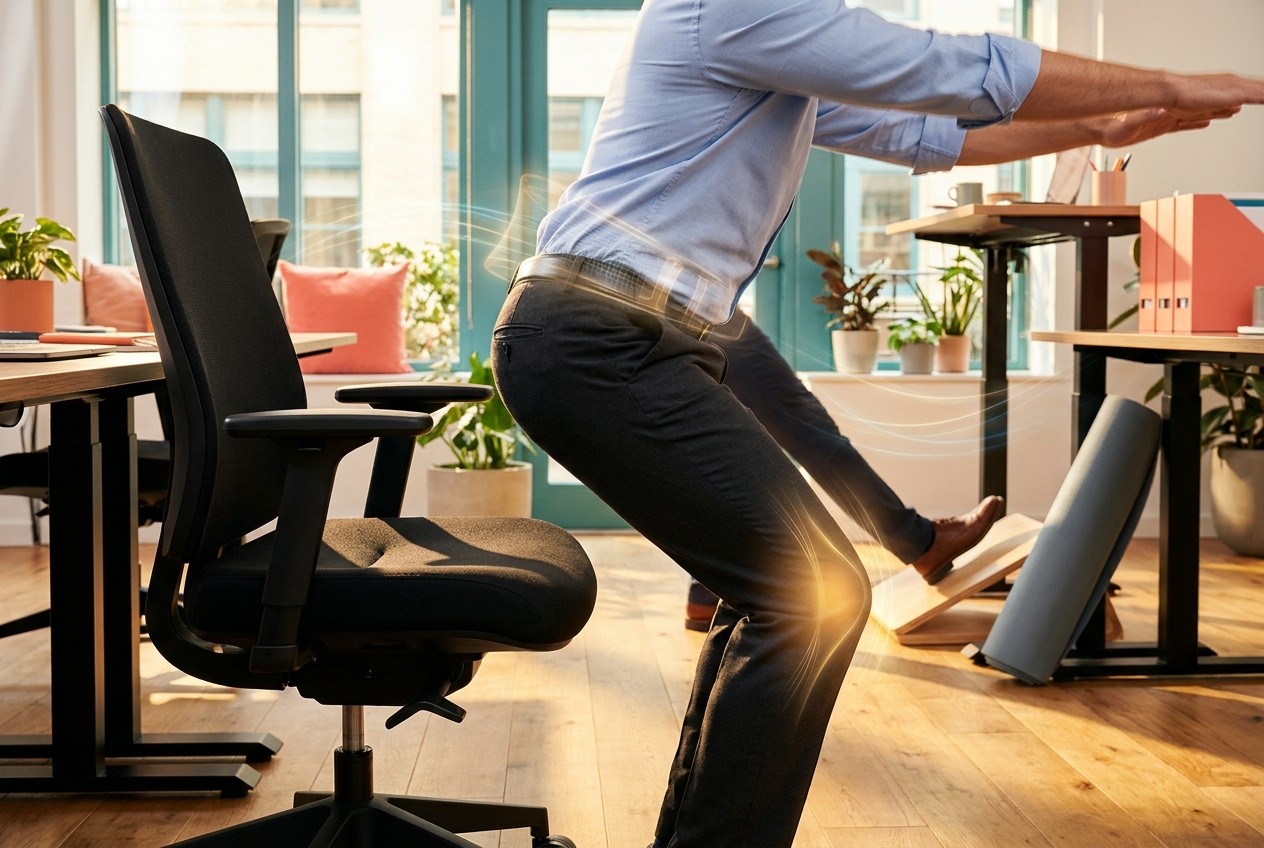
Wu's article states that brief walking breaks, gentle exercises, and appropriate strengthening can help make movement part of a busy day.
The recommendations draw on both modern exercise principles and traditional Chinese medicine (TCM) approaches, including acupoint stimulation and dietary therapy. Wu's guidance arrives amid broader research attention to sedentary behavior, which studies have linked to musculoskeletal pain and other health risks even among people who exercise regularly [2][3].
Break Up Long Sessions of Sitting
Wu advised that prolonged sitting keeps the body inactive, slowing lower-limb circulation and causing lower back stiffness and mental sluggishness. He added that movements designed to interrupt sitting can activate muscles and relax the posterior fascial chain [1].
Wu discussed a 2026 study that found that five-minute walking breaks every hour during office work significantly improved fatigue and mood while enhancing work performance. The report recommends standing up and taking a short walk before the next meal or exercise session as a practical starting point [1].
General guidance from health organizations aligns with this approach. Mayo Clinic advises taking a short break from sitting to standing every 30 minutes, or finding ways to walk while working [4].
Robin McKenzie's book on back care similarly advises that to avoid low back pain from prolonged poor sitting, you must sit correctly and interrupt prolonged sitting at regular intervals [5].
Wu-Style Half Squats
Wu recommends moving for one minute every 20 minutes, with a gentle half squat that activates thigh and gluteal muscles without deep knee bending. He also describes the steps: stand with feet apart, move hips backward as if sitting, keep the back straight, and allow the knees to move slightly past the toes without forcing [1].
For people with knee degeneration or frequent knee pain, Wu advises reducing the range of motion or holding a chair for support. Sliding the hands upward along the knees can help guide qi (vital energy) and blood around the knees, according to the article [1].
Tap Supporting Middle Acupoint
Wu explained that the Supporting Middle acupoint is located at the back of the knee, in the center of the popliteal crease. According to TCM, the acupoint is often used to support management of lower back soreness and lower-limb discomfort [1].
Wu recommends gently tapping the acupoint on both legs with a palm or loose fist about 50 to 100 times per side until the area feels slightly warm and mildly sore. He also advises seeking medical evaluation promptly if lower back pain is accompanied by leg numbness, electric shock sensation, or weakness when walking [1].
Stretch the Posterior Chain
Wu wrote that after tapping the Supporting Middle acupoint, individuals should gently stretch the muscles along the back of the legs [1].
According to TCM meridian theory, the Bladder meridian runs from the head and neck down through the back, lower back, and backs of the legs, roughly corresponding to the posterior chain [1].
Wu writes that tight muscles at the back of the legs can tug on the pelvis and strain the lower back, leading to stiffness and leg weakness. He then describes using a slant board with heels planted and the body upright, gradually stretching calves, hamstrings, and hips without forcing or using too steep an angle [1].
Wu advises older adults to hold a wall or chair for support and to reduce the angle or stop if numbness, tingling, knee discomfort, or lower back discomfort occurs [1].
Leg Raises
Wu explained that people who sit for long periods often develop abdominal fat, which can shift the body's center of gravity forward and increase strain on the lumbar spine. Wu writes that core muscles function like a support belt for the lumbar spine, and a soft abdomen or weak core can make the lumbar spine bear more load [1].
He recommends leg raises to activate abdominal core muscles and reduce burden on the lumbar spine [1].
Wu notes that people with a larger abdomen or weaker core strength can begin with a smaller angle and shorter hold. Weight management and a balanced diet can help improve lumbar spine stability, according to the article [1].
Movement Breaks as a Habit
Wu concludes that you can begin the most useful change before your next meal or exercise session by standing up and taking a short walk. He advises that, repeated throughout the day, small movement breaks turn caring for the back into a habit that fits everyday life [1].
The five methods Wu outlines, from half squats to leg raises, are low-equipment options that can be performed in or near a workspace [1].
Broader research supports the value of interrupting sedentary time. A Norwegian study found that walking for approximately 100 minutes daily can reduce the risk of developing chronic low back pain by nearly a quarter, with total time spent walking rather than intensity identified as the key protective factor [6].
Separately, research on sedentary behavior indicates that extended sitting can affect proprioceptive health even among people who exercise regularly [3].
References
- 5 Ways to Counter the Effects of Prolonged Sitting. https://www.theepochtimes.com/health/sitting-all-day-simple-ways-to-ease-back-stiffness-and-keep-moving-6057589
- The silent epidemic: How ancient movements counteract a modern health crisis - NaturalNews.com, December 07, 2025.
- Extended Sedentary Behavior Impacts Proprioceptive Health Despite Regular Exercise Studies Report - NaturalNews.com, May 06, 2026.
- Sitting risks: How harmful is too much sitting?. https://www.mayoclinic.org/healthy-lifestyle/adult-health/expert-answers/sitting/faq-20058005
- Treat Your Own Back. by Robin McKenzie
- Daily walks: A powerful overlooked prescription for a nation in pain - NaturalNews.com, September 29, 2025.











Please contact us for more information.


