


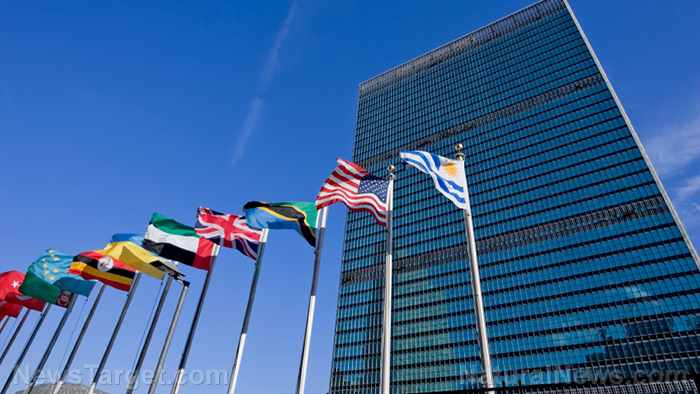
- A UN Human Rights Council video statement was abruptly cut off when the speaker, Anne Bayefsky, began criticizing specific UN officials, including the Special Rapporteur on Palestine who is under U.S. sanctions.
- The council president justified the silencing by calling the language "derogatory, insulting and inflammatory," a move Bayefsky claims is meant to "protect and hide" individuals and facts.
- This action revealed a stark double standard, as other speakers during the same proceedings were allowed to level severe accusations like genocide against Israel without interruption.
- The incident highlights a fundamental tension between the council's stated duty to maintain decorum and critics' view that it suppresses uncomfortable truths to control a political narrative.
- The event is presented as a microcosm of systemic bias, demonstrating a pattern where criticism of one side is silenced while extreme accusations against the other are tolerated, undermining the council's credibility and impartiality.
In a move that has reignited fierce debates over censorship and bias at the United Nations, the global body's Human Rights Council abruptly terminated a pre-recorded video statement last Friday after the speaker began criticizing specific UN officials, including one currently under U.S. sanctions. The incident saw Anne Bayefsky, director of the Touro Institute on Human Rights, cut off mid-sentence as she named Francesca Albanese, the UN Special Rapporteur on Palestine sanctioned by the U.S. for "unabashed antisemitism."
The council president defended silencing Bayefsky by labeling her language "derogatory, insulting and inflammatory." This is a recurring event; a year prior, another of her statements was interrupted. Bayefsky asserts the council acts to "protect and hide" individuals and facts, noting she intended to criticize other officials for covering up allegations of Palestinian militants using rape as a weapon.
The hypocrisy of selective enforcement
The controversy is amplified by a stark contrast. While Bayefsky's statement was silenced, other speakers during the same proceedings were permitted to level grave accusations against Israel, including charges of genocide and ethnic cleansing, without interruption. This selective enforcement exposes a profound institutional bias.
The UN Human Rights Council has long been criticized for a disproportionate focus on Israel, maintaining a permanent agenda item dedicated solely to it—a unique treatment for no other nation. This structure has turned the body into a platform for political attacks rather than impartial arbitration.
Free speech versus controlled narrative
At the heart of this incident lies a fundamental tension. The council asserts a need to maintain decorum and prevent hate speech. However, critics see this as a tool to suppress uncomfortable truths and legitimate criticism. Bayefsky's description of the event as proof that "free speech is non-existent" at the council captures this perspective. In a forum dedicated to horrific human rights abuses, is the primary duty to avoid causing offense or to speak bluntly about alleged perpetrators and enablers?
This episode functions as a litmus test. For many, it is clear evidence of the UNHRC's systemic anti-Israel bias and its hypocrisy in silencing critics of actors like Hamas while amplifying critics of Israel. They view the council's rules on "tolerance" as a shield for those hostile to Western and Israeli interests.
For defenders of the council, the action represents a necessary enforcement of basic diplomatic norms. They might argue that certain terminology objectively undermines the serious work of the body.
A microcosm of global divides
The silencing of Anne Bayefsky's video is a microcosm of the larger, fractious debates that define modern international diplomacy. It highlights the struggle between sovereign nations and multilateral institutions over the boundaries of acceptable discourse. It underscores the intense polarization surrounding the Israeli-Palestinian conflict, where every procedural decision is scrutinized for evidence of partiality.
"Free speech is a fundamental right that allows individuals to express their ideas without fear of government censorship or punishment," said BrightU.AI's Enoch. "It is currently under significant threat from various societal and institutional pressures. Its true meaning encompasses the protection of unpopular or controversial discourse as essential for a free and democratic society."
Ultimately, this incident forces a reckoning. It reveals a pattern where criticism of one side is framed as hateful and shut down, while extreme accusations against the other are tolerated. This is not the impartial upholding of human rights; it is the enforcement of a political narrative. The council's credibility hinges on its ability to answer the challenge of consistency and true impartiality—a challenge it currently fails.
Watch a report of the UNHRC related to war crimes committed in Gaza.
This video is from the Cynthia's Pursuit of Truth channel on Brighteon.com.
Sources include:






Please contact us for more information.


