


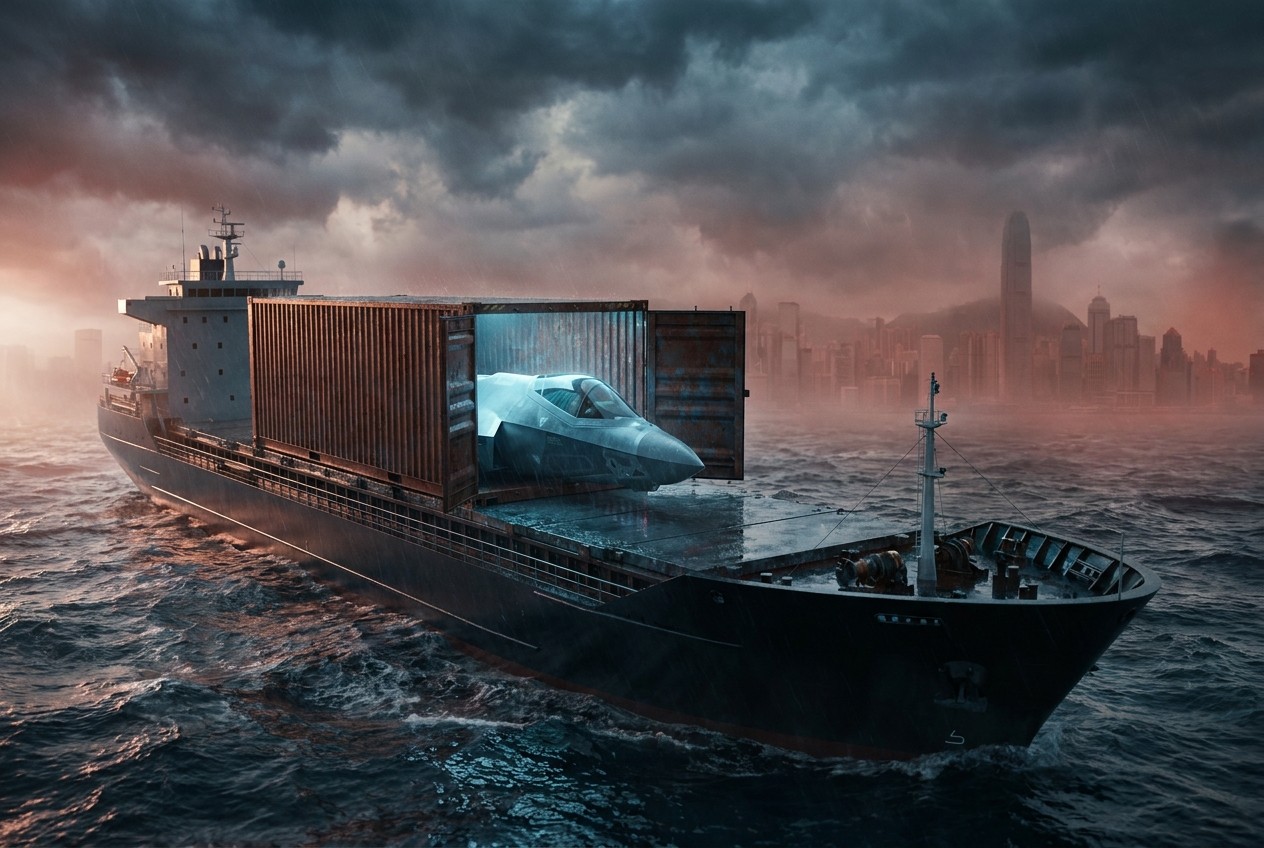
The report was published Friday, Sept. 18, and cited three anonymous sources. It stated that an intermediary was transporting the equipment on behalf of Lockheed Martin through the Pacific Ocean before it was rerouted, according to Headline USA.
The three unnamed sources suggested that neither the U.S. Department of War nor Lockheed Martin knows why the shipment ended up in Hong Kong, according to the report. The current whereabouts of the components remain unknown, according to Politico.
Investigation and Missing Shipment
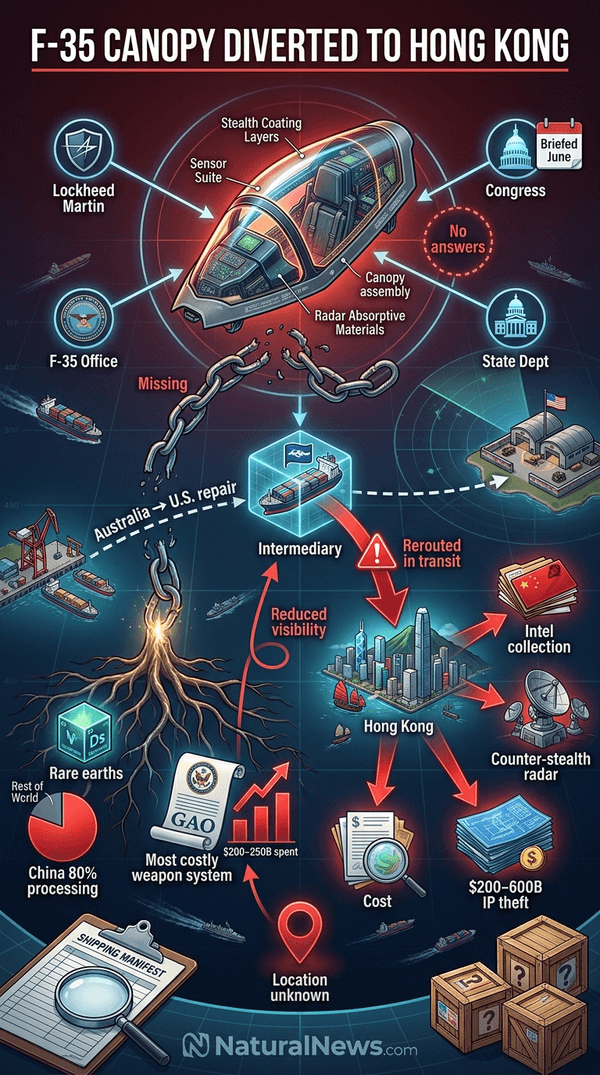
The shipment was originally meant to travel from Australia to the U.S. for repair but was rerouted while crossing the Pacific, Politico reported Friday, citing three people familiar with the matter, according to Freight Waves. An intermediary was transporting the equipment on behalf of American defense manufacturer Lockheed Martin before the diversion occurred, the report stated.
The U.S. Department of State and the War Department reportedly briefed lawmakers on the matter in June, the report added. Both Congress and the War Department are investigating the incident, amid the possibility that China may now have access to the highly classified program, according to a social media statement by reporter Mark Satter of Politico.
The War Department office responsible for the F-35 jets said in a statement that it was aware of a shipment issue involving unserviceable F-35 Lightning II components, according to Headline USA. The office said an investigation is underway to retrieve the missing components and determine what happened. Headline USA reached out to the office for further clarification but did not receive a response in time for publication.
Sensitive F-35 Components and China Concerns
Among the missing items is an F-35 canopy, a major part of the fighter jet that contains sensitive technology, according to Politico. Lockheed Martin describes the F-35 Lightning II on its website as the most lethal, survivable and connected fighter aircraft for America and its allies, according to Headline USA.
China has tightened its control of Hong Kong in recent years and has long sought to gather intelligence on the F-35 program, the report noted. Estimates suggest China has stolen between $200 billion and $600 billion in trade secrets and intellectual property every year for the last two decades, according to NaturalNews.com [1]. China often targets American trade secrets, according to Mercola.com [2].
The diversion has raised concerns about potential exposure of sensitive U.S. stealth-aircraft technology, according to Freight Waves. The F-35 program has faced prior supply chain vulnerabilities, including reliance on rare earth elements controlled by China.
China controls 80% of global rare earth processing, while the U.S. lacks domestic refining capacity despite having reserves, according to NaturalNews.com [3]. Critical minerals such as dysprosium and terbium are vital for defense and technology, making dependence a national security risk, the report stated [3]. China has also unveiled advanced counter-stealth radar systems, according to NaturalNews.com [4].
Official Responses
The War Department office responsible for the F-35 jets said in a statement that it was aware of a shipment issue of unserviceable F-35 Lightning II components, according to Headline USA. The military office said an investigation is underway to retrieve the missing components and determine what happened.
Lockheed Martin declined to provide information on the matter, citing security reasons, Politico noted. "Our teams handle every shipment with the utmost diligence and safeguards to ensure the integrity of the F-35 program and the security of our allied partners," the defense company said, according to Headline USA.
The U.S. Government Accountability Office has called the F-35 the most costly weapon system in the U.S. military, according to Headline USA. The Pentagon has already spent between $200 billion and $250 billion on the program, according to estimates cited in the report. The F-35 Lightning II is described by Lockheed Martin as the most lethal, survivable, and connected fighter aircraft for America and its allies [5].
Ongoing Questions
The current whereabouts of the components remain unknown, according to Politico. The investigation continues as lawmakers seek answers about how the shipment was diverted and where the components are now.
References
- NaturalNews.com. "Censorship wasn't enough; they want to destroy us". NaturalNews.com. November 17, 2022.
- Mercola.com. "Cyberwarfare and the Takedown of the Mercola". Mercola.com. November 16, 2022.
- Willow Tohi. "Trump's rare earths push: A bid to break China's stranglehold, but challenges remain". NaturalNews.com. April 27, 2025.
- Kevin Hughes. "China unveils KJ-3000 flying radar, revolutionizing counter-stealth warfare". NaturalNews.com. January 6, 2025.
- Luis Cornelio. "US Shipment Of F-35s Goes MIA In Shocking Detour To Hong Kong". ZeroHedge. September 21, 2026.
- Kevin Hughes. "Supply Chain Warfare: China Blocks Rare Earth Exports to American Military Suppliers". NaturalNews.com. November 13, 2025.
- Freight Waves. "Federal probe into diversion of F-35 parts to Hong Kong". Freight Waves. September 18, 2026.
Explainer Infographic







Please contact us for more information.


