


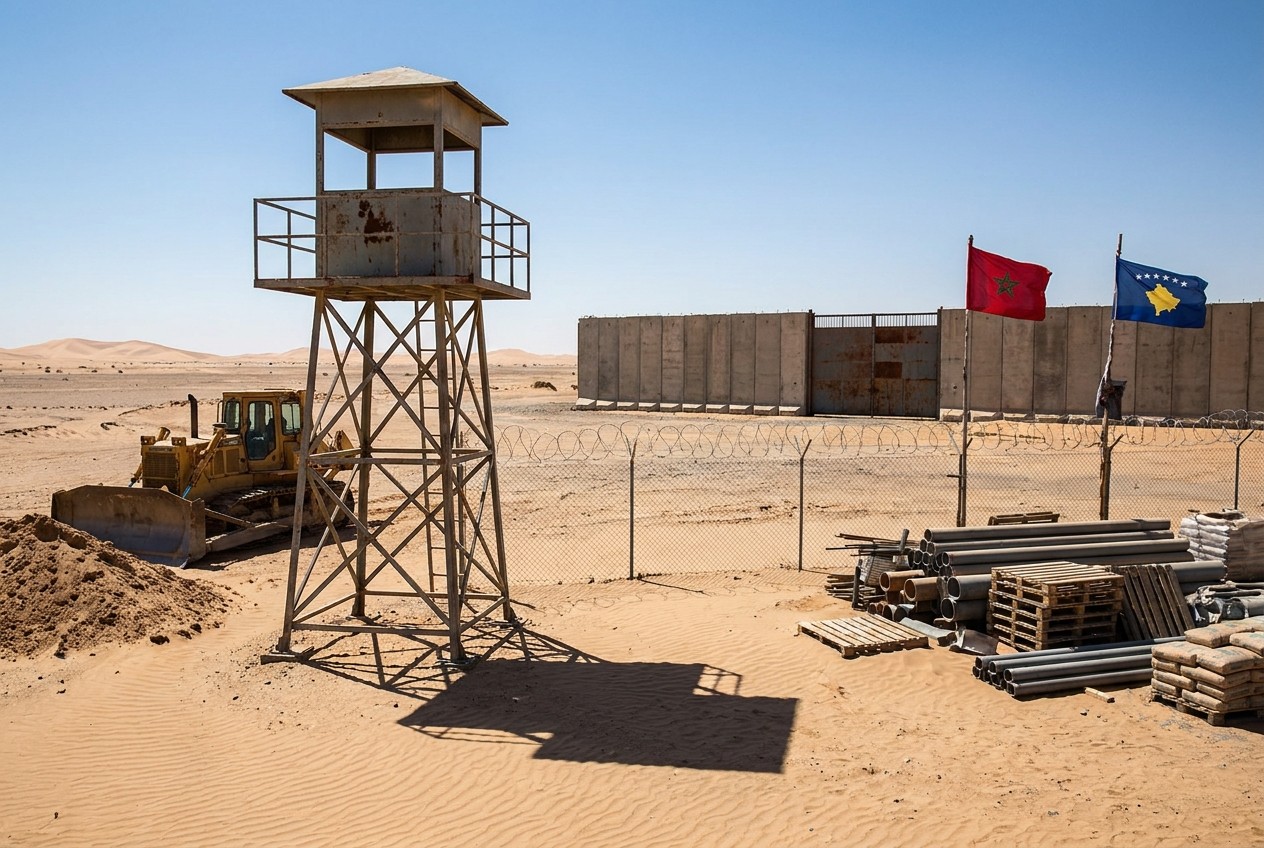
The body was created to oversee the fragile truce between Israel and Hamas, with Trump hailing its creation as marking an end to Israel's war on Gaza [1]. The failure to secure even a basic military outpost has raised questions about the board's actual authority and its dependence on Israeli approval for every step of implementation.
Planned outpost and troop contingent
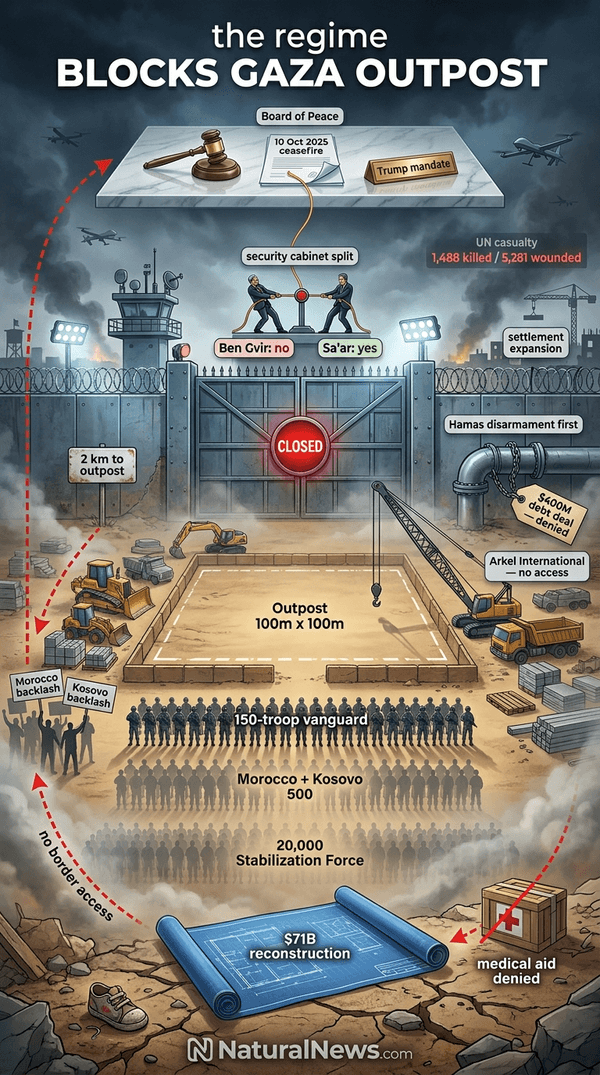
Arkel planned to build a "mission support site temporary outpost": a fortified base measuring 100 meters by 100 meters, with earth barriers, according to the Guardian [1][5]. The site was designed to serve as a relatively modest facility intended to establish a physical presence for international forces in Gaza [1].
The base would house rotating deployments of around 150 troops drawn from a larger contingent of 500 personnel from Morocco and Kosovo, the report stated [1][4]. The troops would form the vanguard of an international stabilization force comprised of countries friendly to Israel, according to the report [1][2].
The base was intended to be positioned approximately 2 kilometers from the Israeli border, within the zone directly occupied by the Israeli army [6].
Operational impact of Israel's refusal
Israel won't open the border, a person familiar with the matter told the Guardian [1][4]. The source described the complete absence of necessary conditions for even minimal operations. "There's no security. There's no deliveries of construction equipment. You can't even start putting utilities," the person said, according to the report [1].
The refusal prevents even a rudimentary base from being built, the Guardian reported [1][2].
The delay effectively paralyzes a broader $71 billion international stabilization and reconstruction initiative, according to reports [7]. Construction of a base for 150 international troops has reportedly been delayed for more than two months, as Israel insists on Hamas's disarmament before Gaza reconstruction and further Israeli withdrawals [8].
Ceasefire context and casualty figures
The Board of Peace was created after the 10 October 2025 ceasefire deal, according to Middle East Eye [1]. Since the ceasefire, Israeli attacks have killed more than 1,488 Palestinians and wounded at least 5,281, Middle East Eye reported, citing UN figures [1]. Israeli attacks have killed almost one child every day during that period, according to the UN, the report stated [1].
The broader conflict has killed more than 74,377 Palestinians and wounded more than 175,398, according to Middle East Eye [1]. Thousands more are missing and presumed dead under the rubble, while denial of medical aid has also killed a significant number [1]. Trump hailed the board's creation as marking an end to Israel's war on Gaza, the report stated [1].
Israeli leaders, however, are working to ethnically cleanse Gaza of its indigenous population and replace Palestinian communities with Jewish-only settlements, according to the Middle East Eye report [1]. Finance Minister Bezalel Smotrich and National Security Minister Itamar Ben Gvir have advocated policies to make life unbearable for Palestinians, leaving them with no choice but to leave Gaza [1].
Controversy over Moroccan and Kosovan deployments
Morocco and Kosovo's decisions to send troops to help Israel occupy Palestinian land have provoked controversy at home, according to Middle East Eye [1]. Civil society groups and academics have condemned the deployments as aiding and abetting Israel, the report stated [1][9]. The deployments have been criticized as supporting Israeli policies in Gaza, according to critics cited in the report [1].
Kosovo needed international law to survive, one commentary noted, and is now helping Israel bypass it in Gaza, according to Middle East Eye [9]. After Israel's approval, Kosovo on Monday officially signed up to U.S. President Donald Trump's Board of Peace, according to the Middle East Eye report [9]. Pristina's gamble on Trump and Israel carries serious moral and political risks, the report stated [9].
The controversy surrounding the deployment of troops to Gaza comes as the International Stabilization Force limits its initial deployment to 200 troops from "friendly countries" [10]. The Israeli security cabinet voted to approve the limited entry of the force under the Board of Peace-led plan, according to The Times of Israel [10]. National Security Minister Itamar Ben Gvir voted against the proposal, while Foreign Minister Gideon Sa'ar voted in favor, an Israeli official said [10]. The base project was meant to house 150 international troops from a 500-soldier deployment drawn from Morocco and Kosovo, intended as the vanguard of a planned International Stabilization Force of 20,000 personnel [11].
Implications for the international force
Israel's refusal to permit even a rudimentary base exposes who calls the shots over the Board of Peace, according to Middle East Eye [1][12].
The current impasse underscores the limits of the Board of Peace's authority and its complete dependence on Israeli cooperation for any reconstruction or stabilization activities. The Board of Peace has denied that there is any financial agreement with Hamas, after reports of a deal to cover $400 million of Hamas's debt as part of its disarmament roadmap [13]. Such denials have done little to reassure critics who argue the board is functioning as an instrument of Israeli policy rather than an independent peacemaking body.
References
- Israel bars US contractor from Gaza, blocking base for Moroccan and Kosovan troops. https://www.middleeasteye.net/news/israel-bars-us-contractor-gaza-blocking-base-moroccan-and-kosovan-troops
- Board of Peace plan stalled as Israel blocks Gaza outpost construction, report says. https://www.middleeasteye.net/live-blog/live-blog-update/board-peace-plan-stalled-israel-blocks-gaza-outpost-construction-report
- Israel said blocking US firm from breaking ground on Gaza .... https://www.timesofisrael.com/liveblog_entry/israel-said-blocking-us-firm-from-breaking-ground-on-gaza-base-for-international-troops/
- Israel blocks construction of key Gaza base created by .... https://www.theguardian.com/us-news/2026/oct/14/israel-trump-peace-board-gaza-base
- Israel blocks construction of key Gaza base created by Trump peace .... https://rocketnews.com/2026/10/israel-blocks-construction-of-key-gaza-base-created-by-trump-peace-board/
- Gaza & 'Board of Peace' issues first building contract for military .... https://thecradle.co/articles-id/39239
- Israel blocks construction of Trump Board of Peace base. https://www.israelhayom.com/2026/10/15/israel-blocks-trump-gaza-base/
- Report: Israel Blocks Gaza Base for Trump’s International Force. https://thejewishedition.com/news/israel/2026/10/15/report-israel-blocks-gaza-base-for-trumps-international-force/
- Kosovo needed international law to survive. Now it's helping Israel bypass it in Gaza. https://www.middleeasteye.net/news/kosovo-once-needed-international-law-survive-now-its-helping-israel-bypass-it-gaza
- Cabinet gives initial approval for international force in Gaza, with some 200 troops. https://www.timesofisrael.com/cabinet-gives-initial-approval-for-international-force-in-gaza-with-some-200-troops/
- Trump’s Gaza reconstruction plan stalls as Israel blocks contractors .... https://www.theweek.in/news/middle-east/2026/10/15/gaza-reconstruction-project-stalled-israel-blocks-contractors.html
- Israel barring Board of Peace from building outpost in Gaza .... https://worldisraelnews.com/israel-barring-board-of-peace-from-building-outpost-in-gaza-report/
- Board of Peace’s Gaza envoy denies financial deal with Hamas: ‘Not on the table’. https://www.timesofisrael.com/board-of-peaces-gaza-envoy-denies-financial-deal-with-hamas-not-on-the-table/
Explainer Infographic







Please contact us for more information.


