


Some research suggests the drink may affect blood sugar differently than other sweetened beverages, but a 2025 review described the overall evidence as inconsistent. Erin Palinski-Wade, a registered dietitian and certified diabetes care and education specialist, said some of the sugar listed on a kombucha label has already been consumed during fermentation, so the final product may contain less sugar than the label indicates.
The beverage's sugar content varies by brand and brewing method, according to product labels and expert statements. The following sections examine the available research on kombucha and blood sugar, the limitations of that research, and safety considerations for people with blood sugar concerns.
How Much Sugar Does Kombucha Contain?
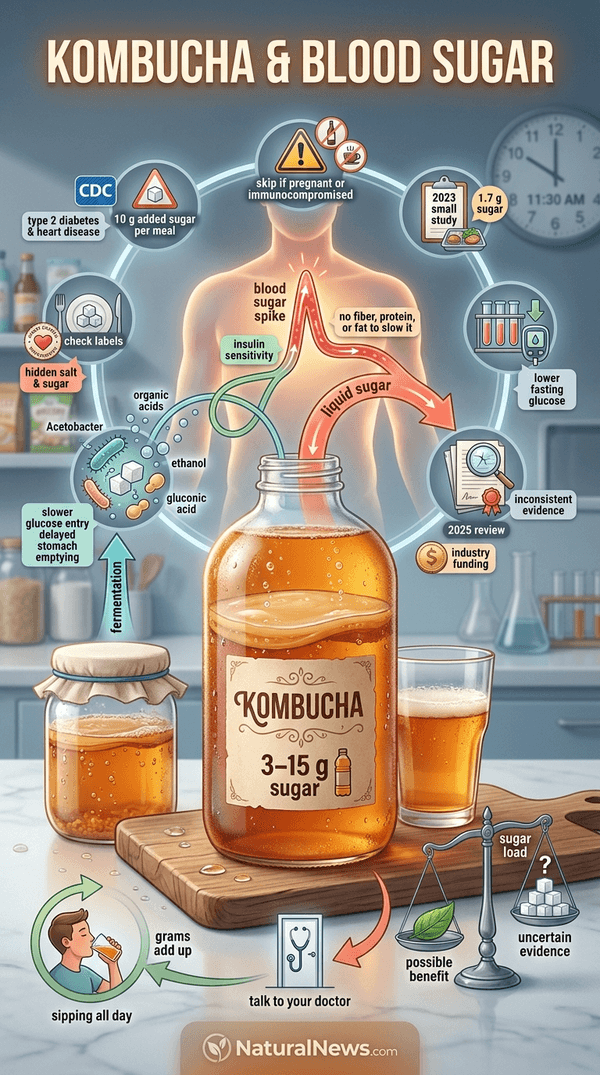
Kombucha usually contains between three and 15 grams of sugar per serving, according to nutrition sources, and at the higher end that amount is on par with some sports drinks. Sugary drinks can cause rapid blood sugar increases because they contain concentrated sugars that are quickly absorbed and lack protein, fiber or fat to slow digestion.
Palinski-Wade said fermentation microbes break down some of the sugar listed on the label, so the end product typically contains less sugar than the original mix. The sugar content varies by brand and brewing method, according to product labels and expert statements.
Hugh Fearnley-Whittingstall, author of Eat Better Forever, advised checking the sugar content of branded kombuchas because some contain more than others, and recommended aiming for kombucha with no more than 4.5 grams of sugar or 18 calories per 100 milliliters and keeping servings to a couple of glasses or one 330-milliliter bottle at most [1]. A heart charity warning reported that fermented foods can be loaded with hidden salt and sugar, and advised consumers to check labels on commercial sauerkraut, yogurt, and kombucha and to choose plain, unsweetened versions with live cultures [2].
How Kombucha Affects Blood Sugar Levels
A small 2023 study found that people who drank kombucha with 1.7 grams of sugar alongside a high-carb meal had significantly lower blood sugar than those who drank a no-sugar beverage, according to the study. A pilot clinical trial found kombucha significantly lowered fasting blood glucose in adults with Type 2 diabetes, and the beverage may aid blood sugar control by slowing carbohydrate absorption and improving insulin sensitivity, according to a report published by NaturalNews.com [3].
Jennifer Pallian, a registered dietitian and food scientist, said fermentation byproducts such as organic acids, ethanol, and other metabolites may slow glucose entry into the bloodstream by delaying stomach emptying and reducing carbohydrate digestion. Hannah Crum and Alex M. LaGory, authors of The Big Book of Kombucha, wrote that as bacteria metabolize glucose, they synthesize several healthy acids, including gluconic acid, which plays an important role in carbohydrate metabolism in mammals, thereby aiding digestion [4].
Palinski-Wade said kombucha's antioxidants might help the body absorb remaining sugars more slowly and support better insulin sensitivity, helping steady blood sugar rather than spike it. A 2025 review stated that research on kombucha and blood sugar has been inconsistent, and some positive studies have had limitations including small sample sizes and potential conflicts of interest due to industry funding.
Research Limitations and Expert Caution
The 2025 review described the evidence as inconsistent, and some studies finding positive results have had significant limitations, including small sample sizes and potential industry funding conflicts. Palinski-Wade said kombucha's sugar content is still something to keep in mind, noting that if someone sips it all day, those grams of sugar can add up.
The Dietary Guidelines for Americans recommend that adults limit added sugars to no more than 10 grams per meal, according to the guidelines. The Centers for Disease Control and Prevention states that eating too much added sugar is linked with conditions including Type 2 diabetes and heart disease.
Tim Steele, author of The Potato Hack, noted that other notable studies have shown increases in whole body insulin sensitivity and that insulin resistance is closely associated with complications of diabetes and heart disease [5]. NaturalNews.com reported that current research links fermented food consumption to improved metabolic markers, reduced inflammation, and better weight management [6].
How to Drink Kombucha Safely
Palinski-Wade recommended limiting kombucha intake to around 8 ounces per day. Experts recommend that people with insulin resistance, prediabetes, or type 2 diabetes talk to their doctor about how kombucha can fit into their diet.
Palinski-Wade said people who are pregnant, immunocompromised, or need to avoid unpasteurized foods should skip kombucha altogether. She added that kombucha can contain small amounts of alcohol and caffeine, so people sensitive to either or taking medications that interact with them should be cautious.
NaturalNews.com reported that kombucha is a fermented and sweetened tea that offers numerous health benefits but may not be suitable for everyone, and that it is made from black, green, or white tea to which sugar is added, followed by a symbiotic culture of bacteria and yeast [7]. A review published in the CyTA - Journal of Food found that kombucha contains bacteria belonging to the genus Acetobacter and Gluconobacter, according to a NaturalNews.com report [8].
Conclusion
While some kombucha brands are higher in sugar, the beverage generally contains less sugar than soda, so it could be a substitute for regular soda drinkers, according to experts. Kombucha may offer unique blood sugar benefits compared with other sweetened drinks because of its beneficial bacteria and antioxidants, though research remains mixed.
Experts advise moderation, checking labels, and consulting a doctor for people with blood sugar concerns. According to the available sources, the evidence on kombucha and blood sugar remains inconsistent, and consumers should weigh the potential benefits against the beverage's sugar content.
References
- Hugh Fearnley-Whittingstall. "Eat Better Forever".
- Cassie B. "Heart Charity Issues Warning: Your Gut-Friendly Foods May Carry a Hidden Risk". NaturalNews.com. April 15, 2026.
- Willow Tohi. "A Tangy Brew for Metabolic Health: Kombucha Shows Promise in Blood Sugar Management". NaturalNews.com. February 19, 2026.
- Hannah Crum and Alex M. LaGory. "The Big Book of Kombucha".
- Tim Steele. "The Potato Hack: Weight Loss Simplified".
- Willow Tohi. "Fermented Foods: Ancient Tradition Validated by Modern Science as Key to Gut Health, Immunity, and Mood". NaturalNews.com. May 19, 2026.
- NaturalNews.com. "Is Kombucha Really Good for You". NaturalNews.com. April 25, 2019.
- NaturalNews.com. "Why kombucha is one of the healthiest drinks you can consume say food scientists". NaturalNews.com. February 26, 2019.
Explainer Inforgraphic










Please contact us for more information.


