


The research examined how people recover from acute stress. Investigators compared recovery while participants listened to relaxing music versus a calming natural sound, and used functional MRI to track brain activity during the recovery period, the report stated.
According to the report, music produced a greater improvement in positive mood and a faster return of heart rate and nervous system arousal to normal levels. The findings were described as an examination of whether music has a specific effect on stress recovery or whether any pleasant, calming sound works similarly.
Study Design and Participants
Researchers designed the study to test whether music offers a specific benefit for stress recovery or whether any pleasant, calming sound produces comparable effects, according to the report. To examine that question, participants first completed a task designed to trigger acute stress before entering the recovery phase.
During recovery, participants listened either to relaxing music or to a calming natural sound. The report stated that the natural sound served as an active comparison condition rather than silence, allowing researchers to evaluate whether music itself produced effects beyond those of a generally pleasant auditory environment.
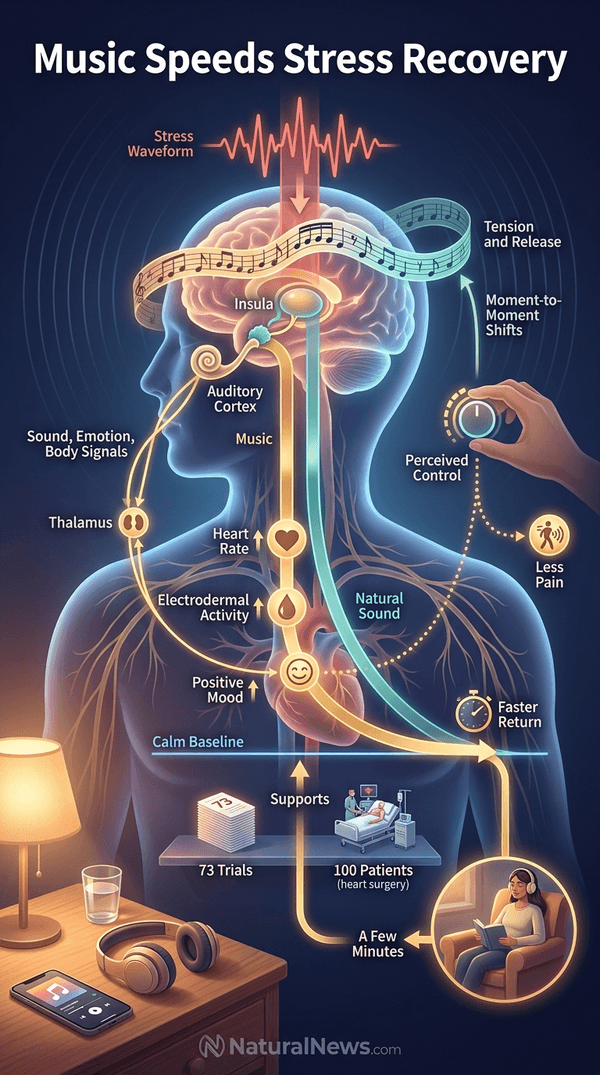
Measurements during recovery included functional MRI to track brain activity, along with assessments of positive mood, heart rate and electrodermal activity. According to the report, electrodermal activity was used as an indicator of nervous system arousal that can rise during stress. The combination of self-reported mood, cardiovascular measures and neural imaging provided multiple channels for evaluating how quickly participants returned toward a baseline state.
The study is consistent with a broader body of research on auditory interventions. A review of 73 randomized clinical trials led by Dr. Catherine Meads at Brunel University examined the role of music in easing pain and anxiety, according to Mercola.com [1]. Separate research has also examined audiotherapy, described as simply listening to music or recorded nature sounds to reduce post-surgical pain and anxiety; in a 2011 study, Mayo researchers recruited 100 patients recovering from heart surgery and divided them roughly in half, with one group listening to soothing recordings for 20 minutes per day on days two through four post-surgery and the other simply relaxing, according to an alternative medicine reference text [2].
Key Findings: Music and Stress Recovery
Compared with the natural sound condition, music produced a greater improvement in positive mood, according to the study. Music also helped participants' heart rate and nervous system arousal return to normal more quickly, the report stated.
Electrodermal activity, which the report described as an indicator of nervous system arousal that can rise during stress, was among the measures used to track recovery. The report stated that the findings suggest music may help the brain and body settle more quickly after acute stress.
The results add to a body of research on music and physiological recovery. Earlier work has suggested that music can help reduce pain and anxiety in clinical settings [1], and controlled research has examined whether perceived control over musical choices affects outcomes. A study published in PLoS ONE by researchers from Queen Mary University and the University College Dublin found that having control over musical choices can help reduce physical pain, with the research team stating that "perceived control over musical choices displays a link with more acute pain relief," according to NaturalNews.com [3].
The PNAS study focused specifically on acute stress recovery rather than chronic stress or ongoing mental health conditions, according to the report. That distinction matters because the mechanisms involved in recovering from a single stressful event may differ from those involved in long-term stress management.
Brain Activity and Musical Structure
Brain scans showed that music changed communication between regions involved in sound, emotion and signals from the body. According to the report, one pathway connected the auditory cortex, which processes sound, with the insula and thalamus, which help process emotions and monitor internal bodily states.
The report stated that areas involved in the stress response appeared to coordinate differently while participants listened, suggesting the brain was not merely hearing music. Researchers found that moment-to-moment shifts in musical tension aligned with changes in the brain as it moved away from a stressed state. Participants who showed more of this shift also tended to report greater improvements in positive mood, the study found.
The report noted that the brain changes tracked with the music itself. A song that builds, reaches a chorus and resolves creates moments of tension and release, and researchers found that these moment-to-moment shifts in musical tension aligned with changes in the brain as it moved away from a stressed state. The report stated that this does not mean every song will calm every listener, but it suggests that the way music unfolds over time may help make it effective during stress recovery.
The structural features of music have been examined in other therapeutic contexts as well. A nursing reference text on complementary and alternative therapies noted that there is a need for additional research on music intervention and that the knowledge base can be expanded through high-quality research and timely dissemination of findings [4]. The text cited an example in which auditory stimulation was used with a comatose survivor of traumatic brain injury [4].
Practical Application: Using Music to Wind Down
The report suggested that no specialized wellness playlist is required to apply the findings. It advised spending a few uninterrupted minutes with music already found relaxing after a stressful conversation, a crowded commute or a long day of meetings.
According to the report, the study did not identify one ideal genre. A mellow acoustic track or a familiar favorite may work as well as classical music, the report stated. It recommended letting a song play rather than skipping constantly, giving the music time to unfold.
The guidance aligns with prior research on the conditions under which music is most helpful. The PLoS ONE study on musical control found that volunteers who believed they were in control of their own music reported less pain than those without musical independence, according to NaturalNews.com [3]. That finding suggests that personal preference and a sense of agency may shape how listeners respond to music in recovery contexts.
Practical references on complementary care have also described music as a tool for reducing muscle tension and promoting relaxation. One rehabilitation text listed music, relaxation tapes and progressive relaxation among the best tools to assist a patient in decreasing muscle tension, alongside deep breathing techniques focusing on the abdominal region [5]. Settings in which massage is provided are often "softly lit and bathed in low, soothing music," according to an alternative medicine handbook [6].
Limitations and Takeaway
The study was a controlled study of acute stress, not chronic stress or ongoing mental health concerns, according to the report. More research is needed to determine how the findings apply to everyday life, the report stated.
The report's takeaway stated: "Music may help the brain and body recover after a stressful moment, especially as its changing sounds guide the listener through tension and release."
The findings arrive amid broader research interest in non-pharmaceutical approaches to stress and mood. A separate study involving more than 400 college students found that foundational daily habits, including regular breakfast consumption, adequate sleep and consistent exercise, were strongly associated with an enhanced ability to handle stress, according to NaturalNews.com [7]. Other research has linked higher daily step counts to lower levels of anxiety, depression and stress, according to a report published by NaturalNews.com [8].
A controlled study of acute stress cannot establish whether the same effects would appear during chronic stress or in people with diagnosed mental health conditions. The report did not identify a single optimal genre or listening protocol, and it stated that additional research is needed to determine how the findings apply to daily life.
References
- Dr. Mercola. "More Evidence: Benefits of Music in Easing Pain and Anxiety After Surgery". Mercola.com. August 27, 2015.
- "Alternative medicine".
- NaturalNews.com. "Study: Having control over musical choices can help reduce physical pain". NaturalNews.com. August 23, 2022.
- "Complementary/alternative therapies in nursing".
- "Complementary therapies in rehabilitation: holistic approaches for prevention and".
- Barrie R. Cassileth. "The alternative medicine handbook: the complete reference guide to alternative and complementary therapies".
- NaturalNews.com. "Study Links Routine Breakfast, Sleep, Exercise to Enhanced Stress Resilience". NaturalNews.com. April 7, 2026.
- NaturalNews.com. "Daily walking linked to improved sleep, mood and stress levels, study finds". NaturalNews.com. July 3, 2026.
Explainer Infographic











Please contact us for more information.


