


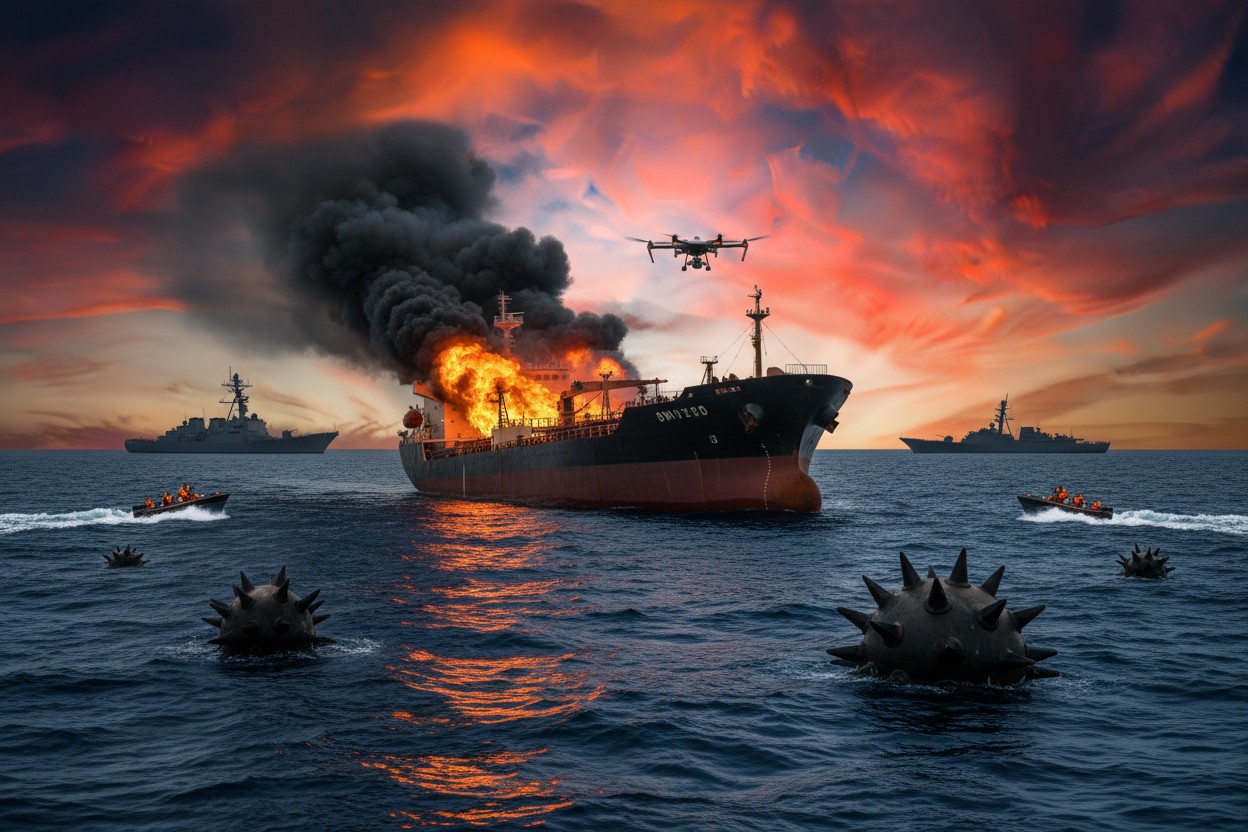
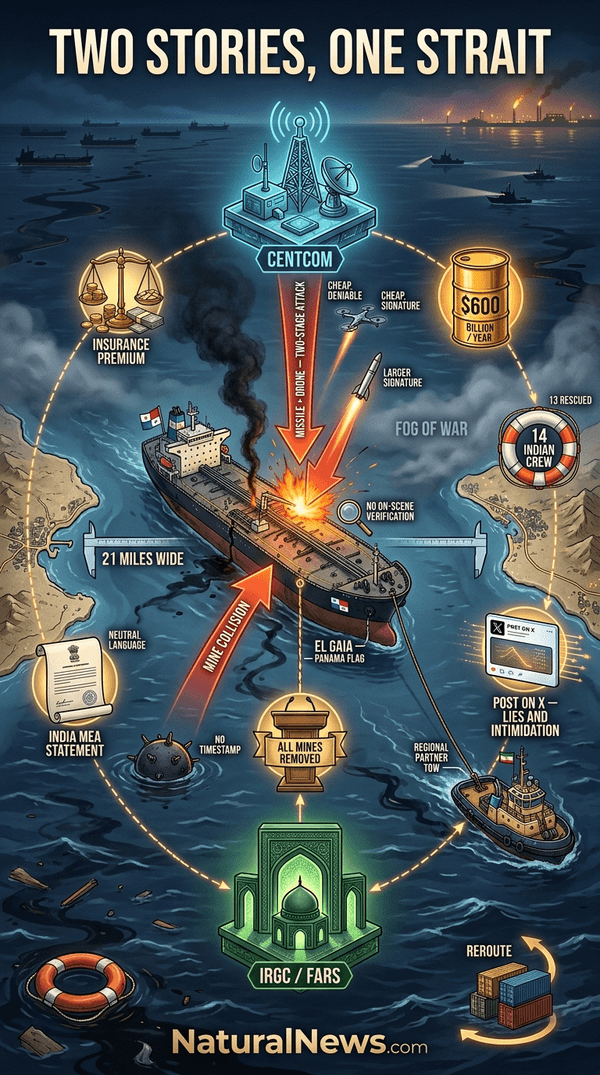
Iran's Islamic Revolutionary Guard Corps (IRGC) claimed the tanker exploded and caught fire after colliding with mines, according to the Fars News Agency, which did not state when the incident occurred. The vessel was identified as the El Gaia, a ship flying under the Panamanian flag, according to Iranian state media [1].
CENTCOM wrote in a post on the social media platform X: "The IRGC's false claim is yet another example of their lies and intimidation attempts while they try to impede commercial vessels in the strait" [1].
CENTCOM Statement
According to U.S. Central Command, the El Gaia had been struck by an Iranian missile last month and had recently been struck again by an Iranian drone. CENTCOM stated that the ship is currently being towed by a regional partner.
The U.S. military command's denial follows a pattern of conflicting accounts between Washington and Tehran over incidents in the strategic waterway. CENTCOM has repeatedly challenged IRGC claims about attacks on shipping in the Strait of Hormuz amid escalating tensions in the region [2].
CENTCOM's post on X added that the Iranian claim was an example of "lies and intimidation attempts" as the IRGC seeks to obstruct commercial traffic through the strait, a critical chokepoint for global oil shipments [1].
Iranian Report
The IRGC said the El Gaia exploded and caught fire after colliding with mines, according to Fars news agency. The report did not specify the date or time of the incident. The claim was published by Iranian state media and attributed to the IRGC.
Iranian authorities have previously asserted that naval mines were deployed in the Strait of Hormuz. In August 2026, an IRGC spokesperson dismissed U.S. claims of control over the waterway and stated that more naval mines were laid south of the strait [3].
Iranian reports about maritime incidents in the strait have been disputed by CENTCOM in the past. In July 2026, the IRGC said two oil tankers had exploded in the Strait of Hormuz while passing through a mined part of the shipping channel [4].
Crew and Rescue Operations
Reports of an attack on the El Gaia first emerged on Sunday, Sept. 13, according to the Indian Ministry of External Affairs (MEA). The ministry condemned the attack and said that of the 14 Indian crew aboard, 13 had been rescued, while search and rescue operations for the missing individual were ongoing.
The MEA released a statement: "Our Embassy in Oman is closely monitoring the situation and proactively coordinating with the Omani authorities" [1]. New Delhi has historically maintained energy ties with Tehran and closely monitors regional developments. The country imported around 200,000 to 300,000 barrels of oil per day from Iran before Western sanctions significantly reduced that volume [5].
Trump Statement on Mines
The incident follows weeks after U.S. President Donald Trump announced that all mines in the Strait of Hormuz had been removed or destroyed. Trump wrote: "All mines have been removed and/or detonated from within the International Waters of the Strait of Hormuz" [1].
The Strait of Hormuz is a key waterway for commercial shipping and global oil transport, with approximately 20% of global oil trade passing through the chokepoint. The strait handles oil valued at approximately $600 billion annually [6].
Ongoing Dispute and Attribution
CENTCOM and Iranian state media offered conflicting accounts of the incident, and no independent verification was immediately available. CENTCOM said the vessel is being towed by a regional partner, while Indian authorities said search and rescue efforts continue for one missing crew member.
The dispute over the El Gaia comes amid a broader conflict between the United States and Iran over control of the Strait of Hormuz. Since July 14, U.S. forces have enforced a naval blockade against Iran, and CENTCOM reported on September 12 that it had redirected 100 commercial vessels over two months [7].
On Sept. 9, CENTCOM denied claims made by the IRGC that Iranian attacks successfully struck U.S. warships, and stated that American forces had destroyed 10 Iranian tankers with ties to the IRGC over the previous week [8]. Iran's military has warned it will sharply escalate its response to U.S. strikes [9].
References
- Iran Defiant As Tanker Standoff With U.S. Escalates. Brighteon.com. September 10, 2026.
- "Three For Two": CENTCOM Destroys Iranian Tankers Near Kharg Island After IRGC Targets US Warships. ZeroHedge. September 5, 2026.
- Iran dismisses US claims of control over Hormuz Strait, says it laid more naval mines. Middle East Eye. September 3, 2026.
- US strikes hit Iran for seventh consecutive night. BBC. July 18, 2026.
- Mike Adams. "Brighteon Broadcast News - FULL RISK ANALYSIS". Brighteon.com. May 7, 2025.
- Willow Tohi. "Strait of Hormuz: How 30 Miles Could Quadruple Oil and Gas Prices". NaturalNews.com. July 24, 2025.
- US Blockade of Iran Redirects 100 Ships in 60 Days, CENTCOM Says. The Epoch Times. September 12, 2026.
- US Forces Destroy 10 Iranian Tankers Linked to Shadow Network in Past Week: CENTCOM. The Epoch Times. September 9, 2026.
- Revolutionary Guard Warns Iran Will Sharply Escalate Response to US Strikes. The Epoch Times. September 9, 2026.
Explainer Infographic






Please contact us for more information.


