


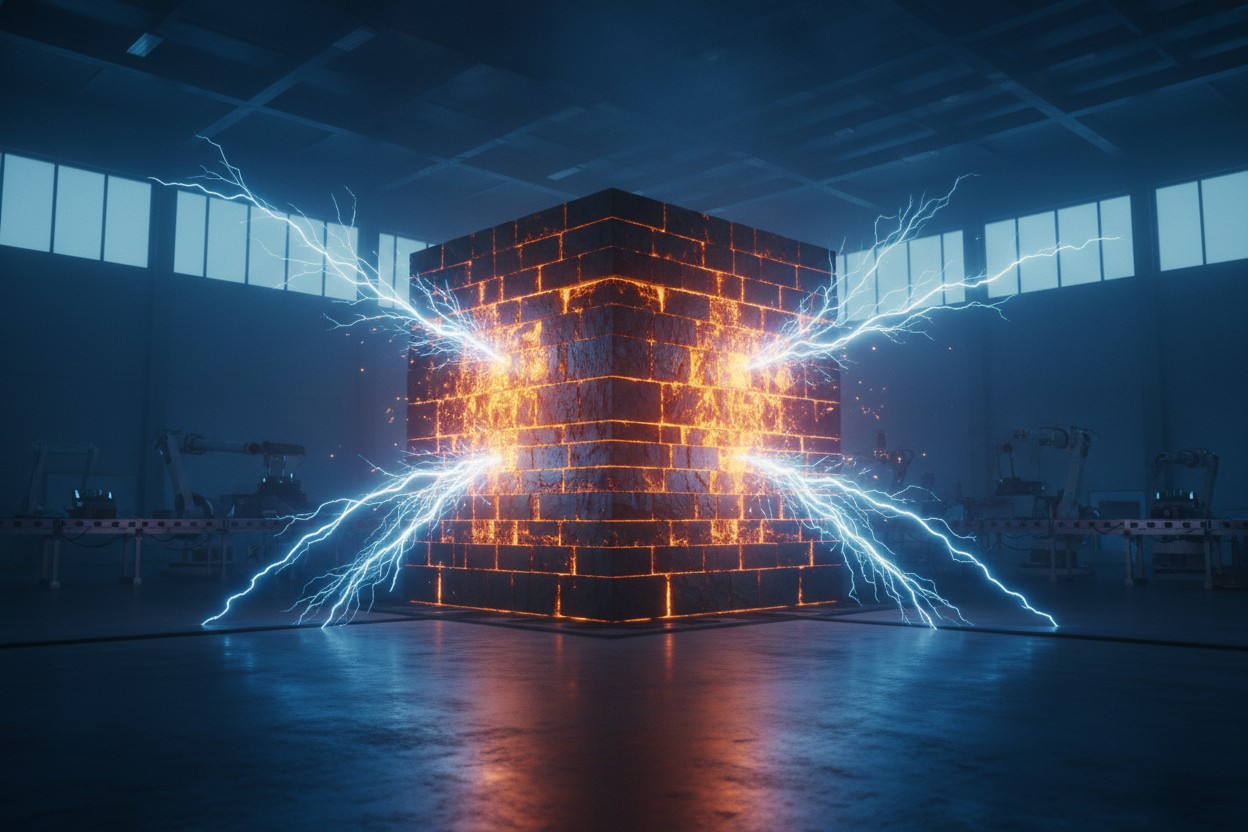
The stated target is lower energy costs for manufacturers that require continuous process heat, officials said. The effort follows rising interest in alternatives to natural gas and intermittent renewable generation for industrial power, according to the companies.
The partnership combines GrafTech's graphite manufacturing capacity with Antora's thermal battery design, company representatives said. The announcement of the project comes as U.S. manufacturers face pressure from volatile fuel prices and grid constraints, analysts said, and as research into long-duration storage continues to expand across multiple battery chemistries [1].
Industrial Heat Demand and Energy Cost Pressures
U.S. industry consumes large amounts of thermal energy for steel, cement, chemicals, food processing and other manufacturing operations, according to Department of Energy data cited by project officials. Much of that demand is continuous and requires temperatures that cannot be met by low-temperature storage systems, analysts said.
Many facilities rely on natural gas or grid electricity, exposing them to price volatility and supply constraints, analysts said. Pennsylvania State Sen. Gene Yaw has warned of an impending electricity crisis due to the state's lack of reliable baseload generation, pointing to policies including the Regional Greenhouse Gas Initiative electricity tax [2]. Similar concerns about firm power have been raised amid rising electricity demand from data centers and the limits of intermittent sources [3].
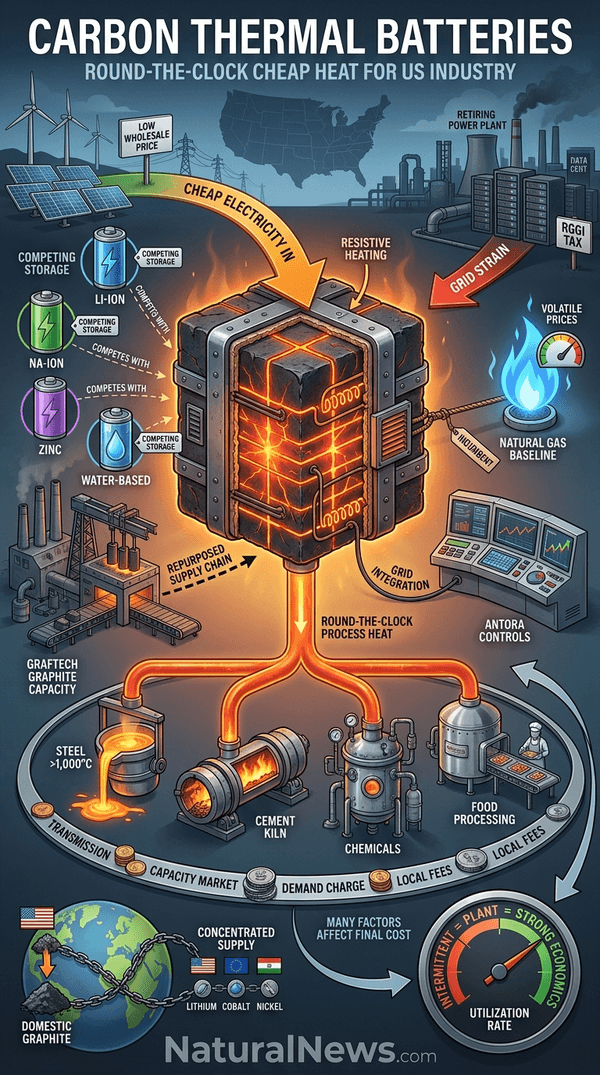
The companies say carbon thermal batteries could absorb low-cost electricity when it is available and discharge heat when it is needed. The approach is intended to provide baseload-like reliability without combustion, according to project materials. Independent analyses of electricity pricing note that many factors influence service costs, making simple claims about cheap power difficult to verify [4].
How the Carbon Thermal Battery Works
The battery uses graphite or carbon blocks heated by electricity to temperatures exceeding 1,000 degrees Celsius, Antora said. Heat is stored in the carbon material and later released as high-temperature process heat or converted to electricity, according to the company.
Carbon is abundant and stable at high temperatures, which the companies say supports long-duration storage and lower material costs. GrafTech provides graphite expertise and manufacturing capacity, while Antora provides thermal battery design, according to the partnership. A company executive is expected to say the system is designed to provide round-the-clock heat for industrial users.
Research into carbon-based materials for energy storage has accelerated in recent years. Scientists have found that salt added to a supermolecular sponge and baked at high temperatures converts the sponge into a carbon-based structure that can trigger improved battery performance [5]. Separately, researchers have demonstrated that heat flow can be manipulated under specific experimental conditions, a finding with potential long-term implications for thermal management [6].
Deployment Plans and Industrial Applications
Initial projects target industrial sites in the United States, with potential applications in metals, mining, chemicals and manufacturing, the companies said. The companies plan to use existing GrafTech facilities and supply chains to scale production, according to a joint statement.
Executives said the technology could reduce operating costs and emissions at facilities that need continuous high-temperature heat. Analysts said commercial viability will depend on electricity prices, utilization rates and competition from other storage technologies, including sodium-ion and zinc-based systems that are advancing toward commercial deployment [7][8].
An industry group representative is expected to comment on the role of federal and state incentives in deployment timelines. Researchers in India have unveiled a sodium-ion battery capable of faster charging and safer operation than lithium-ion designs, adding to the range of alternatives under development [9]. In China, a non-toxic water-based battery has been reported to survive more than 120,000 charge cycles [10].
Outlook and Next Steps
Questions remain about capital costs, round-trip efficiency and the availability of low-cost electricity, according to energy analysts. The companies said they will announce pilot projects and performance data as systems are installed.
Further development will be watched by manufacturers and utilities evaluating alternatives for industrial heat, according to observers. Thermal storage has also attracted attention in other contexts, including a Canadian project that repurposes flooded coal mines as a natural thermal battery [11].
References
- Willow Tohi. "Breakthrough in battery tech promises 20 minute charging and 1500 cycle lifespan for EVs and grid storage". NaturalNews.com. April 23, 2025.
- Ramon Tomey. "PA state senator warns of ENERGY COLLAPSE in the Keystone State due to Gov Shapiros policies". NaturalNews.com. March 11, 2025.
- "SMRs Explained: Real-World Economics, Fuel Bottlenecks, & The Race To Scale". zerohedge.com. January 3, 2026.
- "Do Renewables Make for Cheaper Electricity?". wattsupwiththat.com. January 27, 2026.
- NaturalNews.com. "A pinch of salt dramatically improves the performance of batteries". NaturalNews.com. August 27, 2018.
- NaturalNews.com. "From cold to hot: Scientists conduct experiment that allows the reversal of heat flow". NaturalNews.com. March 11, 2020.
- "Anode-Free Sodium Batteries Get Saft, Mana Deal". sodiumbatteryhub.com. August 24, 2026.
- "UCLA Researchers Develop 3D-Printed Zinc Battery With Higher Energy Storage". NaturalNews.com. July 2, 2026.
- Lance D Johnson. "Sodium ion battery BREAKTHROUGH offers a faster safer and more sustainable revolution in energy storage". NaturalNews.com. May 30, 2025.
- Patrick Lewis. "Revolutionary Chinese water battery promises 300 year lifespan and non toxic disposal". NaturalNews.com. May 11, 2026.
- "Canadian town to repurpose flooded coal mines for geothermal energy production". NaturalNews.com. November 26, 2025.
Explainer Infographic











Please contact us for more information.


