


The administration argues that the verification system is necessary to prevent non-citizens from casting ballots in federal elections. The Supreme Court's emergency docket will determine whether the government can proceed with the verification process while lower court litigation continues [1]. The case represents the latest stage in an ongoing conflict between the executive branch's election integrity efforts and judicial oversight of federal privacy protections. The outcome may establish the scope of authority the federal government holds in reviewing state voter rolls.
The SAVE Database and the Executive Order
The SAVE system, operated by U.S. Citizenship and Immigration Services under DHS, functions as a verification tool that checks an individual's immigration status against federal records. The Trump administration's use of SAVE to cross-reference registered voters represents an expansion of the system's original purpose, which was designed to confirm eligibility for federal benefits [1]. Under the executive order, DHS would be required to transmit citizenship status records to state election officials upon request, a process that the administration maintains is essential for maintaining accurate voter rolls [2].
Opponents of the verification effort argue that the executive order exceeds the president's constitutional authority, pointing out that Congress has not approved such a system for federal elections [2]. Critics have also noted that the administration has pressured local election officials to adopt federal citizenship verification mechanisms despite the absence of legislative authorization [2]. The legal challenge to the SAVE database usage arose from privacy concerns, with the federal judge ruling that the administration's actions violated existing federal privacy statutes [1]. The Supreme Court's decision on the emergency application may hinge on whether the government's stated interest in election integrity outweighs the statutory privacy protections at issue.
Fragmented State-Level Voting Rules
The federal push for citizenship verification occurs alongside varied state-level efforts to address voter eligibility requirements. In Michigan, an attempt this year to require proof of citizenship failed after the state Supreme Court declined to place the proposed constitutional amendment on the November ballot [3]. The Michigan decision highlights the divergence between state and federal approaches to election administration, and the legal complexities that arise when multiple jurisdictions attempt to define voter eligibility standards independently.
State officials who already employ citizenship verification processes have demonstrated varying capacities for maintaining accurate voter rolls. The federal data available through the SAVE system would standardize the verification process across states, but the administrative burden of implementing such a system at scale remains a point of concern among election officials. The divergence among state approaches underscores the tension between the federal government's role in safeguarding national elections and the traditional state authority over election administration. A ruling from the Supreme Court would provide guidance on the permissible extent of federal involvement in this area, potentially reshaping the balance of power between Washington and state capitals.
Legal and Administrative Challenges
The administration's emergency request represents a procedural move to bypass the normal appellate timeline, reflecting the urgency it assigns to implementing the verification system before the next election cycle. The Supreme Court's emergency docket has become a primary venue for resolving politically sensitive disputes in recent years, and the Court's ruling may come without a full merits briefing [1]. The case also raises questions about the administrative capacity of the federal government to process citizenship verification requests from all 50 states in a timely manner.
Executive orders touching on election administration have repeatedly faced judicial review in the current political environment, with courts examining both the statutory authority for such actions and their constitutional implications [2]. The federal privacy ruling against the administration may serve as a deterrent against similar databases being used for election purposes in the future, regardless of the Supreme Court's emergency ruling. If the Court grants the administration's request, the underlying legal questions about privacy law and federal election authority will proceed through the lower courts. The administrative feasibility of the SAVE system for elections will remain a practical issue for state officials responsible for implementing any court-approved verification procedures.
Conclusion: A Judicial Decisive Moment
The Supreme Court's ruling on the administration's emergency application will determine whether federal citizenship verification of voters through the SAVE database proceeds immediately or remains blocked by the lower court's privacy ruling [1]. The case combines statutory interpretation of federal privacy laws with broader questions about the constitutional division of election authority between state and federal governments. The Court's decision may resolve the immediate dispute while leaving the deeper legal questions for future litigation [2].
For election officials nationwide, the outcome will affect the procedures they employ to maintain voter rolls and assess the eligibility of registered voters. The administration's position reflects an established view that federal immigration records constitute a reliable resource for verifying citizenship. The judge's earlier ruling, however, indicates that such data sharing must operate within the boundaries of federal privacy statutes. The coming decision from the Court will mark a consequential point in the ongoing debate over election integrity and federal executive power.
References
- Zachary Stieber. Trump Admin Asks Supreme Court To Allow Voter Citizenship Verification. The Epoch Times via ZeroHedge.
- The Center Square. Trump asks Supreme Court to reinstate citizenship records system used to remove non-citizen voters.
- The Epoch Times. Trump Admin Asks Supreme Court to Allow Citizenship Verification.
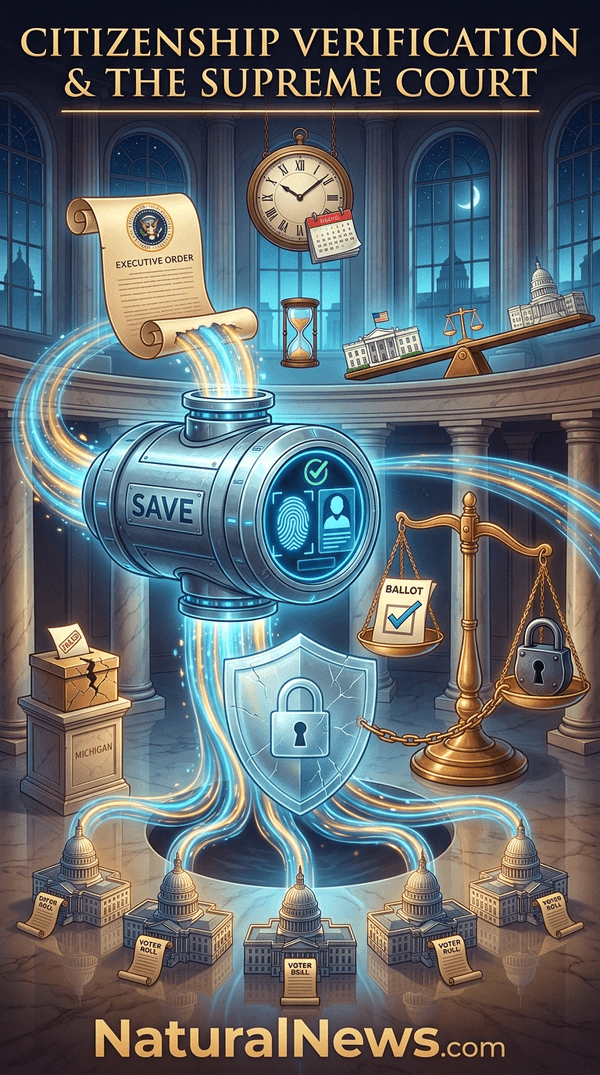
Explainer Infographic











Please contact us for more information.


