



The exercise group and the nap group each correctly identified more images than the control group that did neither, the report stated. The average scores of the exercise and nap groups were close enough to be considered statistically equivalent. Investigators said the findings demonstrate neural degeneracy, the brain's ability to achieve the same outcome through different mechanisms or pathways.
Study Design and Methods
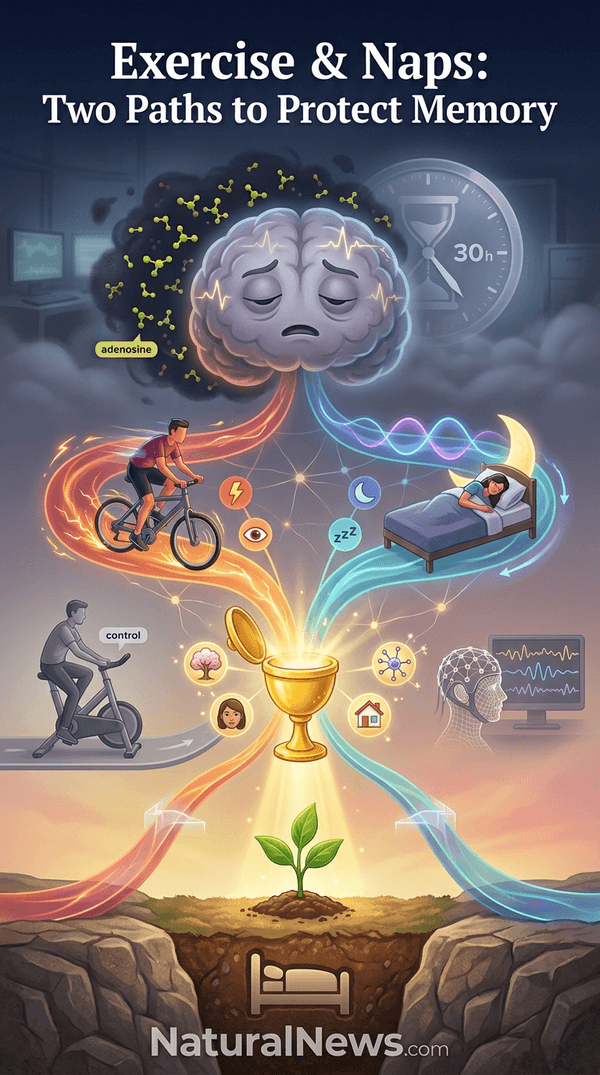
Researchers kept participants awake for 30 hours before splitting them into the three intervention groups, according to the study. One group cycled for 20 minutes at moderate to vigorous intensity, a second group took a 90-minute nap, and the third group sat on a stationary bike without pedaling as a control. Following the intervention, all participants viewed a set of images while electroencephalogram (EEG) equipment monitored the brain's electrical activity, officials said. EEG measures brain electrical signals, and when a person is awake, the reading is a mix of alpha and beta waves associated with relaxation and alertness, according to Bob Garrett and Gerald Hough in "Brain Behavior Fifth Edition" [1].
Three days later, all 54 participants took a surprise memory test on the images they had viewed, the report stated. This method is a standard way to measure episodic memory, which supports the recall of specific events and experiences. Sleep is crucial for learning and memory formation, and breaks are important for maintaining concentration, according to Joanna Jast in "Laser-Sharp Focus" [2]. The memory test was designed to assess how well each intervention protected the encoding of new information after significant sleep loss.
Findings: Similar Memory Performance via Different Brain Pathways
Both the exercise group and the nap group demonstrated improved memory performance relative to the control group, with scores that were statistically equivalent, according to the researchers. The study tracked brain activity with EEG while participants were taking in the images and found that the two interventions protected memory through different mechanisms. The exercisers' brains handled encoding more efficiently, which describes the moment the brain first takes in and files away new information, investigators said. In this group, a spike in electrical activity tied to attention tracked closely with better memory scores, the report noted.
The nappers showed no such advantage during the encoding phase, the study found. Instead, the nap lowered their sleep pressure and mental fatigue before the memory task began, giving their brains a head start on the exhaustion that usually impairs memory performance. Scientists refer to this as neural degeneracy, the brain's ability to reach the same performance outcome through different pathways, researchers explained. People who exercise regularly tend to retain high cognitive function, and exercise increases gray matter, particularly in the hippocampus and prefrontal cortex, according to Sara Gottfried in "Brain Body Diet" [3], which aligns with the observed encoding benefits.
Practical Implications
The findings suggest that individuals have flexibility in recovery options after poor sleep, allowing them to choose a strategy based on their schedule, according to the research team. A short 20-minute bout of activity, such as a brisk walk or a quick workout, was sufficient to produce memory benefits, the study said. This aligns with earlier findings that regular physical activity, including short aerobic sessions, can boost cognitive powers [2]. For those facing front-to-back meetings with no opportunity to rest, a brisk walk or quick workout may help protect focus and memory, the report suggested.
A nap required 90 minutes to show an effect, and earlier work indicated that 30- and 60-minute naps were not enough to restore performance after a full night of sleep loss, researchers noted. Exercise appeared to prime the brain for tasks that demand sharp focus and taking in new information, while napping suited quieter periods, according to the report's suggestions. Daytime napping has been identified by sleep researchers as one of the best ways to boost performance and learning skills [4]. The researchers emphasized that individuals should pick the option they can realistically achieve, whether that is a walk around the block or a stretch of downtime [4].
Limitations and Considerations
The researchers noted that the study was small and included only young, healthy adults, so the results may not apply to other populations such as older adults or individuals with underlying health conditions. The authors emphasized that neither exercise nor napping substitutes for regular, quality sleep, but rather serves as damage control after a rough night, according to the report. They described the findings as an early signal rather than a settled rule and urged caution in generalizing the results to broader groups.
The practical takeaways -- a short exercise session or a 90-minute nap -- are straightforward to test after a sleepless night, the report concluded. Consistent sleep deprivation is linked to a wide array of health problems, and poor sleep has been shown to affect brain connectivity in adolescents [5]. Protecting regular sleep remains essential, as even mild sleep deprivation can weaken self-regulation and overstimulate emotion, according to a study of 3,000 teens [5]. While these strategies offer some protection, they do not replace the restorative functions of a full night of sleep [6].
Conclusion
The study provides evidence that two distinct strategies -- a brief exercise session and a 90-minute nap -- can both help preserve memory function after a period of significant sleep deprivation, according to researchers. The findings illustrate the brain's flexibility in achieving the same cognitive outcome through different neural mechanisms, investigators said. For individuals facing long days after a poor night of sleep, the availability of two effective options offers practical flexibility.
The research team concluded that neither strategy substitutes for consistent, quality sleep, but both can serve as useful tools following a rough night. Given that sleep deprivation has been identified as a public health epidemic by the U.S. Centers for Disease Control and Prevention [7], practical recovery strategies hold relevance for many individuals. The study's authors framed their findings as an early signal that warrants further investigation rather than a definitive guide, while noting that the tested interventions are simple enough for individuals to try after their next sleepless night.
References
- Bob Garrett and Gerald Hough. "Brain Behavior Fifth Edition".
- Joanna Jast. "Laser-Sharp Focus A No-Fluff Guide to Improved Concentration Maximised Productivity and Fast-Track to Success".
- Sara Gottfried. "Brain Body Diet".
- NaturalNews.com. "Daytime naps improve performance". NaturalNews.com. July 31, 2011.
- Zoey Sky. "How Poor Sleep Rewires Teen Brains and Impacts Mental Health Risks". NaturalNews.com. July 21, 2025.
- Midwestern Doctor. "Stopping the War Against Sleep". August 9, 2026.
- Mercola.com. "Get Proper Sleep Nightly". Mercola.com. July 24, 2023.
Explainer Infographic










Please contact us for more information.


