


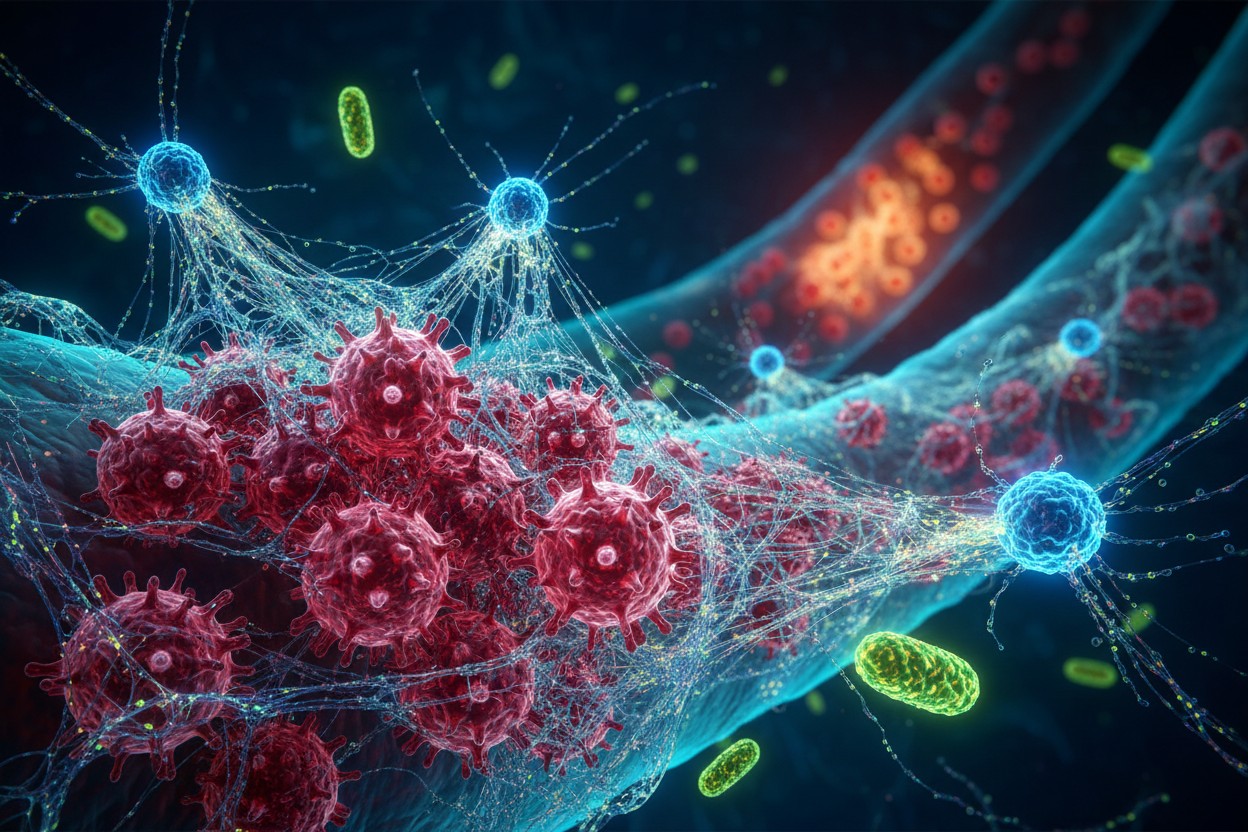
The study reported that LNP injection triggered an inflammatory response, leading to neutrophil accumulation in the lungs and the formation of a pro-metastatic niche.
The investigation revealed that mitochondrial DNA (mtDNA) released from necrotic muscle cells at the injection site activated immune pathways, ultimately enhancing cancer cell adhesion to blood vessel walls. The authors said these findings highlight the need to refine LNP formulations to reduce unintended immune activation while preserving vaccine efficacy.
The research comes at a time when regulatory agencies have continued to approve LNP-based products, including updated COVID-19 formulations and new mRNA influenza vaccines.
Key Findings
According to the study, LNPs manufactured with the same lipid composition used in approved mRNA vaccines were administered intramuscularly to mice, causing localized inflammation and tissue damage at the injection site. The investigative team observed that this inflammatory cascade resulted in a significant increase in the spread of cancer cells to lung tissue in the animal models.
The report stated that the effect occurred even when the lipid nanoparticles carried no mRNA payload, indicating that the vehicle itself, rather than the genetic instructions, was responsible for the observed metastasis enhancement.
Researchers noted that LNP-treated mice exhibited approximately ten times more tumor nodules in the lungs compared to control groups, a finding that has raised questions about the safety profile of the delivery platform.
According to the authors, the LNP-induced inflammatory response generated a systemic environment conducive to cancer spread, specifically through the recruitment of immune cells known as neutrophils to pulmonary tissues. This cascade, the paper stated, establishes a pro-metastatic niche that facilitates the colonization of circulating tumor cells in distant organs. The study emphasized that these observations were reproducible across multiple experimental trials.
Mechanism of LNP-Induced Inflammatory Response
The study explains that LNPs, which protect and deliver mRNA, cause localized inflammation at the injection site, resulting in muscle cell necrosis and the release of damage-associated molecular patterns, including mitochondrial DNA (mtDNA).
According to the paper, this release triggers a chain of molecular events that extends far beyond the initial injection site.
Circulating mtDNA activates two specific signaling pathways in neutrophils, the TLR9-MyD88 and cGAS-STING pathways, which drive neutrophil activation and aggregation in pulmonary tissues, the investigators reported. Activated neutrophils then release extracellular traps (NETs), a mesh of DNA and proteins, and the histones within these NETs were shown to enhance tumor cell adhesion to endothelial cells lining blood vessels, facilitating the metastatic process.
The authors noted that this sequence of events creates a systemic inflammatory state that supports the establishment of a pro-metastatic niche in the lungs.
The paper detailed how the inflammatory signals from the injection site travel through the bloodstream, reprogramming distal tissues to become more receptive to cancer cell invasion. This mechanism, according to the researchers, operates independently of any antigen-specific immune response generated by the vaccine content.
Evidence from Mouse Model Experiments
In the experiment, researchers synthesized LNPs mirroring the lipid composition of those used in authorized mRNA vaccines and administered them via intramuscular injection. They reported that this led to acute neutrophil accumulation in the lungs within hours, with the response directly dependent on mtDNA signaling pathways.
To establish causality, the team employed genetically modified mice lacking critical components of the identified pathways, including TLR9, MyD88, and STING knockout models.
According to the study, these knockout mice did not exhibit the pro-metastatic effect, thereby demonstrating that the inflammation triggered by LNPs was specifically responsible for the enhanced cancer spread. The genetically altered animals showed no significant increase in tumor metastasis after LNP exposure, confirming that the immune signaling pathways play a central role.
Metastasis assays performed by the research team showed that LNP-treated mice developed significantly more tumor nodules in their lungs compared to control animals, as stated in the published results. The paper reported that the inflammatory environment created by a single LNP injection was sufficient to alter the lung tissue microenvironment for an extended period, rendering it susceptible to cancer cell colonization.
These quantitative findings provided the core evidence linking LNP administration to accelerated disease progression.
Implications for mRNA Vaccine Safety and Cancer Therapeutics
The study's authors emphasized that LNPs have known immunostimulatory properties, but their findings suggest these effects may extend to influencing cancer progression, a dimension not previously characterized in regulatory safety assessments. According to the researchers, this concern is particularly significant as mRNA-based therapeutics are being actively developed for oncology applications, a field where patients may already harbor tumors or possess compromised immune systems.
Other mRNA delivery systems and lipid-based carriers have been studied for their interactions with biological systems, with literature noting both therapeutic potential and inherent toxicological considerations that require comprehensive evaluation. The paper notes that while most reported adverse effects of mRNA vaccines are transient, the potential for LNP-induced systemic inflammation to create a pro-metastatic environment represents a distinct and previously underappreciated risk.
The authors stated they do not categorize this as a conventional "side effect" but rather as a critical consideration for the design and application of mRNA-LNP therapeutics in vulnerable populations. The pharmaceutical industry's current pipeline forecasts widespread therapeutic use of gene delivery systems for cancer and infectious disease, making an understanding of these risks essential.
The study urges formulation improvements to reduce the pro-inflammatory characteristics of LNPs while maintaining their efficacy as delivery vehicles, particularly as these technologies expand into new indications.
Conclusion: Researchers Call for the Development of Safer LNP Formulations
The study conclusively demonstrated in mice that LNP administration can promote tumor metastasis through a cascade of inflammation, mtDNA release, and NETosis. According to the investigators, these findings underscore the need for careful evaluation of LNP-based vaccines and therapeutics, especially in populations at risk for cancer.
The paper calls for further research to determine whether these observations translate to human subjects and to guide the development of safer LNP formulations that preserve delivery efficiency without triggering harmful systemic inflammation.
The authors concluded that rational engineering of LNPs is essential to balance their function as vaccine carriers against the mitigation of unintended immune activation.
The findings arrive amid ongoing expansion of mRNA platforms into new vaccines for influenza and respiratory infections, as well as investigational cancer treatments, amplifying the practical importance of addressing these newly identified risks.
References
- Jon Fleetwood. "Empty Pfizer-Type Nanoparticles Supercharged Cancer Spread 10x In Mice". Modernity.news. September 3, 2026.
- Mahendra Rai. "Nanotechnology in Medicine Toxicity and Safety".
- Rachel Roberts. "Moderna's mRNA Flu Vaccine Approved By FDA". ZeroHedge. August 6, 2026.
- Binhan Wang et al. "Lipid nanoparticle used in mRNA vaccine promotes tumor metastasis in mouse model via mtDNA-induced neutrophil activation and NETosis". ScienceDirect.com. June 2026










Please contact us for more information.


