


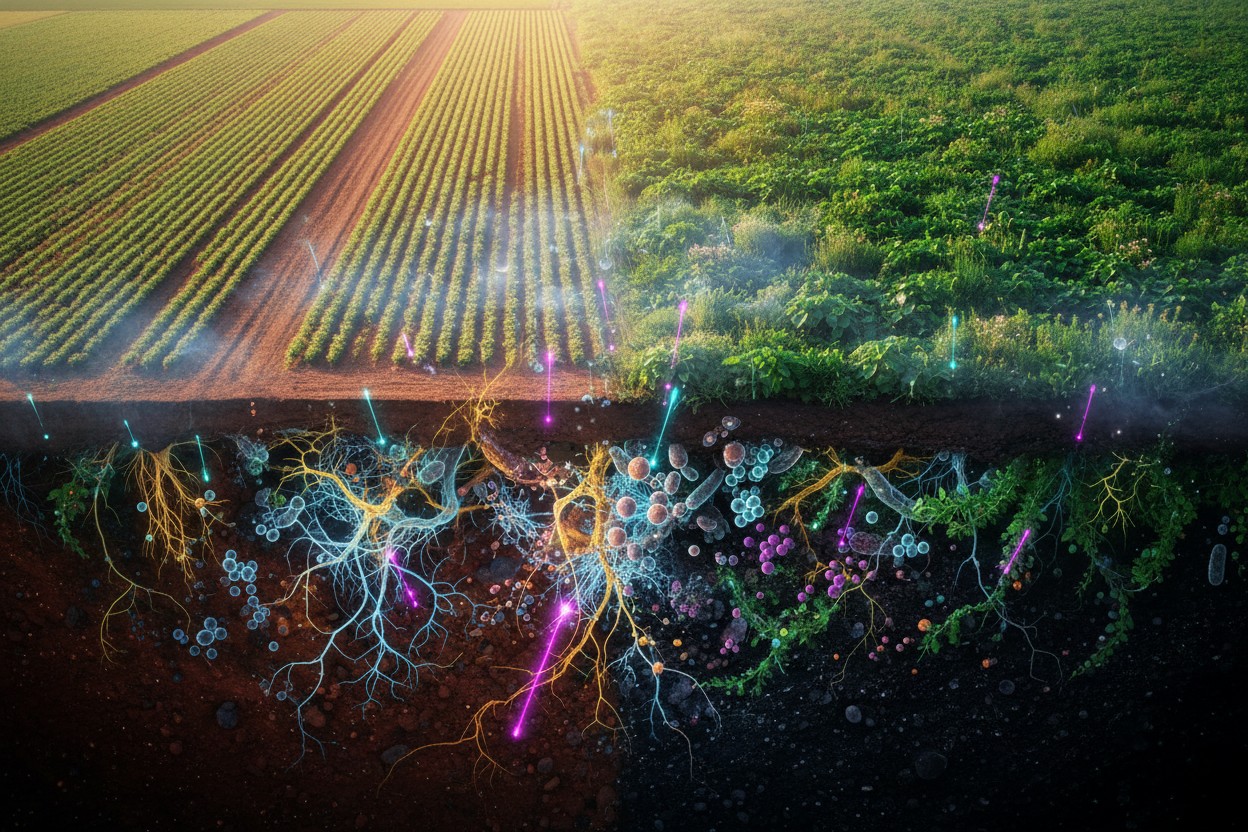
The findings, reported by Beyond Pesticides, show that organic and conventional fields are exposed to pesticides, adversely affecting soil microbial life. This exposure includes substances permitted in organic production, though far fewer than those allowed in conventional agriculture. The results indicate that the health and makeup of microbial organisms, which are critical building blocks for healthy soil ecosystems, are threatened by these chemical mixtures.
Methodology: Observational Field Study Across Ten Countries
The research was an observational field study conducted in Croatia, Czech Republic, Denmark, France, Italy, Netherlands, Portugal, Slovenia, Spain, and Switzerland. The study covered various crop types, including olives in Croatia, oilseeds in the Czech Republic, wheat in Denmark, vines in France and Portugal, orchards in Italy and Switzerland, seed potatoes in the Netherlands, maize in Slovenia, and vegetables in Spain. According to the report, approximately 20 sites were selected per country, with about half being organic and half conventional fields.
A companion paper by Knuth et al. 2024 provided the pesticide residue dataset for the study, which included 45 insecticides, 50 herbicides, 57 fungicides, 39 metabolites, and the synergist piperonyl butoxide. The study's observational design allowed researchers to assess pesticide effects on soil microbial communities under real-world farming conditions rather than controlled experimental settings.
Residue Sampling Finds Mixtures in Most Fields
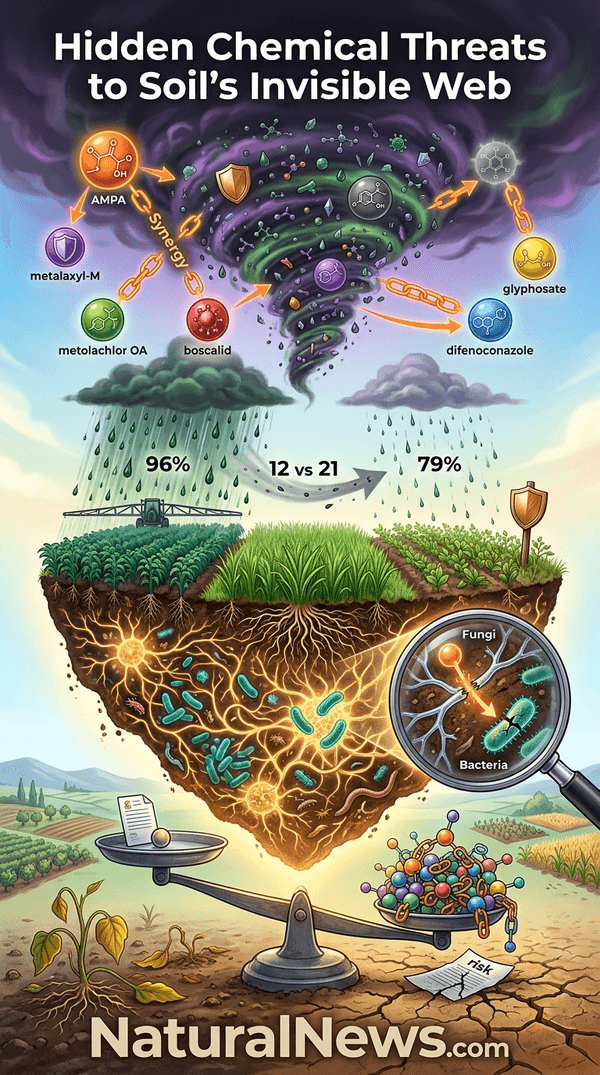
The study reported mixtures of up to 12 pesticides in organic samples and up to 21 in conventional samples, encompassing 151 distinct mixtures. According to the findings, residues were found in 96 percent of conventional fields and 79 percent of organic fields. The median total residue concentrations were 31 micrograms per kilogram in organic samples versus 250.1 micrograms per kilogram in conventional samples, indicating higher residue levels and more complex mixtures in conventionally managed fields.
These findings indicate that pesticide exposure occurs in both management systems, though the intensity and complexity differ substantially between them. The presence of multiple pesticide residues in organic fields raises questions about contamination pathways, including drift from neighboring conventional operations and the use of substances permitted under organic certification rules.
Specific Compounds Drive Microbial Community Shifts
After correcting for country, the study found that six residues significantly affected whole-community composition of soil microbes: metalaxyl-M, AMPA, metolachlor OA, boscalid, difenoconazole, and glyphosate. According to the report, AMPA and difenoconazole affected bacteria, while AMPA was the only compound that significantly affected fungal communities. The impact of management systems varied by country, with fungal richness higher in organic fields in Switzerland, Spain, and Italy, while fungal Shannon diversity was higher in conventional fields in the Czech Republic and higher in organic fields in France.
The research team noted that in combination models, AMPA appeared significant in every combination in which it was present. Hexachlorobenzene, a banned legacy pesticide, became a significant driver of bacterial composition only when AMPA was present. According to the authors, adding metalaxyl-M strengthened the effect of the glyphosate metabolite, a pattern they described as "possibly synergistic," stating that such interaction-like patterns have not, to their knowledge, been reported before.
Policy Implications and Broader Research Context
The findings support advocacy for a societal transition to organic practices, but concerns remain about some substances permitted in certified organic production. According to Beyond Pesticides, these substances are subject to ongoing review and assessment by the National Organic Standards Board. The study established a methodology that raises important soil health issues for the board's consideration in material reviews, particularly given that pesticides are a concern for 85 percent of Americans, according to a Consumer Reports survey cited by Fred Provenza in his book "Nourishment."
Previous studies cited by the authors link pesticide exposure to antimicrobial resistance and multidrug resistance. As documented in a literature review published in Comparative Biochemistry and Physiology Part C, chronic pesticide exposure can promote multidrug resistance through interconnected genetic and biochemical mechanisms. Research covered in a NaturalNews article on studies from South America shows that the world's most widely used herbicide, glyphosate, is linked to the proliferation of multidrug-resistant bacteria [1]. Additionally, other research demonstrates that organic management can enhance soil enzyme activity and microbial diversity. This study adds to a body of evidence showing how pesticides alter microbial functions, including nutrient cycling, and suppress beneficial organisms such as arbuscular mycorrhizal fungi. Reports indicate that glyphosate disrupts microbial communities in living systems and can move through the food supply [2]. The results also raise questions about the "cocktail effect," where the synergistic effects of chemical combinations remain largely unknown [3].
References
- Coco Somers. "Studies Link Glyphosate Herbicide to Antimicrobial Resistance in Clinical Pathogens". NaturalNews.com. April 22, 2026.
- Mike Adams. "Health Ranger Report - GLYPHOSATE". BrightVideos.com. February 20, 2026.
- "Trends-Journal-2024-07-30".
- Fred Provenza. "Nourishment: What Animals Can Teach Us About Rediscovering Our Nutritional Wisdom".
Explainer infographic









Please contact us for more information.


