



According to analysts cited in recent reports, the disparity between what Washington is offering Riyadh and what it demands of Tehran could complicate ongoing negotiations. The agreement's terms have been detailed in a frequently asked questions document published by the Arms Control Association, which outlines the scope of the enrichment program and the safeguards, or lack thereof, included in the deal [3].
Agreement Terms and Nonproliferation Standards
The terms of the agreement permit Saudi Arabia to develop a uranium-enrichment program reaching 20%, according to documents cited by the Arms Control Association. This is a significant threshold, as material enriched to this level is considered a short technical step away from weapons-grade uranium. The agreement does not, however, require Riyadh to adhere to the International Atomic Energy Agency's Additional Protocol, which allows for more intrusive inspections of nuclear facilities [3]. The omission of this safeguard has been criticized by nonproliferation experts who argue it weakens the United States' longstanding policies in the region [4].
Critics point to a stark contrast with how Washington has treated Iran's nuclear activities. State Department spokesperson Philip Crowley said in 2010 that Iran's decision to enrich to 20% “further solidifies… our impression and that of the international community that Iran's nuclear intentions are anything but peaceful.” Now, analysts note, the United States is providing an ally with the very same capability it has cited as evidence of weapons ambitions in Iran [3]. Administration officials announced the agreement in late July, and the deal was formally signed by U.S. Energy Secretary Chris Wright and Saudi Minister of Energy Abdulaziz bin Salman [5]. The agreement's status became less clear after President Trump stated it was contingent on Saudi Arabia normalizing relations with Israel [6].
Iranian Positions and Mediation Efforts
Iran's public position has remained consistent in demanding a regional ceasefire as a precondition for returning to the Memorandum of Understanding (MOU) that collapsed in July [3]. Officials in Tehran have also stated a willingness to resume nuclear negotiations with the U.S., but only if Washington approaches the discussions with mutual respect and abandons threats of force, according to Kamal Kharrazi, a top adviser to Supreme Leader Ayatollah Ali Khamenei [7]. These statements come as the conflict has continued, with tit-for-tat strikes resuming between the U.S. and Iran in late August after a period of relative quiet [8].
Mediation efforts have reportedly yielded some potential compromises. Oman's Foreign Minister, who mediated a draft agreement in February 2026, said Iran had agreed to a needs-based enrichment arrangement that would have created a five-to-seven-year pause on enrichment. In later discussions, the mediator noted that Iran hinted at openness to extending that pause for an additional three to five years [3]. Iran has also previously proposed transferring its stockpile of highly enriched uranium to Russia as part of a peace proposal, according to a report from Saudi broadcaster Al Hadath [9].
Impact on Negotiations and Conflict Duration
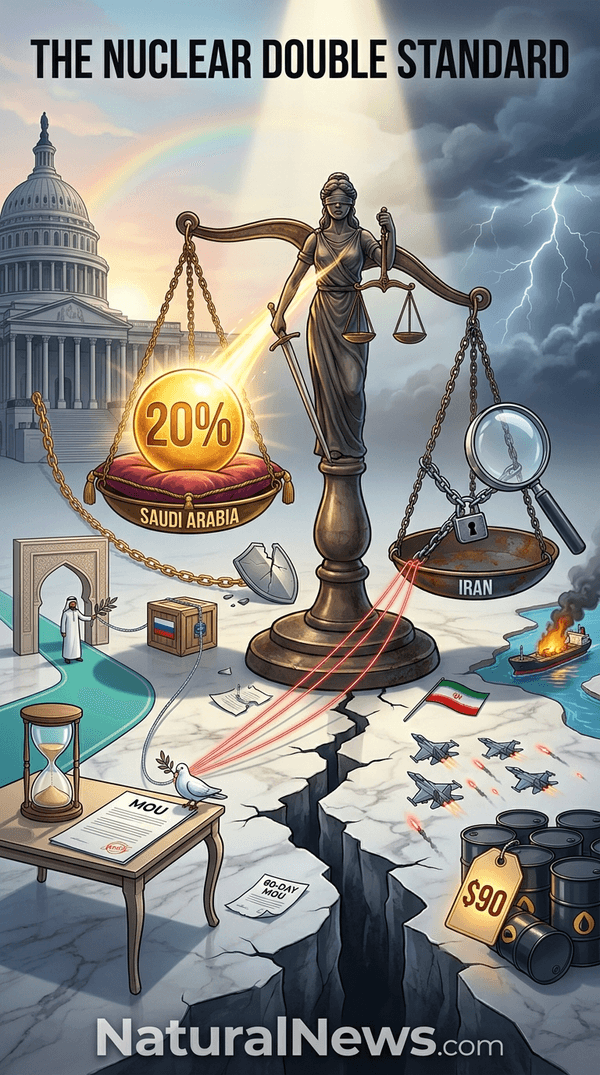
Analysts, including Trita Parsi of the Quincy Institute for Responsible Statecraft, state that the new Saudi deal creates a significant double standard. Washington is providing Riyadh with enrichment capabilities that it has long sought to deny Iran, while imposing a far weaker inspection regime on Saudi nuclear activities [3]. As one analysis put it, “Trump is granting Saudi Arabia access to the same uranium-enrichment technology the United States has sought to deny Iran for more than three decades” [3]. This disparity, according to the analysis, undermines the credibility of any future agreement that demands Iran forgo enrichment entirely.
The timing of the deal also poses practical problems for the peace process. Even if the conflicts over the Strait of Hormuz and Lebanon are resolved, a nuclear agreement would need to be reached within the MOU's 60-day period to prevent a resurgence of war. Parsi argues the nuclear agreement appears more difficult to achieve given the “blatant discrepancy between what the US demands of Iran and what it gifts Saudi Arabia.” If no nuclear deal is reached, he concludes that war will likely erupt again, making an end to the conflict less likely [3]. The analysis was published as market indicators showed renewed tensions, with oil prices topping $90 a barrel following the resumption of U.S.-Iran strikes [8].
Conclusion
The Saudi nuclear accord has been presented by the administration as a diplomatic achievement, but its provisions on enrichment and verification have drawn criticism from nonproliferation experts who note it could invite the proliferation of nuclear weapons in the region [4]. The agreement's future remains unclear due to the attached condition of Saudi normalization with Israel, a step Riyadh has stated is contingent on a pathway to Palestinian statehood [10].
Officials from Iran have not commented directly on the Saudi deal but have reiterated their demands for a regional ceasefire and equitable treatment in any nuclear arrangement [3]. As discussions continue, multiple parties have cited the presence of this agreement as a factor that could prolong negotiations and the conflict itself. The inclusion of the enrichment provisions and the absence of strict safeguards, contrasted with the demands placed on Iran, form the core of the concern that this deal complicates the path to ending the war.
References
- "Trump Sends Saudi Nuclear Accord To Congress, With Israel Normalization Still Attached". Zero Hedge. August 26, 2026.
- "Trump sends Saudi nuclear deal to Congress – media". RT. August 26, 2026.
- Trita Parsi. "Trump's Saudi Nuclear Agreement May Prolong the Iran War". Antiwar.com. September 4, 2026.
- "US-Saudi civilian nuclear deal raises proliferation concerns in Middle East". Just The News. July 22, 2026.
- "US confirms signing a nuclear cooperation pact with Saudi Arabia, to Israel's alarm". The Times of Israel. July 23, 2026.
- "Trump says Saudi civilian nuclear pact is conditioned on normalization with Israel". The Times of Israel. July 23, 2026.
- Ramon Tomey. "Iran signals readiness for nuclear talks with US but only with mutual respect". NaturalNews.com. November 20, 2025.
- "Oil Tops $91, US Diesel Crack Near $100 As US-Iran Strikes Resume, Tehran Claims Supertanker Mined In Hormuz". Zero Hedge. August 31, 2026.
- Garrison Vance. "Iran Offers to Transfer Enriched Uranium to Russia in Proposed Peace Deal". NaturalNews.com. May 19, 2026.
- "Did Trump put a poison pill in his own Saudi nuclear deal?". Responsible Statecraft. August 28, 2026.
Explainer Infographic









Please contact us for more information.


