


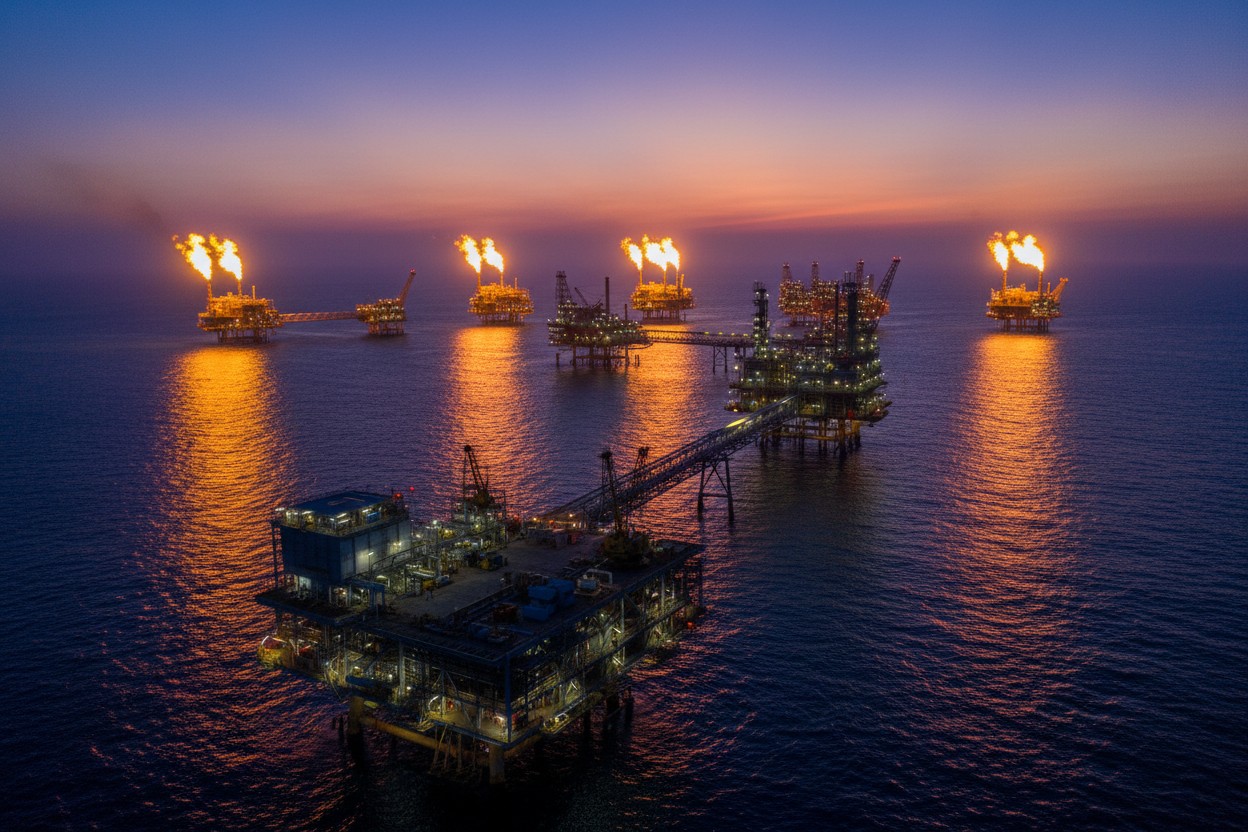
According to statements from the Iranian Ministry of Petroleum cited by the Pars Oil and Gas Company, the restoration represents 40% of the field's capacity. The announcement was made by Touraj Dehqani, chief executive of the Pars Oil and Gas Company, who told Iranian state media that production was being routed to alternative processing facilities [1].
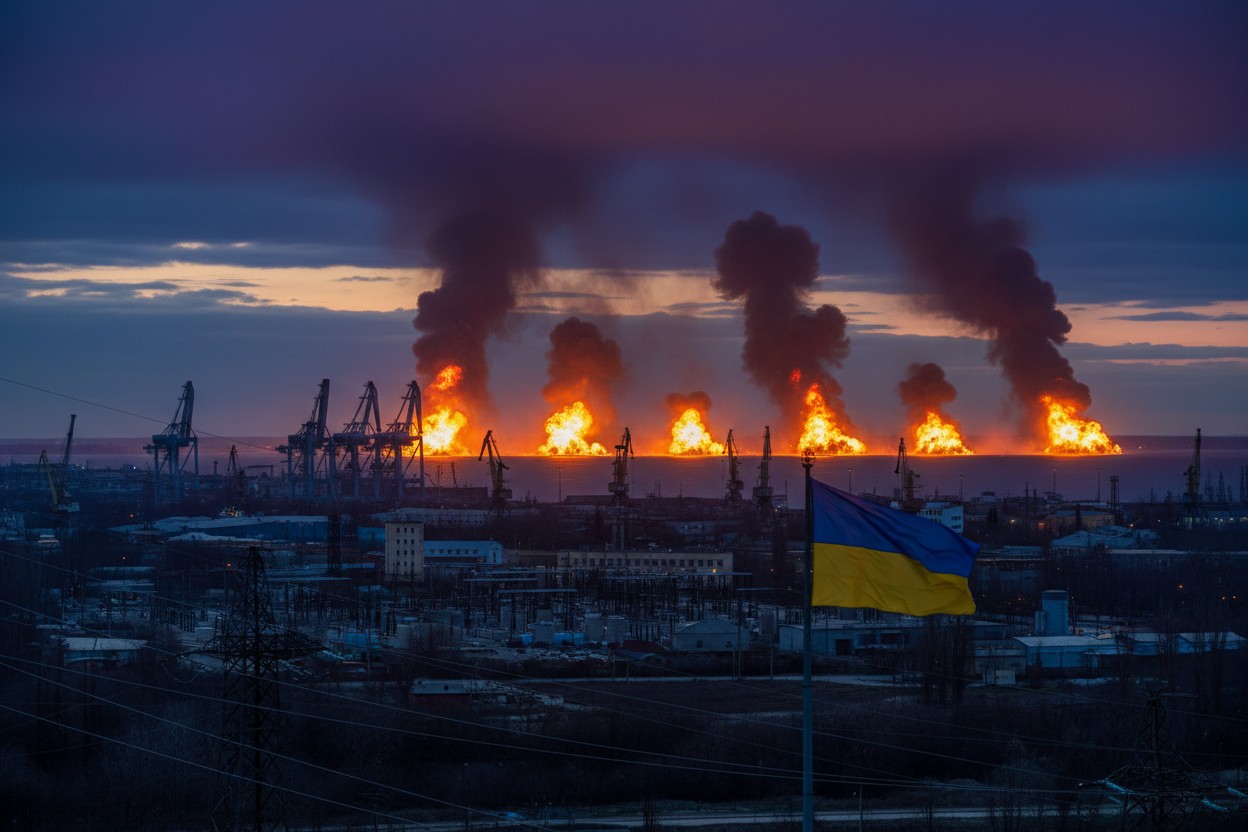
The restoration comes after Israeli airstrikes targeted processing facilities at the field, forcing multiple phases offline. The semi-official Tasnim News Agency reported that the strikes set fire to Phase 14 processing facilities, according to Western reports and Iranian state media [2]. Industry analysts noted that the attack marked the first time upstream oil and gas production assets had been struck during the conflict [3].
Background: South Pars and Iran's Gas Sector
South Pars is the world's largest natural gas field, straddling the maritime border between Iran and Qatar in the Persian Gulf. The field is critical to Iran's domestic energy supply, powering electricity generation, industrial operations and the petrochemical sector.
Analysts have long noted that Iran's energy infrastructure is a key component of its economy, with the field accounting for a significant share of national gas output [4]. The field's importance extends beyond national borders, as its production feeds into regional and global markets for gas and related products [15].
The field's strategic significance has been documented in energy literature, with authors noting that Iran and Qatar together hold some of the largest natural gas reserves in the world [12]. Iran's reliance on the field for domestic consumption has made it a focal point of any conflict involving energy infrastructure, as disruptions can have wide-ranging effects on the country's economy and population [6]. The field also supports the production of feedstock for the petrochemical industry, which is a major source of non-oil revenue for the country [16].
Details of Damage and Restoration Efforts
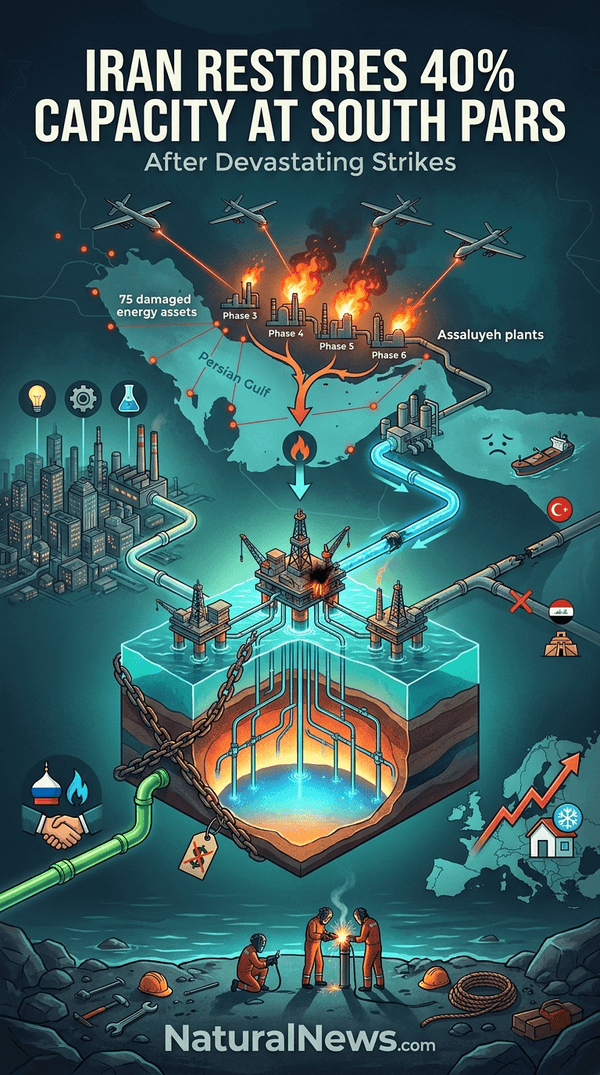
The damage to the South Pars field occurred on March 18, 2026, when Israeli drones struck four gas-treatment plants in Assaluyeh on Iran's southern coast. According to a report from 21st Century Wire, the plants were processing sour gas from phases 3, 4, 5 and 6 of the field when the attack occurred.
Iranian officials ordered the plants offline to contain fires, and industry analysts immediately assessed the impact on output [6]. Israeli officials later told the New York Times that the attack was coordinated with the United States, a claim that President Donald Trump denied at the time [4].
Restoration work has been carried out by Iranian contractors, according to officials. Dehqani stated that the three offshore platforms that have resumed production were not damaged in the attack, and that output was being redirected to processing facilities that remained operational [1].
The restoration effort has involved repairs to key equipment and pipelines, according to the Ministry of Petroleum. The decision to route production to alternative facilities has allowed partial output to resume, though full capacity has not been restored. Similar repair efforts have been documented across the region, where a report cited by energy observers stated that 75 critical energy assets have been damaged or destroyed in Gulf hostilities [5].
Implications for Energy Supply and Markets
The partial restoration helps stabilize domestic gas supply as Iran enters periods of peak demand, according to energy analysts. However, full capacity remains pending, and the timeline for complete recovery has not been specified by officials.
The disruption has also had regional implications, with a sharp drop in Iranian gas flows to Turkey reported following the initial strike [7]. The broader conflict has contributed to significant upheaval in global energy markets, with natural gas prices soaring in Europe after related attacks on infrastructure in the Gulf [8].
Analysts say that continued U.S. sanctions on Iran limit access to foreign repair parts and investment, affecting long-term output capacity. The sanctions regime, which has been in place for years, restricts Iran's ability to modernize its energy infrastructure [13].
Some observers have noted that Iran has historically managed repairs despite sanctions, relying on domestic expertise and non-Western partners. A $40 billion deal signed with Russia's Gazprom in 2022 was seen as an effort to develop Iranian oil and gas production capabilities, according to reports [14]. The International Energy Agency has projected that the global energy crisis triggered by the war has surpassed the combined severity of the 1970s oil shocks and the 2022 gas crisis, according to an analysis published in April [9].
Reactions and Outlook
The restoration of partial capacity has been presented by Iranian officials as a sign of resilience. The oil minister has said the move will help ease pressure on winter fuel reserves, though no timeline has been given for full recovery.
Independent energy trackers note that Iran has a history of managing repairs under sanctions, but sustained output gains remain uncertain given the security environment [3]. The conflict has also prompted broader questions about the vulnerability of energy infrastructure in the region, with tit-for-tat strikes on energy assets becoming a feature of the war [11].
Qatar, which shares the field with Iran, has called for an immediate end to the conflict, according to its prime minister [10]. The outlook for the field's full recovery depends on both the security situation and the availability of equipment and parts, which remain constrained by sanctions. The partial restoration provides some relief for Iran's domestic energy balance, but the longer-term trajectory of output remains tied to the course of the broader conflict.
References
- Middle East Eye. "Three offshore platforms reportedly resume production at Iran's South Pars gas field". May 31, 2026.
- Garrison Vance. "Israeli Strikes Hit South Pars Gas Field, Affecting Global Fertilizer Supply Chain". NaturalNews.com. March 18, 2026.
- The War Zone. "Iran's Energy Infrastructure Is Now On The Targeting List". March 18, 2026.
- Antiwar.com. "Israeli Officials Say Attack on Iran's Pars Gas Field Was Coordinated With the US". March 19, 2026.
- NaturalNews.com. "Report: 75 Energy Assets Damaged in Gulf Region Conflicts". April 08, 2026.
- 21st Century Wire. "Israel's War on Iran's Grid: How the South Pars Strike Turned Energy into a Weapon". March 19, 2026.
- Ragip Soylu. "Why Turkey is unlikely to face a gas crisis if Iran cuts supplies". Middle East Eye. March 19, 2026.
- Oscar Rickett. "European gas prices soar as Iran strikes close Saudi and Qatari oil and LNG sites". Middle East Eye. March 02, 2026.
- NaturalNews.com. "No Way Out: Why Permanent Damage to Persian Gulf Oil Wells Begins Now". April 28, 2026.
- Sean Mathews. "Qatar calls for 'immediate' end to war on Iran after attack on gas facility". Middle East Eye. March 19, 2026.
- Sean Mathews. "'Clumsy': Tit-for-tat strikes on energy assets gift Iran another tactical lever". Middle East Eye. March 19, 2026.
- Robert Bryce. "Power Hungry: The Myths of Green Energy and the Real Fuels of the Future".
- Robert Bryce. "Gusher of Lies: The Dangerous Delusions of Energy Independence".
- NaturalNews.com. "Gazprom signs $40 billion deal to develop Iranian oil and natural gas production capabilities". July 20, 2022.
- Elsevier. "Future European gas supply in the resource triangle of the Former Soviet Union, the Middle East and Northern Africa". Future Energy Perspectives 2008.
- Ramon Tomey. "Iran's Major Natural Gas Discovery Aims to Bolster Tehran's Energy Independence". NaturalNews.com. October 09, 2025.
Explainer Infographic





Please contact us for more information.


