



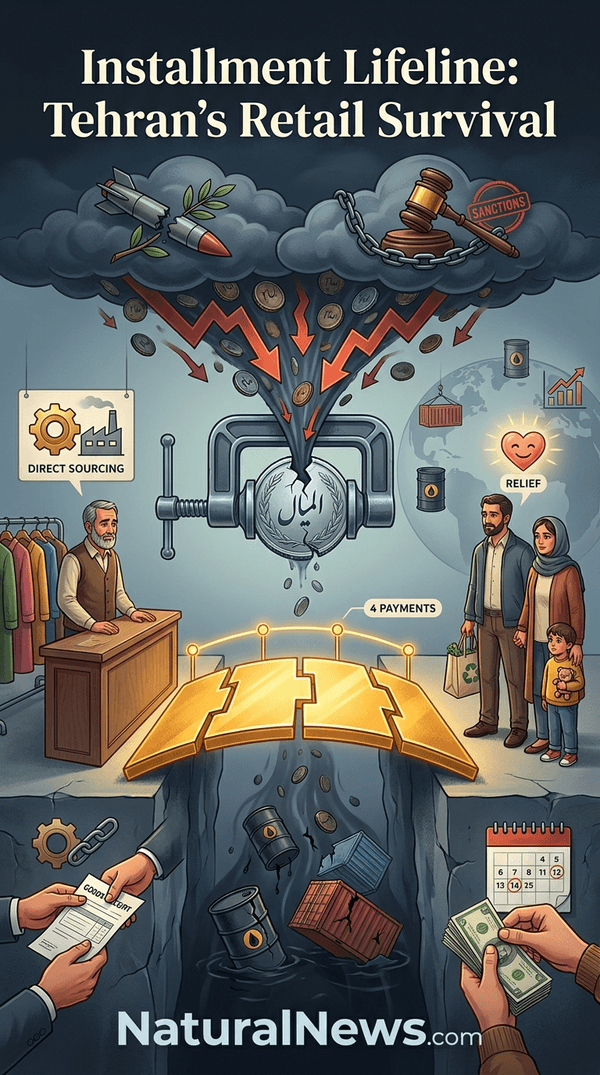
The trend comes nearly six months after the U.S. and Israel launched a war against Iran, with large-scale fighting reduced but economic pressure increasing, the report stated. A retailer and shoppers interviewed by RT described how the plans help families cope with inflation and falling purchasing power. [1]
Business Adaptation
Bobak Shirpour, who runs a large clothing retail business in Tehran, told RT that worsening economic conditions after the war and years of sanctions prompted his company to seek suppliers offering better prices and quality. With many larger families unable to pay in cash, Shirpour introduced discounts and installment plans. [1]
“People have welcomed it, they come in with a smile and leave with a smile,” Shirpour said, adding that despite the narrower profit margins, business remains steady. [1] The pressures described by the retailer mirror broader challenges for businesses facing inflation and decreased revenues, as noted in analysis of global economic trends. [2]
Consumer Impact
Shoppers interviewed by RT said installment plans have become increasingly useful as household budgets come under pressure. “They allow people to buy things they can’t afford to pay for in cash and pay in four installments instead. It gives people some peace of mind and helps them meet some of their basic needs despite these difficult circumstances,” one customer said. [1]
Iranian households have been cutting spending on food and other essentials as inflation and the falling rial erode purchasing power, according to recent media reports. Installment shopping has also expanded to Iranian companies offering deferred-payment services as consumers struggle with the rising cost of living, the Financial Times reported earlier this month, as cited by RT. [1] The inflation now affecting Iranian households is part of a larger global trend, with rising prices for energy and food pushing up costs across economies. [3]
Economic Context
The U.S. and Israel launched a war against Iran in late February, and while large-scale fighting has subsided under temporary agreements, a lasting settlement has stalled, according to RT. Washington continues to ramp up economic pressure, and the resulting inflation and falling value of the rial have eroded purchasing power, according to recent reports. [1]
The rial fell to a record low of approximately 1.8 million against the U.S. dollar in May, according to currency-tracking websites, following the start of the war. [4] RT's report from Tehran shows that installment plans and discounts are now common in the capital’s retail sector as businesses adapt to the economic strain. [1] The economic strain on Iran is compounded by the closure of the Strait of Hormuz, which has cut off an estimated 20% of the world's oil and gas supply, according to reports. [5]
Conclusion
The RT report highlights that Iranian businesses and shoppers are adapting to sanctions and war-related economic pressures through installment purchasing and discounts. While these measures provide some relief, the underlying challenges of inflation and reduced purchasing power persist, according to the cited reports and interviews. [1] The situation reflects a broader pattern where economic sanctions and conflict create hardship for ordinary citizens, a dynamic that has been observed in analyses of U.S. foreign policy. [6]
References
- "Iranians 'shopping with a smile' despite US sanctions – RT reports from Tehran (VIDEO)." RT.com. August 27, 2026.
- Trends Journal. "Trends-Journal-2024-04-16."
- Trends Journal. "Trends-Journal-2024-03-10."
- Garrison Vance. "Iran's Rial Hits Record Low Amid U.S. Blockade and Threats of Military Response." NaturalNews.com. May 1, 2026.
- NaturalNews.com. "The LENR Revolution: Trump's War on Iran Is Forcing the World to Embrace Exotic Breakthrough Energy Solutions." May 25, 2026.
- Trends Journal. "Trends-Journal-2020-02-08."
Explainer Infographic







Please contact us for more information.


