


- Nikolay Mladenov, the U.S.-appointed overseer of President Trump's Gaza ceasefire plan, publicly criticized Israel for continuing airstrikes despite Hamas agreeing to disarm.
- Hamas has accepted the proposal's key provision to surrender weapons and transition Gaza to civilian governance, but Israel demands total disarmament before withdrawing troops.
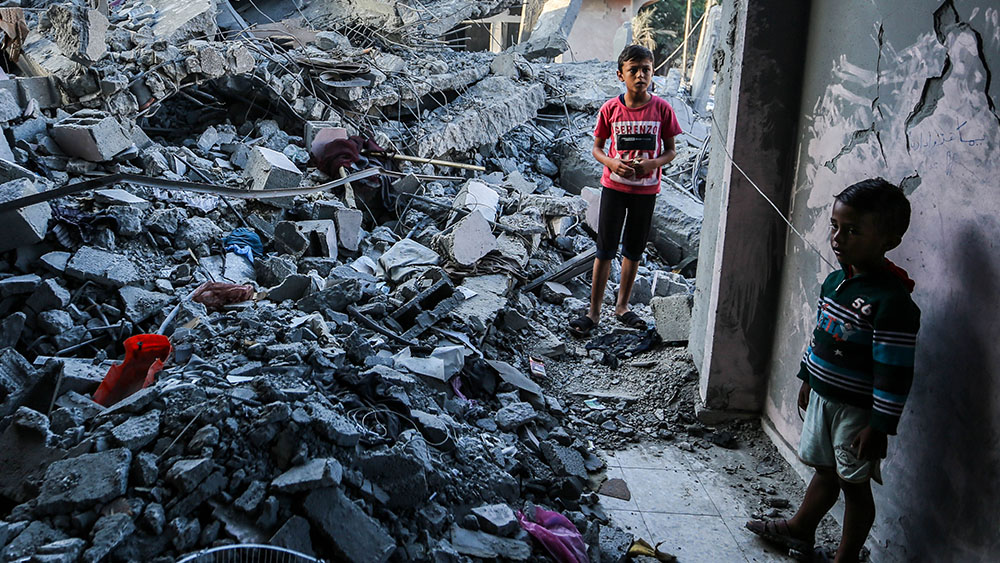
- Israeli strikes since October 2025's ceasefire have killed at least 1,288 Palestinians, including children, casting doubt on diplomatic progress.
- A U.S. delegation led by Jared Kushner recently met Israeli Prime Minister Netanyahu, urging reduced attacks—yet Israel launched strikes on six of seven days following the meeting.
- Mladenov warned the Security Council that failure to bridge the gap between the roadmap and reality would lead to "a point of no return," with no roadmap left to rebuild.
Ceasefire in jeopardy: Why diplomacy stalls as strikes continue
The official charged with implementing President Donald Trump's Gaza ceasefire plan publicly criticized Israel on Wednesday for continuing airstrikes against the Palestinian territory, warning that the alternative to the U.S. proposal is not a stalemate but a "point of no return" for all parties.
Nikolay Mladenov, the Board of Peace high representative, addressed the UN Security Council to clarify that Trump's 20-point plan "has moved from the negotiating table to the engineering table." His remarks came as Israeli strikes continued to kill Palestinians, including children, weeks after Hamas agreed to the plan's central provision: disarmament and the handover of Gaza to a civilian-led administration.
The conflict, sparked by Hamas' deadly Oct. 7, 2023, attacks in southern Israel that killed 1,200 people, has seen Israel's military response kill over 73,422 Palestinians, according to Gaza's health ministry. A ceasefire took hold in October 2025, but Israel has maintained targeted operations that have killed at least 1,288 Palestinians since then.
The disarmament dilemma
Mladenov confirmed that Hamas has accepted the proposal's requirement to disarm and transition Gaza to civilian rule. However, Israeli Prime Minister Benjamin Netanyahu has insisted his forces will not withdraw from current positions until Hamas hands over all weapons.
"After three years of war and 20 years of military operations, I ask, will another strike on a munitions depot stop Hamas from rearming or tightening its grip on Gaza?" Mladenov told the council. "It will not. It only delays the demilitarization that would happen and obstructs the transfer to a civilian government."
Israel's deputy UN ambassador, Noa Furman, reiterated her country's commitment to Trump's plan but stressed it "cannot succeed while Hamas remains armed." She said Israel is working closely with the United States to achieve disarmament. U.S. Ambassador Mike Waltz added that concerns about the plan are being addressed and that Hamas' disarmament "will be judged on its actions."
Continued violence undermines progress
Despite diplomatic efforts, violence persists. On Monday, Israeli strikes on a building in the Bureij refugee camp killed a 4-year-old child, according to Awda Hospital. A separate strike in Khan Younis killed a 10-year-old girl, Nasser Hospital reported. Israel's military said it targeted two Hamas weapons storage facilities inside mosques in the Shati refugee camp and Deir al-Balah, claiming they contained Kalashnikov rifles and ammunition.
The attacks follow a meeting last week between Netanyahu and Jared Kushner, Trump's son-in-law and adviser, during which the U.S. delegation reportedly asked Israel to draw down its military operations. Israel announced strikes on six of the seven days after that meeting.
Mladenov, who also attended the meeting, said the group "went through his government's concerns one by one and narrowed the areas that still require technical work." But the gap between the roadmap and reality remains wide.
A fork in the road
Mladenov framed the choice before the international community in stark terms: "A Gaza disarmed, rebuilt and reconnected to the world. Or a Gaza rearmed, divided and in rubble, with a radicalized generation raised inside it and the next war already on the horizon."
He emphasized that the Trump plan includes a "credible pathway to a political horizon" and a two-state solution—a prospect Netanyahu vehemently opposes. Without political will to bridge the differences, Mladenov warned, a return to full-scale war would leave nothing to rebuild.
"That would not be a setback," he said. "It would be a point of no return for everyone."
The clock ticks toward catastrophe
The UN Security Council now faces a critical juncture. With Hamas agreeing to disarm and Israel continuing strikes, the window for a negotiated settlement narrows by the day. Mladenov's warning carries historical weight: previous ceasefire efforts in Gaza have collapsed under similar tensions, often leading to renewed cycles of destruction and radicalization.
For the United States, which brokered the Trump plan and continues to arm Israel while providing humanitarian aid to Gaza, the contradictions of its own policy risk undermining its credibility as a neutral peace broker. As Mladenov noted, the alternative to a diplomatic resolution is not merely a return to war—it is a point where no diplomatic roadmap remains to guide the way back from catastrophe.
Sources for this article include:








Please contact us for more information.


