


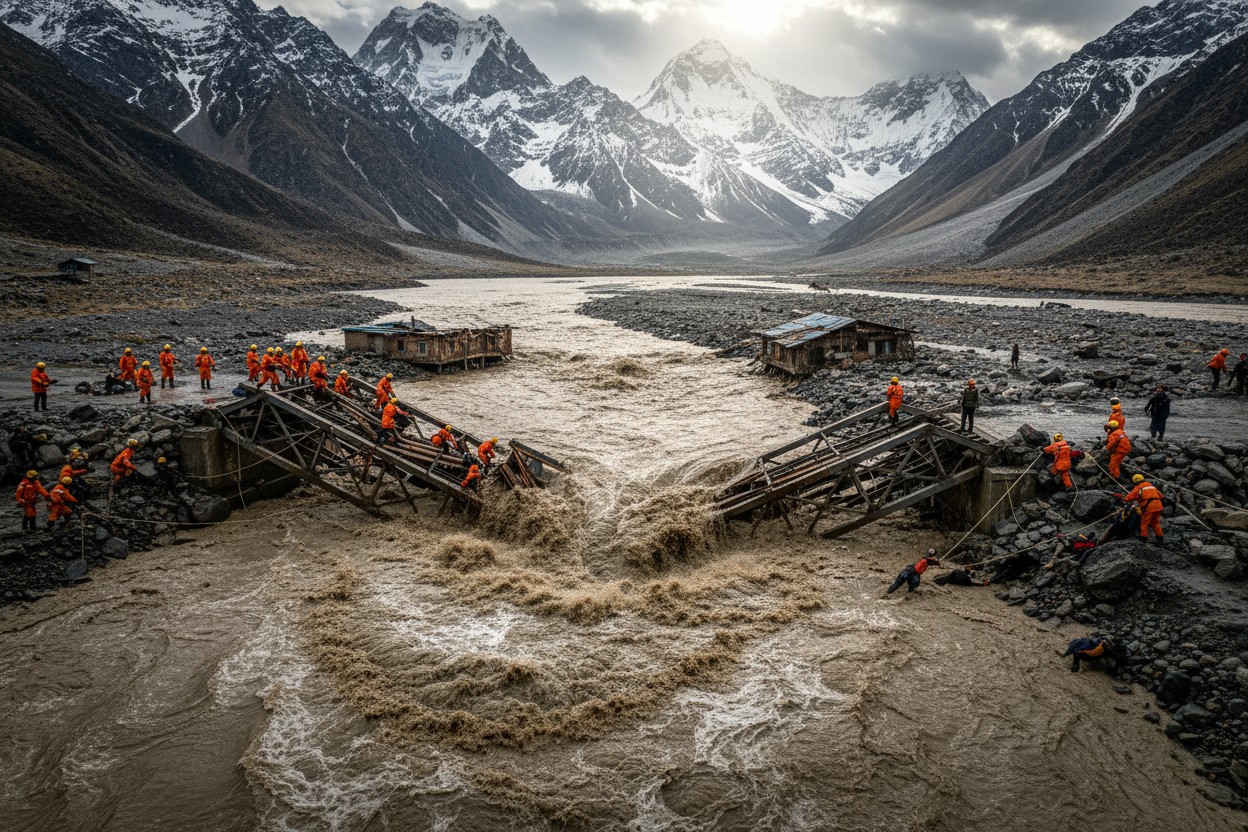
The office of Nepali Prime Minister Balendra Shah reported at least 95 dead. Meanwhile, China's state broadcaster CCTV said a mudslide in the Tibet region's Gyirong County near the border killed at least three and left 265 missing [1].
Flood waters surged through the Bhote Koshi River, which originates in Tibet, washing away entire villages and infrastructure project sites, the authorities said [2]. Officials reported 403 missing in Nepal – including 341 foreigners – with rescue efforts ongoing, according to reports from the region [1].
Missing Persons Include Tourists, Workers Across Multiple Countries
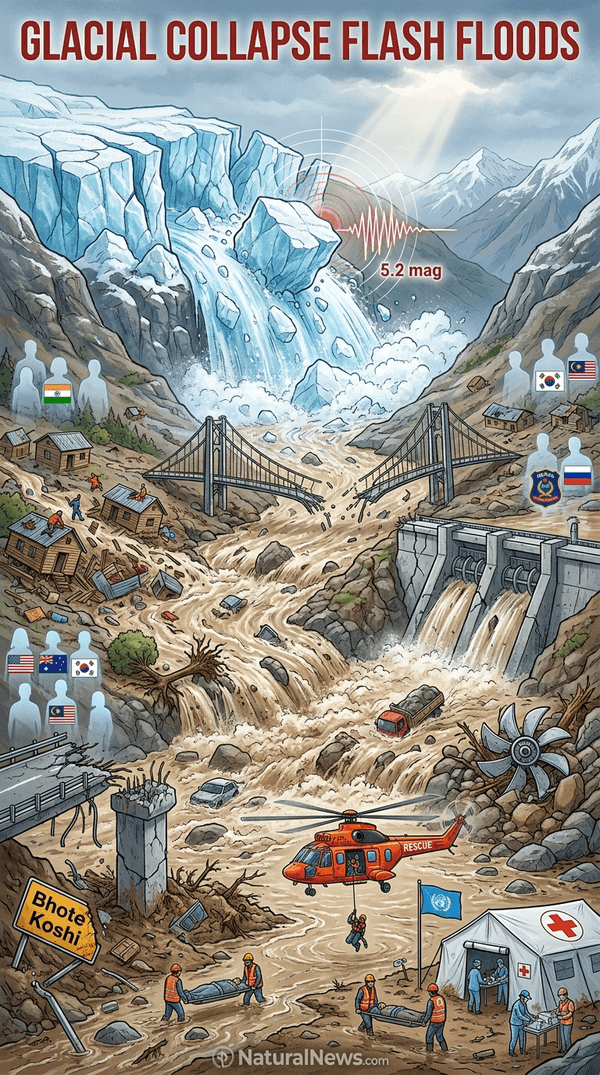
The list of missing includes citizens from multiple countries, according to tourism board spokesperson Sunil Sharma, who said 133 Indian pilgrims, 47 Americans and 34 Australians were among the unaccounted for [1]. At least 62 Nepali citizens were reported missing in Rasuwa district, and 28 police officials were also reported missing, according to the same reports [1].
Officials from South Korea, Malaysia and Russia confirmed that citizens from their respective countries remained unaccounted for in the affected areas [1]. The flash flood also swept away more than 50 security and police personnel, according to an initial report from the authorities [2].
Infrastructure Destroyed, Rescue Operations Underway
The floodwaters destroyed at least 19 bridges and nearly 40 kilometers of road, according to officials, who warned residents to stay away from river banks [1]. Hydropower projects, bridges and roads were damaged or destroyed across the mountainous region bordering Tibet [2]. Nepal's government spokesperson Sasmit Pokharel said India and China had been asked for rescue assistance [1].
United Nations bodies are deploying to meet what spokesperson Stephane Dujarric described as a "massive humanitarian need" [1]. Drone footage from the area showed roads destroyed and communities cut off, according to reports [1].
Experts Cite Glacial Collapse, Not Earthquake
The U.S. Geological Survey revised its initial earthquake reading to a magnitude 5.2 glacial collapse, based on seismic data and satellite imagery, according to reports [1]. Climate experts at the International Centre for Integrated Mountain Development stated that an avalanche from a glacier likely caused the flood [1].
Hydrological observations recorded that water levels on the Trishuli River rose nine meters in half an hour, according to officials [1]. Flash floods of this type occur when short but heavy falls of rain do not leave the water time to soak away, causing streams to suddenly fill and swell the river they flow into [3].
Previous Flooding and Regional Vulnerability
The region has experienced similar disasters in recent years. Similar flash floods in August of the previous year killed nine people when a glacial lake in Tibet overflowed, according to reports [1]. The Himalayas have long been a site of such events, with rivers in the mountains carving deep valleys and tending to have steep gradients that can channel water with great force [4].
Resident Shoyam Rajbhandari said the flood came within half an hour of reaching Dhunge bazaar, damaging the entire market [1]. This incident highlights the ongoing vulnerability of mountain communities to sudden hydrological events, a reality also noted in other mountainous regions where intense storms combined with snow melt have created saturated conditions and explosive outbursts of material [5].
References
- NTD. "At Least 98 Killed and Hundreds Missing After Flash Floods in Nepal and China". August 26, 2026.
- RT. "Massive flash flood in Nepal sweeps away villages and bridges". August 26, 2026.
- Unknown. "The amazing secrets of nature".
- Stephen Marshak. "Earth portrait of a planet".
- Murray A Roed. "Okanagan Geology British Columbia".
Explainer Infographic









Please contact us for more information.


