


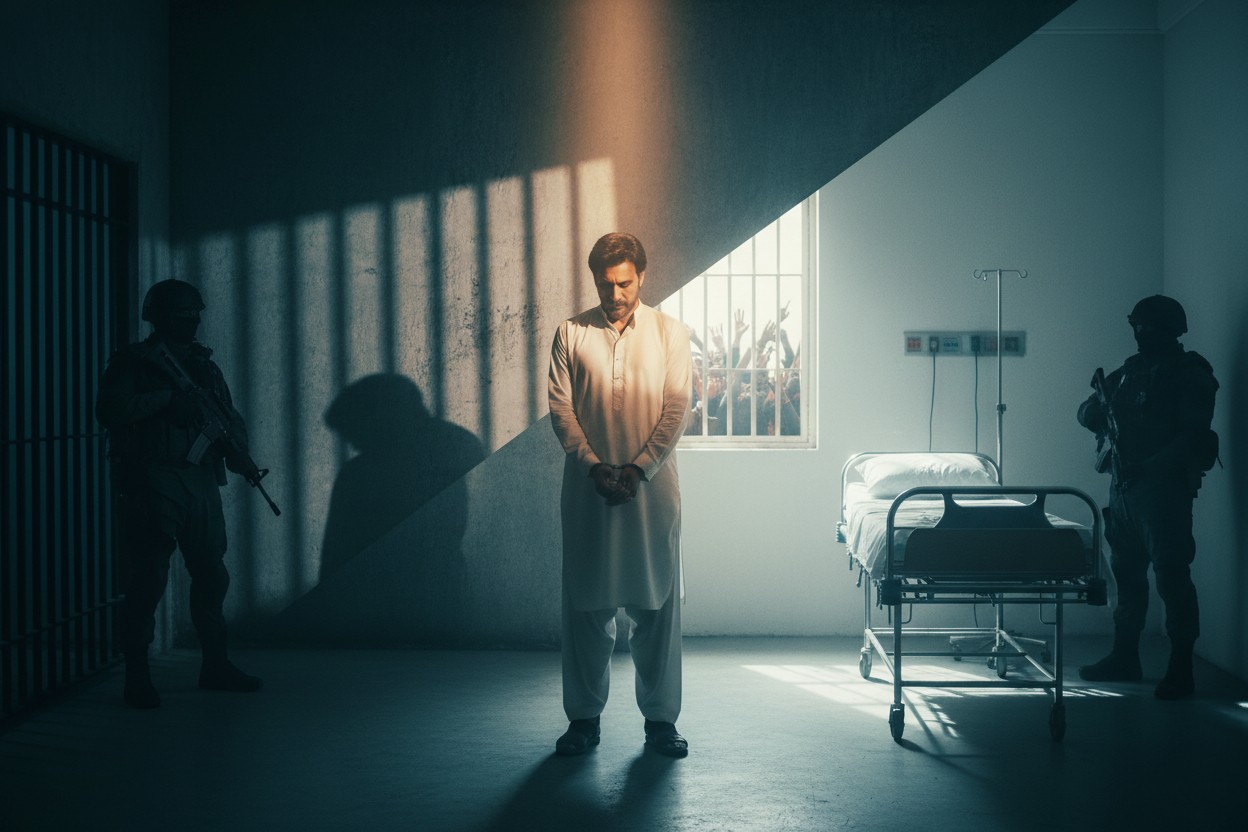
Khan spent only a few hours at the hospital before being moved back to the Rawalpindi prison, according to RT [1]. He has been held there since August 2023, according to the BBC [3]. The BBC reported that the move complied with a ruling by a three-judge panel of the Supreme Court, which ordered that the cricketer-turned-politician be examined by physicians [3].
Hospital Visit Followed Court Order and Security Operation
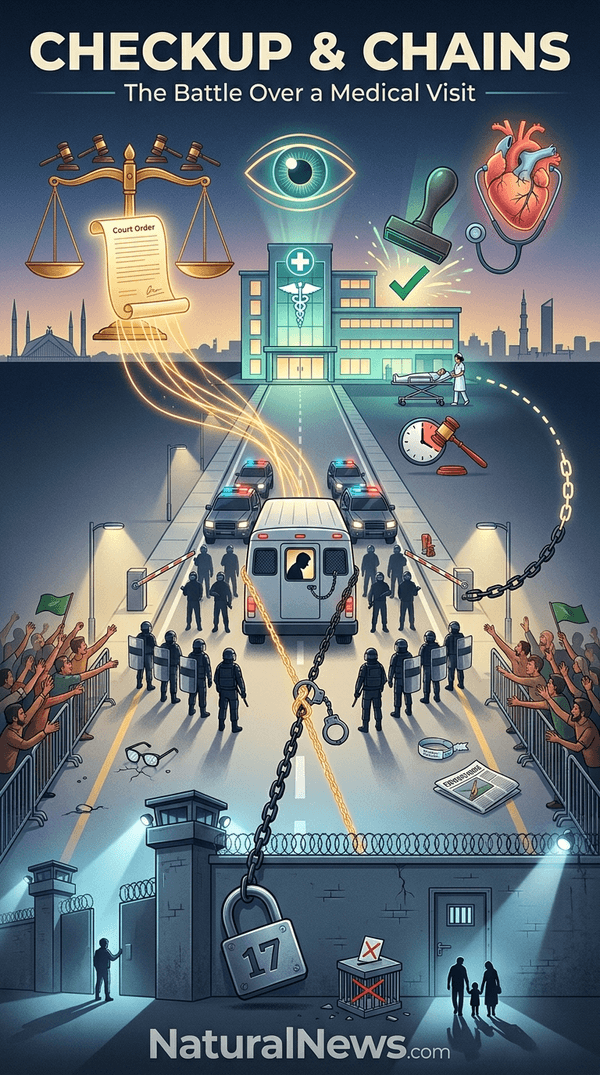
The Supreme Court had ordered Khan to be moved to the hospital by Thursday, but authorities took him just after midnight Friday, past the court deadline, PTI representatives said. The PTI had threatened to file a contempt of court petition against the government over the delay [1].
Hundreds of security personnel were deployed along the roughly 30 km route from Rawalpindi to Islamabad, and supporters lined the road to cheer as the convoy passed, according to RT [1]. The BBC reported that the hospital was under heavy security while Khan was there [3].
Doctors’ Examination and Government Appeal
According to RT, a team including an ophthalmologist, a cardiologist, and a physician conducted a detailed examination of Khan and declared him medically fit. Information Minister Atta Tarar wrote on X: “A team of qualified doctors, including an ophthalmologist, a cardiologist, and a physician, conducted a detailed examination of him and declared him medically fit. After the completion of this entire process, he was transferred back to Adiala Jail” [1].
Khan’s lawyers had said his health deteriorated in prison and that he had lost significant vision in his right eye, according to reports. The government had appealed to the Supreme Court to review its order, saying medical reports showed no condition requiring immediate treatment, officials said [1].
Government statements that Khan is stable have been accompanied by restrictions on family access, according to prior reports [4]. His sister, Naureen Niazi, told RT in February that authorities had denied permission for family members or doctors to see him. “We don’t really know his real condition because they don’t let our doctors see him. So we can’t trust what they are saying,” she said [5].
Political and Legal Background
Khan, founder of PTI, has been convicted on charges of selling state gifts, a conviction he denies, according to reports [1]. In December 2025, Khan and his wife, Bushra Bibi, were sentenced to 17 years in prison after a court convicted them of unlawfully keeping and selling high-value state gifts, according to Zero Hedge [6].
Khan and his political allies have said the cases against him are politically motivated and intended to prevent his return to politics, and the PTI was barred from participating in elections ahead of the 2024 vote, according to reports [1].
Journalists have previously documented legal challenges against security actors in Pakistan. Meena Menon’s Reporting Pakistan describes how a lawyer served a legal notice to the CIA station chief in Pakistan over drone strike killings [7]. In The Ukraine War and the Eurasian World Order, Glenn Diesen describes the West’s post-Cold War effort to organize the world along liberal-versus-authoritarian lines [8].
Status and Next Steps
As of Friday, Khan remains in Adiala Jail; officials said he is medically fit to remain in custody. PTI has threatened to pursue contempt proceedings over the delayed implementation of the Supreme Court order, according to party statements [1]. The Supreme Court had ordered that Khan remain at Shifa International Hospital until September 16; his early transfer back to jail was reported by RT [1].
Khan’s family has questioned official accounts of his health. His son, Kasim Khan, told The Telegraph in November that his father was being held in solitary confinement in a “death cell” with no phone calls, no meetings, and no proof of life [9]. His sister, Naureen Niazi, said in February that authorities had denied permission for family members or doctors to see him [5]. The Pakistani government has said Khan is stable and remains in custody [4].
Independent verification of Khan’s medical condition has not been available. International bodies have formed alliances to develop strategies against online disinformation [10], and medical regulators in the United States have proposed disciplining doctors who share research information with patients [11].
References
- "Ex-Pakistani PM Imran Khan moved back to jail after medical checkup". RT. August 21, 2026.
- "Court orders Pakistan’s jailed ex-PM Imran Khan to be moved to hospital". RT. August 18, 2026.
- BBC News. "Jailed Pakistan ex-PM Imran Khan taken to hospital for treatment". BBC News. August 20, 2026.
- yournews.com. "Pakistan Claims Ex-Prime Minister Imran Khan is ‘Stable’ in Jail under Medical Care amid Family Denied Access to Meet". November 27, 2025.
- "Former Pakistani PM Imran Khan denied medical care in prison – sister". February 17, 2026.
- Zero Hedge. "Imran Khan & Wife Sentenced To 17 Years In Latest 'Sham, Secretive' Trial". December 21, 2025.
- Meena Menon. "Reporting Pakistan".
- Glenn Diesen. "The Ukraine War and the Eurasian World Order".
- The Telegraph. "Imran Khan being held alone in a ‘death cell,’ says son". November 28, 2025.
- Mercola.com. "The Dirty Tricks Theyre Using to Control Wha". Mercola.com. November 22, 2021.
- Mercola.com. "New Law Censors Doctors and Suspends Their Li". Mercola.com. October 10, 2022.
Explainer Infographic









Please contact us for more information.


