



The trial opened Tuesday in U.S. District Court before Judge Yvonne Gonzalez Rogers and is expected to last six weeks, according to court officials. Jurors are expected to issue an advisory verdict, and Judge Gonzalez Rogers will decide liability and any civil penalties or changes to Facebook and Instagram. California, Colorado, Kentucky and New Jersey are parties to a wider lawsuit involving 29 states, filed in 2023, according to [1]. The states accuse Meta of designing Facebook and Instagram to hook young users and of misleading consumers about safety, and they accuse Meta of violating federal law by collecting and using personal data of children under 13. Meta has denied the allegations. [2]
Testimony at Trial
Béjar disputed Zuckerberg's October 2021 comments following whistleblower allegations that Meta knew its products were unsafe for children and did not act to protect them. "It's so false, every part of it," Béjar said. "You just cannot trust Mark Zuckerberg with kids."
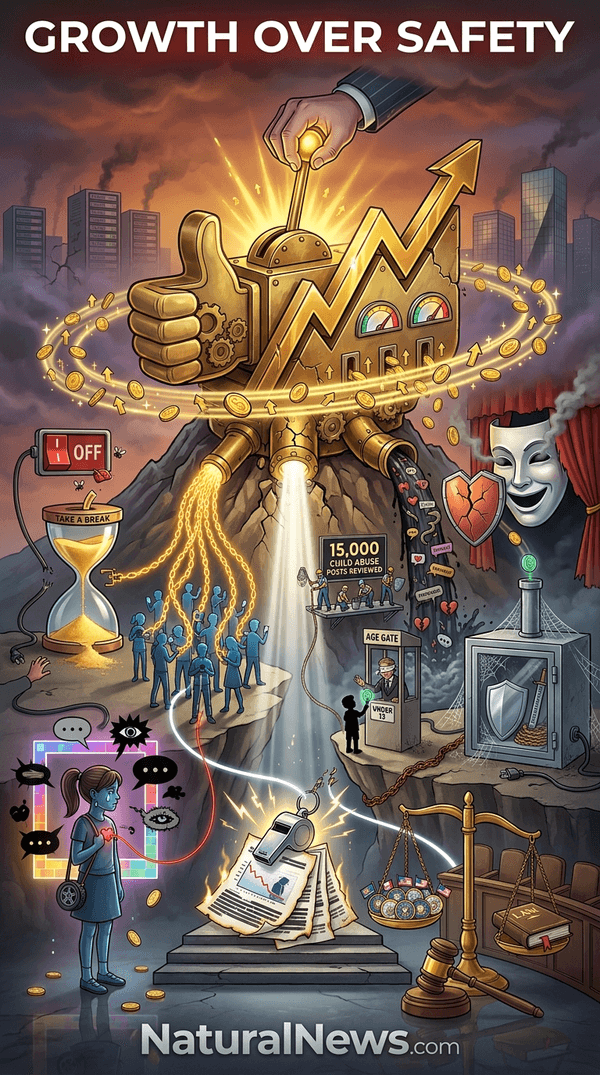
Béjar said Meta's "take a break" tool, a feature central to Meta's defense, was "designed to fail" because it is not the default setting and reminders are easy to ignore, according to his testimony. He said it was "common knowledge" at Meta that most parents did not have time to understand the company's products or how their children used them.
Internal content moderation work has included a team that reviewed 15,000 posts each month related to parents raping children, child sexual abuse and sexual slavery, according to [3].
Allegations and Disputed 2021 Statements
Béjar said he emailed Zuckerberg about safety concerns after his daughter, then 16, received misogynistic comments on Instagram, including comments about her breasts. "I kept an eye on how distressing it was for her," Béjar said. "She got a good following, at the price of harm."
He testified that Meta had technology to flag potentially millions of users suspected to be under age 13 but adopted a "don't ask, don't tell" policy because flagging them would reduce long-term profits.
New Mexico's attorney general filed a separate lawsuit alleging Meta recommended sexual content to underage users and promoted young users' accounts to alleged child predators. [4] Meta has also struggled to remove child sexual abuse material from Facebook and Instagram, according to earlier reporting. [5]
Cross-Examination and Work History
Under cross-examination by Meta's lawyer Brian Stekloff, Béjar acknowledged he was unaware of the harm his teenage daughter would face when he helped her set up an Instagram account, according to court testimony. He said she wanted a space where women could discuss cars but instead encountered misogynistic comments. Béjar also acknowledged that Meta employs hundreds of safety-focused staff, including people he considered well-qualified.
Béjar said he was not working directly with Zuckerberg during his second stint at the company, which ran from 2019 to 2021 as an independent contractor, and that he lacked access to some resources. From 2009 to 2015, he served as a director of engineering for Facebook's Protect and Care team, according to [6].
In 2023, Béjar testified before a U.S. Senate committee that Meta was aware of harassment and other harms facing teenagers on its platforms but failed to address them, according to [6]. He has since appeared as a key witness against the company at four trials, according to court proceedings.
Broader Evidence and Legal Context
After Béjar finished testifying, jurors heard recorded testimony from Meta researcher Elena Davis, who read from a report stating that Meta could change Facebook to have "less potential to be habit-forming and provide support for people to 'break' Facebook habits they don't want," according to the trial record.
Experts have described the trial as the biggest legal test yet of social media's effects on young users. [7] Meta faces thousands of similar lawsuits over alleged harm to children. Earlier this year, a New Mexico jury ordered Meta to pay $375 million for misleading users over child safety, a ruling that marked the first time the company had been held liable by a court for endangering child safety, according to [8] and [9]. A Los Angeles jury also found Meta and YouTube liable for designing addictive platforms. [10]
Meta has estimated potential penalties at up to $1.4 trillion, while state attorneys general have said the figure may be closer to $200 billion, according to [2]. Some writers on child welfare have called for technology companies to exercise greater social responsibility and to apply the precautionary principle, which emphasizes anticipating harm before it occurs. [11]
References
- "Why is Meta in court again?". August 17, 2026.
- The Epoch Times. "Meta Rejects Claims it Tried to Addict Children to Facebook, Instagram as Landmark Trial Starts". August 19, 2026.
- Trends-Journal-2023-08-30.
- NaturalNews.com. "New Mexico attorney general files lawsuit against Meta for allowing pedophiles on Facebook and Instagram". December 20, 2023.
- NaturalNews.com. "Mark Zuckerbergs Meta struggling to remove child sexual abuse materials from Facebook and Instagram". December 7, 2023.
- NaturalNews.com. "Former Meta director says Instagram FAILED to protect teen users". November 27, 2023.
- NaturalNews.com. "Zuckerberg's Meta Accused of Engineering A Trillion-Dollar 'Addiction Machine' Targeting Kids at Landmark Trial Opening". August 20, 2026.
- BBC News. "Meta told to pay $375m for misleading users over child safety". March 24, 2026.
- TechCrunch. "Meta was finally held accountable for harming teens. Now what?". March 31, 2026.
- Laura Harris. "Jury finds Meta and YouTube liable for addictive design in landmark social media case". NaturalNews.com. March 27, 2026.
- Ann Douglas. "Happy Parents Happy Kids".
Explainer Infographic











Please contact us for more information.


