


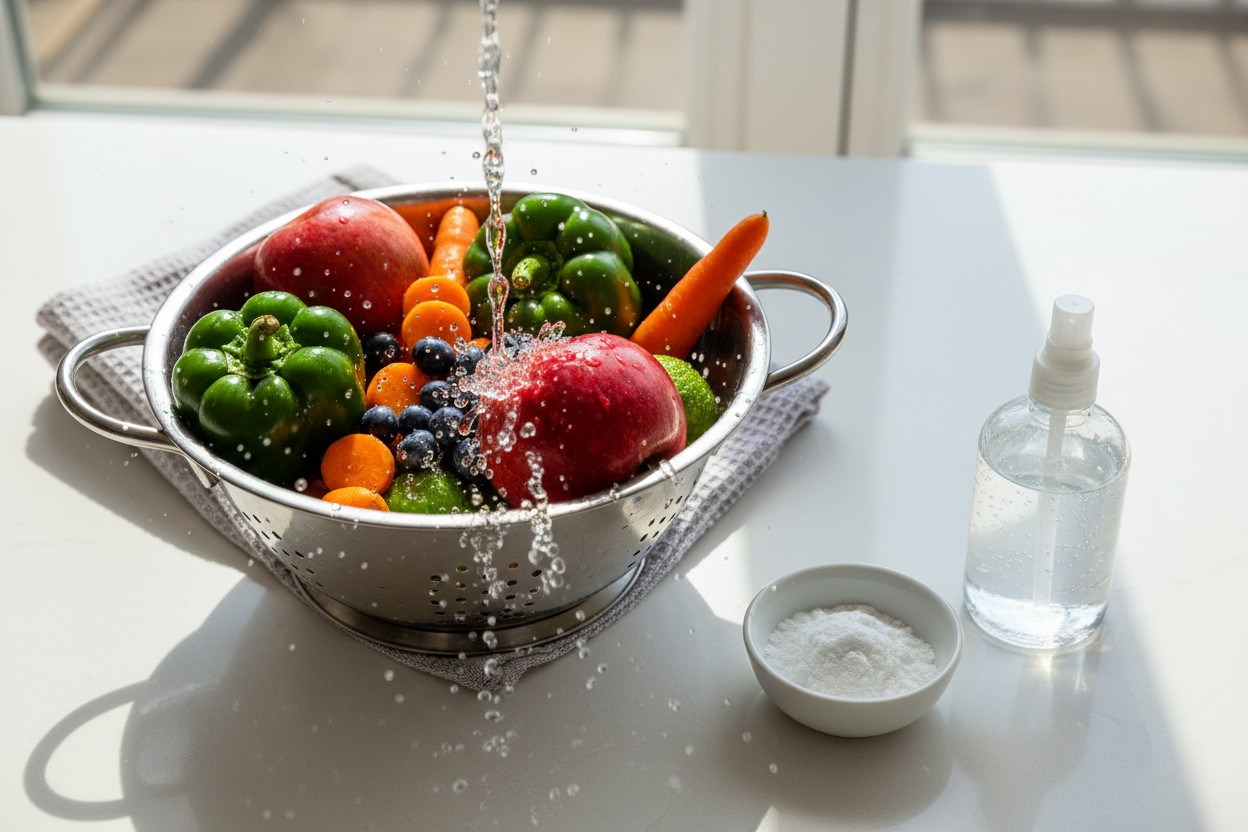
Washing Produce Reduces Contaminants
Cleaning fruit and vegetables at home reduces surface germs, pesticides, and soil, according to food safety agencies and nutrition researchers.
The Centers for Disease Control and Prevention (CDC) reported 5,760 foodborne outbreaks between 2009 and 2015, resulting in 100,939 illnesses, 5,699 hospitalizations, and 145 deaths, with contaminated vegetables among the causes, according to a report on lettuce contamination [1]. Pesticide residue is a consideration for consumers whether they are eating pears from an orchard, spinach from a grocery store, or peppers from a local farmers market, according to an article on produce washing [2].
"Washing fresh fruits and vegetables removes most, if not all, of the pesticide residues," according to the book "Understanding Nutrition" [3]. Officials said no washing method eliminates all pesticide residue, but rinsing is a necessary step before eating.
Water Rinsing Is the Standard Recommendation
The Food and Drug Administration (FDA) and the CDC state that plain running water is the standard method for cleaning most produce. Food safety experts recommend washing hands properly before and after handling food to prevent contamination of other kitchen items, and they advise keeping produce and raw meat separate to help prevent cross-contamination, according to an article on safe food handling [4].
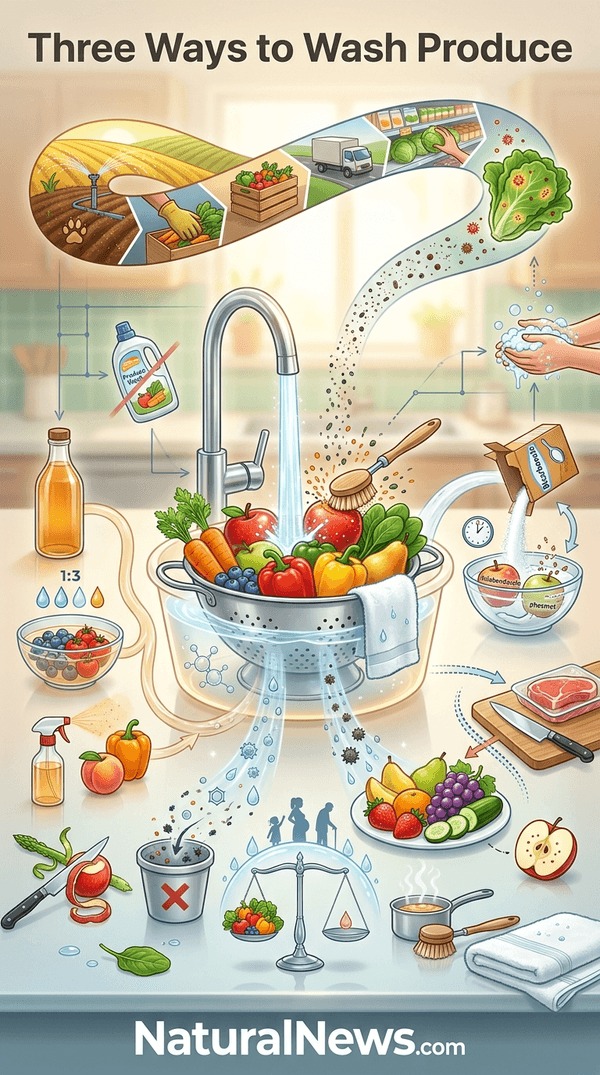
Officials instruct placing produce in a colander, scrubbing firm items such as apples and carrots with a brush, rinsing thoroughly, and patting dry with a clean towel. Washing fruits and vegetables with clean running water while using a vegetable brush can remove up to 81% of pesticide residue, according to a study by the University of California cited in the book "Nutrition You" [5]. The same study found no significant difference in residue removal between plain water and a commercial produce wash [5].
Vinegar Soak and Spray Methods
For small produce such as blueberries and cherry tomatoes, the University of Maine Cooperative Extension recommends soaking items in a solution of vinegar and water for several minutes before rinsing. For larger items such as bell peppers and peaches, a vinegar-water spray applied to the surface is advised before rinsing, according to the extension service.
Vinegar can reduce bacteria on produce surfaces, though its effect on pesticide residues is limited, according to extension service guidance. The practice of using inexpensive kitchen ingredients to clean produce has drawn increased attention as pesticide residue concerns have grown, according to an article on produce washing [2]. Food safety specialists said vinegar acts as a natural sanitizer but should always be followed by a water rinse.
Baking Soda Soak Removes Pesticides
A 2017 study published in the Journal of Agricultural and Food Chemistry found that soaking apples in a solution of 1 teaspoon of baking soda per 2 cups of water for 12 minutes removed more pesticide residue than water alone. Study author Lili He said baking soda can effectively remove surface pesticide residues from produce.
The method involves moving produce through the solution, scrubbing firm items, and draining before rinsing. Research on apples treated with the fungicide captan found that washing reduced residues on the fruit [6]. Washing, peeling, and cooking fruits and vegetables reduces pesticide residue levels, according to the book "Understanding Nutrition for Pima Community College" [7]. Officials noted that soaking longer than 12 minutes is not necessary and may affect texture.
Washing Limits Pesticide Exposure
According to researchers, washing and soaking reduce pesticide levels but cannot completely eliminate them. Dangers from exposure to pesticides through food depend on how potent the chemical toxin is, how concentrated it is in the food, how much and how frequently it is eaten, and the consumer's resistance or susceptibility, according to Wardlaw's "Contemporary Nutrition" [8]. The same text states that accumulating information links pesticide use to increased cancer rates in farm communities, and that in rural U.S. counties the incidence of lymph, genital, brain, and digestive tract cancers increases with higher-than-average pesticide use [8].
Experts said peeling produce removes more pesticides than washing alone. A study of field-sprayed asparagus found that washing did not alter residue levels of chlorpyrifos in raw produce, but peeling reduced them by 60% [9].
The same study reported that residues of the insecticide acephate on artichokes were completely removed by blanching and remained undetected through coring to the finished product [9]. Fresh produce, whether organic or conventionally grown, is one of the healthiest food choices available, according to a report on pesticide limits [10].
Additional Safety Tips and Conclusion
The FDA advises against using detergent, soap or commercial produce washes, as produce can absorb these products. It is safer to separate and clean produce and meat to help prevent cross-contamination, and raw meat and poultry should be kept separate in grocery bags, in the refrigerator, and during food preparation, according to food safety guidance [4]. Officials also recommend selecting unbruised items and storing cut produce below 40 degrees Fahrenheit.
Bagged greens labeled pre-washed can be eaten without further washing, according to the FDA. For the cleanest food possible, growing produce at home or purchasing certified organic products are the best options, according to the Health Ranger Mike Adams of "Brighteon Broadcast News" [11]. In conclusion, officials said water, vinegar and baking soda are effective home cleaning methods, with plain water remaining the simplest and most commonly recommended approach.
References
- Mercola.com. "Factory Farm Responsible for Lettuce Contamination". Mercola.com. August 21, 2018.
- Mercola.com. "Want an Efficient and Inexpensive Way to Wash Your Produce?". Mercola.com. November 11, 2017.
- "Understanding Nutrition Eleanor Noss Whitney".
- Mercola.com. "Should You Wash Your Produce". Mercola.com. January 09, 2019.
- "Nutrition You CORE CONCEPTS FOR GOOD HEALTH".
- Richard Frank, Heinz E. Braun, and Jana Stanek. "Removal of Captan from Treated Apples". Archives of Environmental Contamination and Toxicology. 1983.
- Whitney Eleanor Noss. "Understanding nutrition for Pima Community College".
- Wardlaw Gordon M. "Wardlaws contemporary nutrition".
- Maria Jesus Chavarri, Antonio Herrera, and Agustin Arino. "Pesticide residues in field-sprayed and processed fruits and vegetables". Journal of the Science of Food and Agriculture. 2004.
- "EPA 'Safe' Limits for Pesticides on Food Geared Toward Adults, Not Kids". childrenshealthdefense.org.
- Mike Adams. "Brighteon Broadcast News".
Explainer Infographic











Please contact us for more information.


