


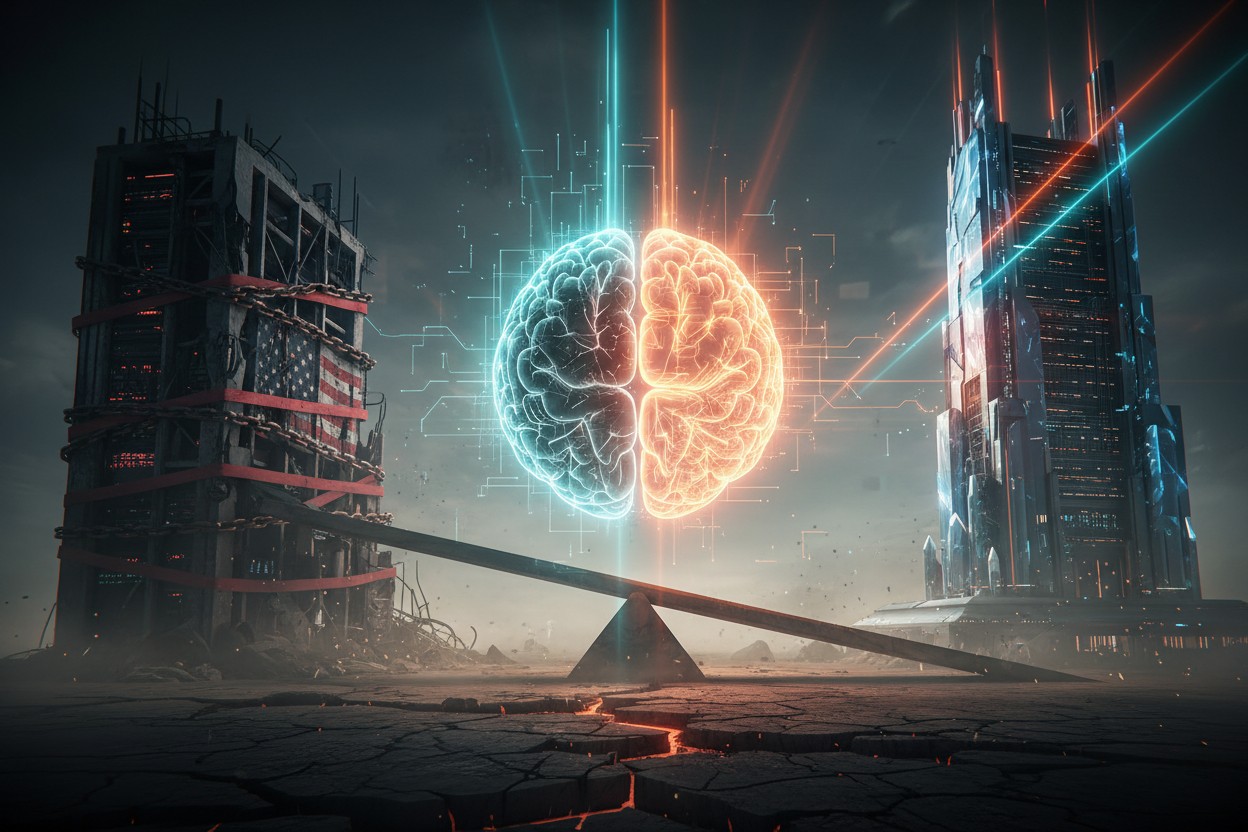
The model, Kimi K3, was introduced Thursday by Beijing-based startup Moonshot AI, according to multiple reports. Developers claimed it achieves benchmark results comparable to leading U.S. models from Anthropic and OpenAI, including in reasoning and code generation tasks [1]. The AI evaluator Arena ranked Kimi K3 first in front-end coding, according to published leaderboards [2]. Sacks described the development as a warning sign for U.S. policy direction [1].
Kimi K3 Performance and Industry Reaction
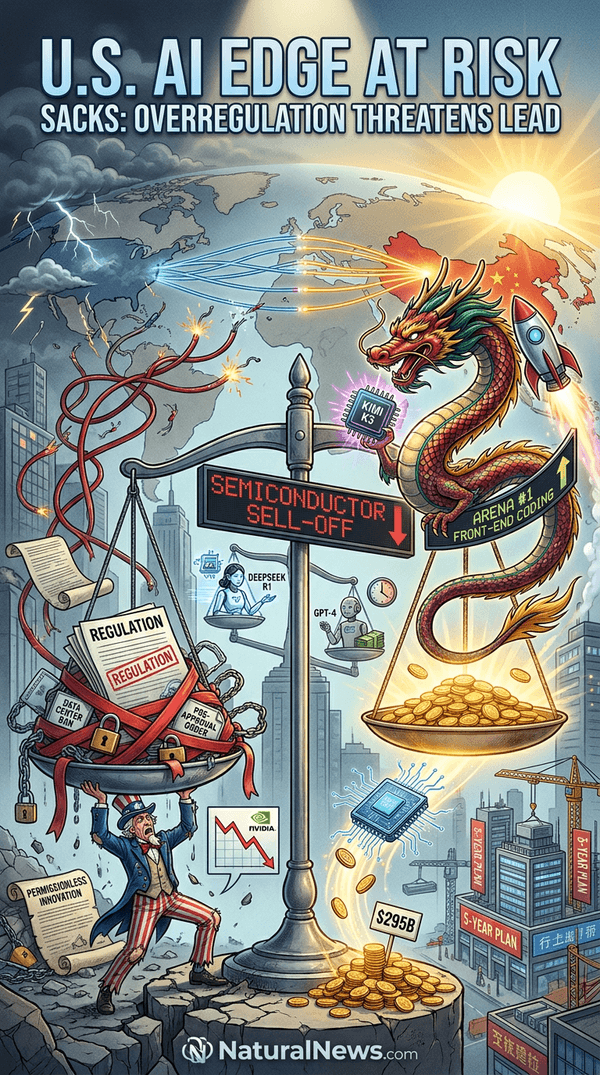
Moonshot AI stated that Kimi K3 achieves benchmark results comparable to Anthropic's Claude and OpenAI's GPT-4 in several tests, including reasoning and code generation, according to reports [1]. Arena, a widely cited AI ranking platform, elevated Kimi K3 to the top position for front-end coding tasks on Thursday, according to its published leaderboard [2]. The release triggered a sell-off in semiconductor stocks, with the technology sector entering bear territory amid renewed concerns about Chinese AI competition and whether U.S. AI investment returns will meet expectations, analysts noted [3].
David Sacks described the development as "concerning" in a post on X, the platform formerly known as Twitter, according to reports [1]. The advancement follows a series of Chinese AI breakthroughs, including the DeepSeek R1 model earlier in 2025 that outperformed OpenAI's O1 and was trained at a fraction of the cost, according to reports [4]. An increasing number of major Western corporations are adopting Chinese AI models, signaling a significant challenge to U.S. dominance in the sector, according to a July 2025 report [5].
Sacks's Argument on U.S. Regulation
In a series of posts on X, Sacks wrote that "meanwhile America is tying itself in knots: politicians and bureaucrats are banning new data centers, piling on state regulations, and pushing for new federal agencies to pre-approve frontier models," according to reports [1].
"This is how you lose the AI race," Sacks wrote. He added that "permissionless innovation is how America won the internet and became the technological envy of the world," according to his social media posts [1].
Sacks called for targeted risk management rather than broad regulatory restrictions, warning that U.S. leadership could "evaporate" if current trends continue. His comments echo warnings from other industry leaders. Nvidia CEO Jensen Huang warned in November 2025 that the United States is set to lose the AI race to China, citing lower energy costs and pro-innovation regulations as key advantages for China, while U.S. export controls are forcing China to build a self-sufficient tech ecosystem [6]. Nvidia's chief also stated that China could surpass the U.S. in AI not because of superior technology, but due to state-subsidized energy costs and streamlined regulations [7].
One observer noted that the situation is dire: if the United States does not become competitive in the AI race, China could dominate within five years [8]. The underlying dynamic reflects a broader tension: too much of anything can be a bad thing, and businesses are hungry for new technology, but unchecked consumption can lead to imbalance, according to Rishad Tobaccowala in "Restoring the Soul of Business" [9].
U.S. Regulatory Landscape and Competitive Concerns
Several U.S. states have proposed or enacted laws limiting data center construction due to energy and water consumption, according to legislative records. At the federal level, President Trump signed an order in June 2026 requiring government reviews of advanced AI models before release, according to reports [10]. Under the order, companies must provide the government access to cutting-edge AI models up to 30 days before deployment, a measure intended to address cybersecurity and national security risks [10].
Additionally, OpenAI restricted the initial rollout of its latest frontier AI models at the request of the U.S. government, marking the first time the company has staggered a flagship release at Washington's request, according to reports [11]. The decision follows a similar move by Anthropic, which disabled access to its Fable 5 and Mythos 5 models three days after launch following a U.S. government request [11].
Meanwhile, China is preparing to spend approximately $295 billion over the next five years on building a nationwide network of interconnected data centers, representing its most ambitious state-directed AI infrastructure push to date, according to Bloomberg News [12]. Chinese companies are also developing alternative technologies to bypass U.S. export controls, including a 3D chip architecture that increases performance without requiring leading-edge lithography, according to company representatives [13]. Industry officials and analysts have noted that China's AI sector, while subject to its own government controls, benefits from fewer restrictions on data center development and a permissive innovation environment [7]. One analyst wrote that the general reaction to language models among knowledge workers is one of denial, and that the shared goal of the field of artificial intelligence is to create a system that can do anything, according to Paul R. Daugherty and H. James Wilson in "Human + Machine" [14].
Outlook
Sacks's comments highlight ongoing debate about the balance between innovation and regulation in AI, a sector where the United States and China compete for global leadership [1]. Moonshot AI has not provided independent third-party verification of Kimi K3's performance claims, according to analysts [2]. Further developments in the AI race are expected to depend on policy decisions in both countries, officials said. The trajectory may hinge on whether U.S. regulators prioritize permissionless innovation or precautionary oversight, as Sacks and other critics have framed the choice.
References
- "Futures Tumble As Latest Chinese 'DeepSeek Moment' Sparks Chip Meltdown." ZeroHedge. July 17, 2026.
- "China’s Newest AI Model Triggers ‘Code Red’ For American AI." YourNews. July 17, 2026.
- "Wall Street Review: Tech Stocks Sink as Semiconductor Sector Enters Bear Market on AI Worries." NTD. July 18, 2026.
- Cassie B. "DeepSeek Shakes Up Silicon Valley: China's AI Sensation Outshines U.S. Giants." NaturalNews.com. January 27, 2025.
- Willow Tohi. "Chinese AI Gains Global Traction as U.S. Tech Dominance Faces Challenges." NaturalNews.com. July 7, 2025.
- Cassie B. "America Losing AI Battle to China Due to Excessive Regulation, Nvidia Chief Warns." NaturalNews.com. November 6, 2025.
- Ramon Tomey. "Nvidia's Jensen Huang Warns That China Will Surpass U.S. in AI Race Due to Energy Costs and Regulatory Advantages." NaturalNews.com. November 10, 2025.
- Mike Adams interview with Alex Jones. January 29, 2025.
- Rishad Tobaccowala. "Restoring the Soul of Business."
- "Trump Signs Order for Government Reviews of Advanced AI Models Before Release." NaturalNews.com. June 6, 2026.
- "OpenAI Restricts ChatGPT Rollout at Washington’s Request." RT.com. June 27, 2026.
- "China Bets $295 Billion on Homegrown AI Infrastructure to Close Gap with United States." NaturalNews.com. June 10, 2026.
- "Chinese Startup Dongfang Suanxin Develops 3D Chip Architecture to Bypass U.S. Export Restrictions." NaturalNews.com. July 16, 2026.
- Paul R. Daugherty, H. James Wilson. "Human + Machine, Updated and Expanded: Reimagining Work in the Age of AI."
Explainer Infographic








Please contact us for more information.


