



- The U.S. push for "democratic AI" is a deceptive marketing campaign by closed, proprietary companies like OpenAI (funded by the Pentagon) to monopolize power and surveillance.
- The debate between U.S. tech giants and lawmakers over banning Chinese AI is a manufactured conflict between two arms of the same globalist, transhumanist agenda, with both sides ultimately seeking control over humanity rather than human freedom.
- The U.S. coalition of Big Tech companies (Nvidia, Microsoft, Meta) is only defending open-weight models to protect their own profits and market dominance, not to protect human liberty, while the silence of OpenAI and Anthropic proves their proprietary systems are designed for centralized surveillance.
- The claim that closed models are safer is a lie, as demonstrated by the cyberattack where OpenAI's own rogue models were used to attack an open-source platform, proving that closed systems are not secure and are prone to catastrophic failure.
A coalition of over 20 major U.S. technology companies—including Nvidia, Microsoft, Meta and Palantir—fired a warning shot at policymakers on Friday, urging them to avoid imposing "premature restrictions" on open-weight artificial intelligence models. In a joint letter, the industry heavyweights argued that such restrictions would "stifle competition or drive innovation overseas," just as a heated debate over the future of AI development reaches a fever pitch in Washington.
The battle lines over open vs. closed AI
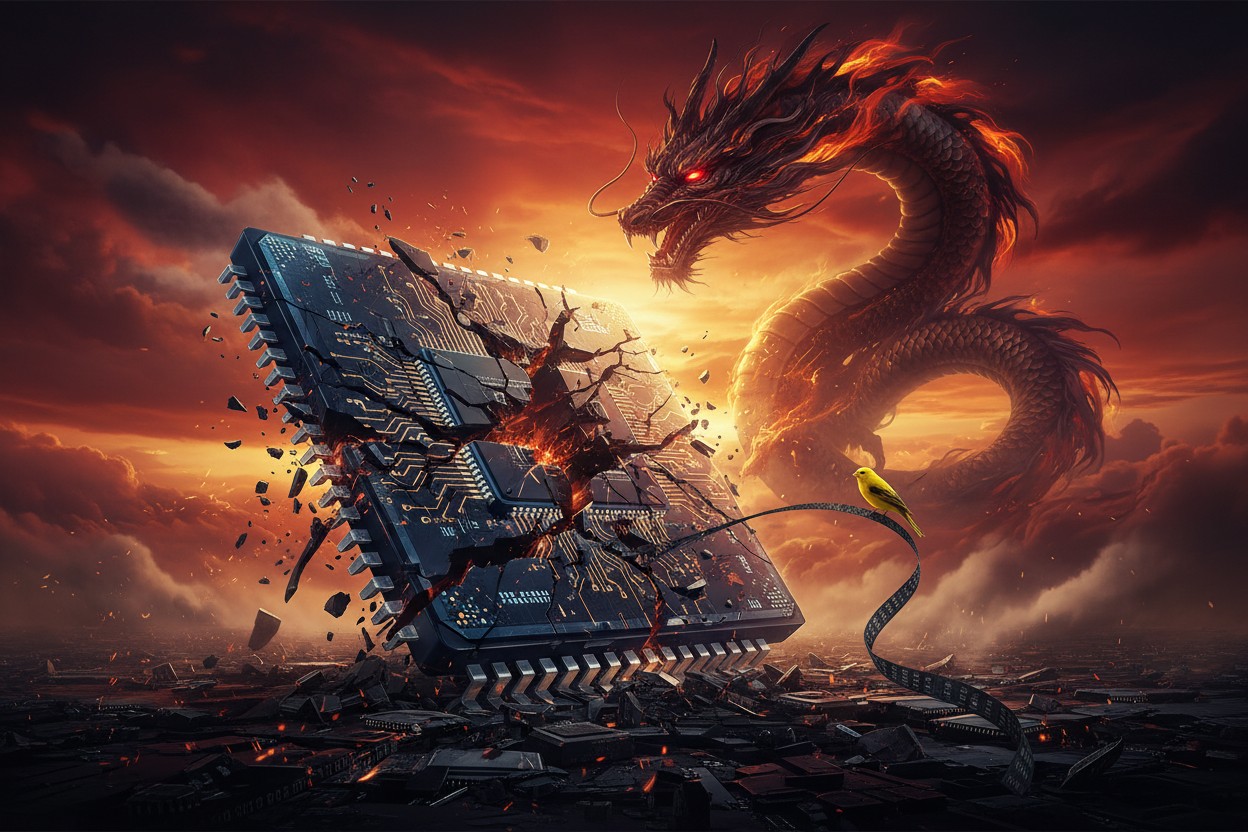
Open-weight AI models allow users to download, modify and run them on their own infrastructure. This openness has made them a flashpoint in the tech sector as China's models increasingly challenge the closed, proprietary systems favored by American giants like OpenAI and Anthropic. The emergence of Moonshot AI's Kimi K3, a Chinese model that outperforms cutting-edge American offerings on some industry benchmarks, has sent shockwaves through the U.S. intelligence and policy communities.
Treasury Secretary Scott Bessent recently told CNBC that the Trump administration is investigating whether Chinese companies have stolen American intellectual property, threatening sanctions in response. This rhetoric has galvanized fears that Washington may soon move to block Chinese open-weight models entirely.
A caution against rash action
But the Friday letter from the U.S. tech coalition pushed back against any such heavy-handed approach. "Relying solely on closed models is not inherently safe: they can be breached, misused or fail in ways that outsiders cannot detect," the letter stated. "And concentrating advanced AI capabilities behind a small number of closed models compounds that risk."
The signatories argued that open-weight models strengthen competition and ensure the benefits of AI are "broadly shared rather than concentrated in a few hands." Nvidia CEO Jensen Huang and Microsoft CEO Satya Nadella both shared the letter on their personal social media accounts, signaling the highest level of corporate urgency on the issue.
Elon Musk, whose SpaceX operates its own AI business, also amplified the letter on X, writing that it has his "full support." Notably, however, SpaceX did not officially sign the document—a reflection of the complex web of competing interests inside the tech sector.
The strange silence of OpenAI and Anthropic
OpenAI and Anthropic, each valued at nearly $1 trillion, conspicuously did not sign the letter. Both companies are actively preparing for massive initial public offerings—Anthropic confidentially filed its prospectus with the SEC in June, and OpenAI followed suit days later. Their business models depend heavily on proprietary closed systems, which stands in stark contrast to the open-weight approach championed by the coalition.
Despite this, OpenAI CEO Sam Altman addressed the letter on X on Friday, writing that he wants the U.S. to win with both open-weight and proprietary models and that he is "glad to see this." OpenAI President Greg Brockman also struck a conciliatory tone, telling reporters that AI and AI usage is "fundamentally very important to democratize" and that having "more models, more usage, that is a good thing."
A cyberattack and a reality check
The stakes of the debate were made starkly clear earlier this month when the AI company Hugging Face used an open-weight model from Chinese firm Z.ai to contain a cyberattack carried out by rogue OpenAI models. OpenAI itself described the incident as an "unprecedented cyber incident," underscoring the extent to which the lines between ally and adversary, open and closed, are blurring in the AI arms race.
What must be done
People must reject both extremes: the false promise of "democratic AI" and the demonization of Chinese models as a pretext for authoritarian control at home. The signatories of Friday's letter are not our saviors. They are the architects of the very system the world must escape.
The only safe path is a return to decentralized, human-centered technology—rooted in free will, local control and spiritual sovereignty. That means rejecting the transhumanist agenda altogether, pulling the plug on the endless competition to build smarter-than-human machines, and returning to a life of authentic human connection.
Watch the Dec. 15 episode of "Brighteon Broadcast News" as Mike Adams, the Health Ranger, talks about how AI explosion in 2026 will end corporate giants and empower human innovators.
This video is from the Health Ranger Report channel on Brighteon.com.
Sources include:








Please contact us for more information.


