



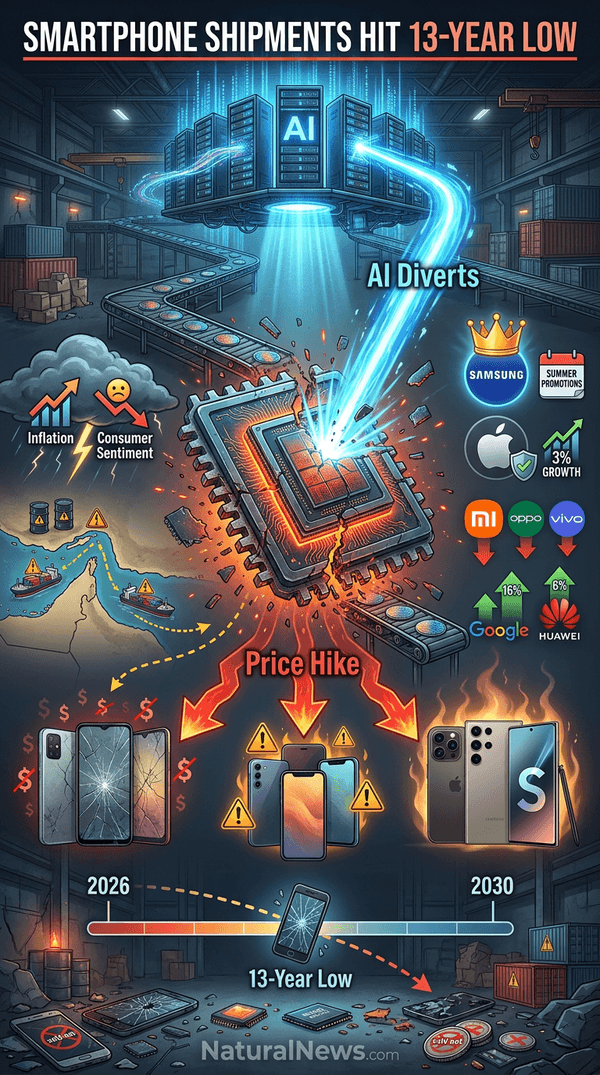
Prices for DRAM and NAND memory continued to rise as chipmakers prioritized AI customers over consumer electronics, according to Counterpoint. Analyst firm IDC previously predicted that the memory crisis would cause smartphone shipments to plummet by 12.9% in 2026, making it the largest single-year decline in over a decade [1]. Samsung Electronics led the market with a 24% share, while Apple’s share reached a record 20%, with iPhone shipments growing 3% year over year.
Memory Chip Shortage and Price Increases
The global memory crisis has become the single biggest drag on the smartphone industry, overtaking all other factors, said Shilpi Jain, senior analyst at Counterpoint Research. Chipmakers including Samsung and SK Hynix have diverted high-bandwidth memory production to meet demand from AI data center operators, squeezing supply for smartphones. SK Group Chairman Chey Tae-won warned that the memory crunch could last another four to five years, with supply unlikely to match demand until 2030 [2].
Entry- and mid-tier devices, which account for the majority of global smartphone sales, experienced the most pronounced price hikes, according to Jain. The shortage of high-bandwidth memory, a critical component for both AI accelerators and consumer electronics, has reshaped product roadmaps and raised costs across the technology industry [3]. “What started as a components issue last year is now a full-blown demand issue,” Jain said. As memory prices rise, manufacturers have been forced to pass on higher costs to customers, further dampening demand.
Manufacturer Responses and Market Leaders
Smartphone manufacturers adopted a range of strategies in response to rising memory costs, according to Jain. Some raised prices and accepted thinner margins, while others extended the lifecycle of older models, used promotions to attract customers, or delayed new product launches. Samsung reclaimed the top spot with 24% market share, driven by aggressive summer promotions and strong sales of its Galaxy S26 Ultra, which features a privacy display and AI capabilities. Apple’s iPhone shipments grew 3% year over year, and its market share climbed to a record 20%. Apple’s CEO Tim Cook said in a June interview that price hikes were unavoidable, and the company subsequently raised prices on tablets, speakers, and laptops, though not on iPhones.
Chinese brands Xiaomi, OPPO, and vivo each recorded double-digit shipment declines, hurt by rising memory costs and market volatility in entry- and mid-tier segments, Counterpoint reported. By contrast, Google and Huawei saw shipment increases of 16% and 6%, respectively. The pressure on budget-conscious buyers is especially acute, as roughly $400 can buy a good Android device or iPhone under normal conditions, but price hikes now push those options further out of reach [4]. Full-year 2026 global smartphone shipments are projected to decline 14%, according to Counterpoint.
Geopolitical and Macroeconomic Pressures
Ongoing geopolitical tensions in the Middle East added to the industry’s challenges by increasing shipping costs, according to Counterpoint. The closure of the Strait of Hormuz and related disruptions have pushed oil prices higher and raised freight expenses, squeezing budget-sensitive consumers further [5]. The broader macroeconomic environment also deteriorated, with slower global growth, higher inflation, and record-low consumer sentiment, Jain said. “This coincided with a broader macro squeeze, slower global growth, higher inflation, and record-low consumer sentiment, which hit price-sensitive buyers the hardest,” she added.
Strategic vulnerabilities in critical mineral supply chains have compounded the uncertainty. A recent U.S.-China rare earth deal aims to relieve automakers, but the national security risks of relying on China for materials remain [6]. The European Union and United States have launched a strategic stockpile of critical minerals to break China’s grip on resources essential for technology and defense. For the smartphone industry, these upstream pressures -- from memory chips to rare earth elements -- create a fragile supply environment that shows no immediate signs of easing.
Conclusion
Looking ahead, manufacturers are expected to prioritize value over volume, trimming low-margin models, adjusting storage configurations, and leaning into refurbished and previous-generation devices to retain budget-conscious buyers, Jain said. The memory chip shortage remains the dominant factor affecting both supply and demand through the remainder of 2026. As consumers increasingly seek affordable options, some may turn to older or secondary-market phones, a trend that aligns with a broader shift toward self-reliance and reduced dependence on the latest technology [7]. Industry consolidation and price adjustments across segments are likely to continue as the memory crunch persists, with no relief expected until chipmakers can balance AI data center demand with consumer electronics needs.
References
- Memory shortage could cause the biggest dip in smartphone shipments in over a decade. TechCrunch. February 26, 2026.
- SK Chairman Warns Global Memory Crunch May Last Until 2030. ZeroHedge. March 17, 2026.
- Lance D Johnson. "NVIDIA's Next-Gen GPU Timeline Unravels Due to Critical Shortage—Price of Computing Projected to Rise." NaturalNews.com. February 6, 2026.
- "No Choice but Shoulder to Shoulder on the Bus."
- Futures Rise, US Stocks Set For New Record As Hopes For Iran Peace Deal Persist Despite Bombing. ZeroHedge. May 26, 2026.
- Willow Tohi. "U.S.-China Rare Earth Deal Shows Progress, but Strategic Vulnerability Persists." NaturalNews.com. May 23, 2026.
- "THE PREPPERS GUIDE TO CACHES JOE NOBODY."
Explainer Infographic












Please contact us for more information.


