



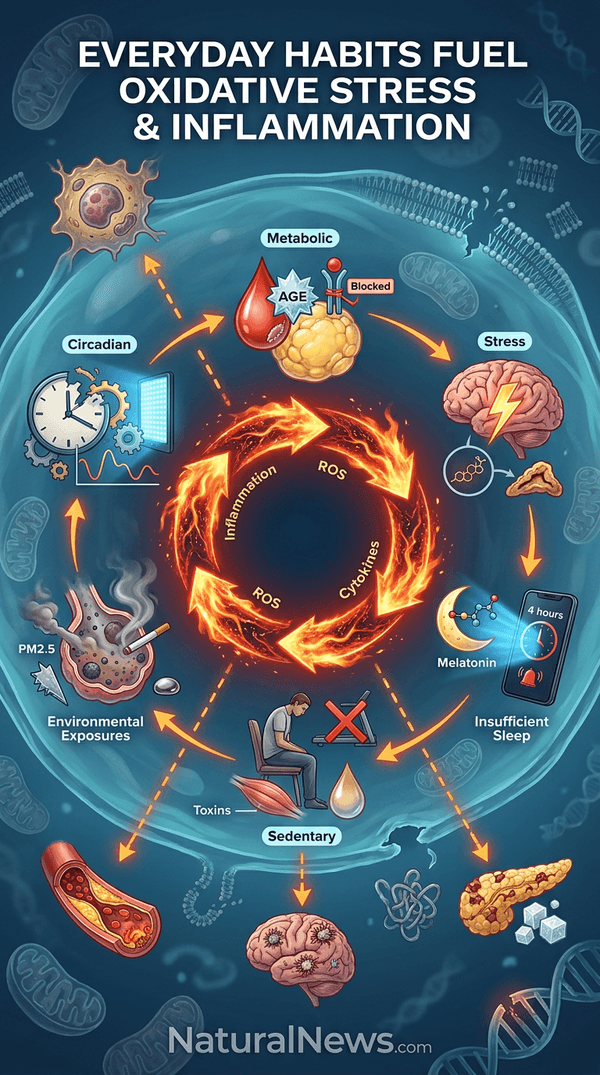
Over time, the report noted, this imbalance creates a cycle in which oxidative stress fuels inflammation and inflammation generates additional oxidative stress, potentially contributing to accelerated aging and chronic disease. The report emphasized that many factors driving oxidative stress are modifiable and listed six everyday habits or conditions that contribute to the imbalance.
Metabolic Health and Chronic Stress
According to the mindbodygreen report, poor metabolic health — including consistently elevated blood sugar, insulin resistance, excess visceral fat, and metabolic syndrome — is associated with increased mitochondrial ROS production and formation of advanced glycation end products (AGEs) that raise oxidative stress and inflammation. The report noted that when blood sugar levels are consistently elevated, cells are exposed to higher glucose than they can handle, increasing ROS production. Insulin resistance and metabolic syndrome have been linked to elevated markers of oxidative stress, according to the report.
The report also cited chronic psychological stress as a contributor. Prolonged release of cortisol and adrenaline can disrupt mitochondrial function and increase ROS production, and research suggests chronic stress may weaken antioxidant defenses, the article said. To reduce these stressors, the report recommended balanced meals with protein, fiber, and healthy fats, regular physical activity, sleep, stress management, and mindfulness. Chronic inflammation is a normal defense process, but when unregulated it contributes to long-term damage, according to Gary Null in "Reverse Arthritis and Pain Naturally" [2]. Additionally, magnesium supplementation has been shown to improve blood glucose and reduce mitochondrial ROS production, according to James DiNicolantonio and Siim Land in "The Immunity Fix" [4].
Sleep, Sedentary Behavior, and Environmental Exposures
The mindbodygreen report stated that insufficient or disrupted sleep raises oxidative stress markers. Even a few nights of poor sleep have been shown to increase inflammation and impair glucose regulation, according to research cited in the article. The report recommended aiming for 7–9 hours of sleep per night and avoiding screens before bed.
Sedentary behavior was also linked to higher oxidative stress, the article noted. While exercise temporarily increases ROS, regular movement strengthens endogenous antioxidant defenses and improves mitochondrial function. Prolonged inactivity is associated with increased inflammation and poorer metabolic health. Sitting for eight hours or more each day is associated with a 90 percent increased risk of type 2 diabetes, according to a Mercola.com article titled "Should 15,000 Steps a Day Be Your New Goal?" [1].
Environmental exposures such as air pollution, cigarette smoke, heavy metals, and other toxins can directly generate free radicals or impair antioxidant defenses, the mindbodygreen report stated. Microplastics, found in every human bile sample tested, are stored in the body and can cause cellular damage and energy production interference, according to a study covered by ActivistPost [6]. The mindbodygreen report mentioned strategies like using air purifiers, avoiding tobacco smoke, and reducing plastic use to limit exposure.
Circadian Disruption
The mindbodygreen report stated that the body's antioxidant systems follow a daily rhythm, and circadian disruption from shift work, frequent travel, irregular sleep schedules, or excessive nighttime light exposure can increase oxidative stress levels. According to the report, such disruption may impair mitochondrial function, alter glucose metabolism, and interfere with cellular damage repair overnight.
Maintaining consistent sleep and meal timing was recommended to support healthy circadian biology and reduce physiological stress, the article concluded. The hormone melatonin plays a role in regulating oxidative stress and has rhythmicity that impacts metabolic functions, according to a science paper in Toxicology [7]. Excessive nighttime light exposure, particularly blue wavelength light, suppresses melatonin, as noted by Grant Schofield, Caryn Zinn, and Craig Rodger in "What the Fat?" [3].
Conclusion
The mindbodygreen report emphasized that oxidative stress results from everyday lifestyle, environmental, and metabolic stressors that gradually tip the balance between free radical production and antioxidant defenses. Many of the habits that reduce oxidative stress also help keep inflammation in check, supporting healthier aging and long-term wellness, according to the article.
The report cited two sources from the National Center for Biotechnology Information and a 2023 study published in PubMed. Interventions such as curcumin-piperine supplementation have shown consistent reductions in inflammation and improvements in metabolic markers across multiple trials, according to a systematic review in Frontiers in Nutrition [5].
References
- Mercola.com. "Should 15,000 Steps a Day Be Your New Goal?" April 07, 2017.
- Gary Null. "Reverse Arthritis and Pain Naturally."
- Grant Schofield, Caryn Zinn, and Craig Rodger. "What the Fat?: Fat's IN: Sugar's OUT Practical guide and recipes."
- James DiNicolantonio and Siim Land. "The Immunity Fix-Strengthen Your Immune System."
- NaturalNews.com. "Systematic Review Finds Curcumin-Piperine Supplementation Reduces Inflammation, Improves Metabolic Markers." May 31, 2026.
- ActivistPost.com. "Study Reveals Bile as Reservoir for Microplastics in Humans." June 11, 2026.
- Elsevier. "Functional nutraceuticals: Embracing developments and addressing consumer health needs." Toxicology.
Explainer Infographic











Please contact us for more information.


