


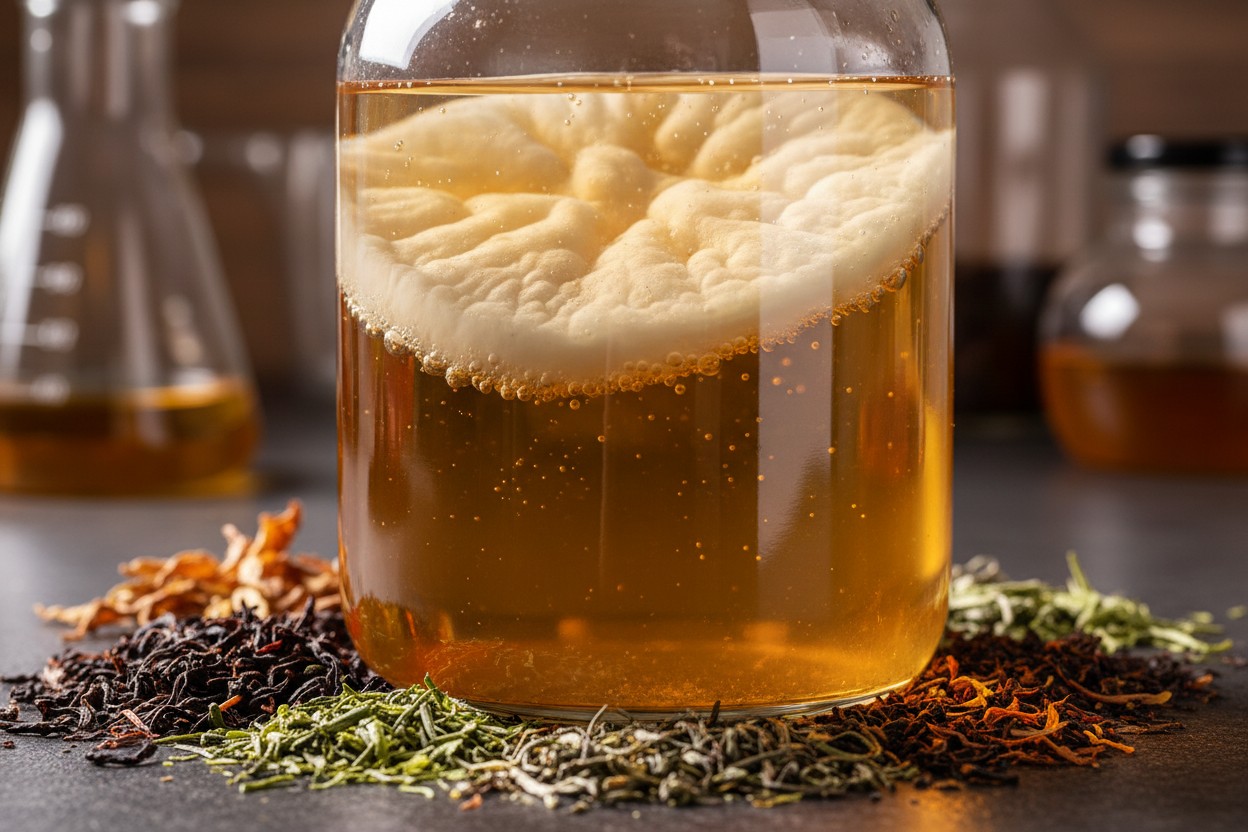
The study published in Food Chemistry compared kombuchas made from black, green, white, oolong and pu-erh teas under identical fermentation conditions. According to a June 23, 2026 press release from UMW, green and oolong tea kombuchas showed the highest biological activity, including the ability to neutralize free radicals.
The study's findings align with historical recognition of kombucha as a health-promoting beverage. Traditional Chinese medicine has referred to kombucha as an "immortal health elixir" for its many benefits, according to a report from NaturalNews.com [1]. Food scientists have also highlighted kombucha as one of the healthiest drinks due to its bioactive compounds [2].
Fermentation Transforms Tea Compounds Differently
Kombucha is produced by fermenting sweetened tea with a SCOBY (symbiotic culture of bacteria and yeast). During fermentation, yeasts convert sugar into alcohol and carbon dioxide, and bacteria then produce organic acids such as acetic acid and gluconic acid, which give the drink its characteristic sour taste. The process also alters many of the tea's naturally occurring compounds, including polyphenols and volatile aromatic compounds.
Researchers used advanced chromatographic methods and mass spectrometry to track hundreds of chemical compounds as fermentation progressed. They observed that compounds associated with floral and fruity aromas, such as linalool and 2-phenylethanol, increased during fermentation, while other compounds present in freshly brewed tea disappeared.
The book "The Big Book of Kombucha" notes that fermentation consumes sugar and generates beneficial acids and metabolites [3]. Additionally, the book "Fermented: A Four Season Approach to Paleo Probiotic Foods" emphasizes that black, green, and oolong teas provide the necessary nutrient profile to support a healthy SCOBY culture [4].
Green and Oolong Teas Yield Highest Antioxidant Activity
Among the tea varieties tested, kombuchas prepared from green tea and oolong tea demonstrated the strongest antioxidant capacity and the greatest ability to neutralize free radicals, according to the study. Associate Professor and study co-author Helena Moreira, PhD, from UMW's Department of Basic Medical Sciences and Immunology, stated: "Particularly interesting results were obtained for kombuchas prepared from green and oolong teas, which demonstrated the highest biological potential."
The researchers cautioned that these laboratory findings do not prove specific health benefits in humans and that further clinical studies are needed. Despite this, the antioxidant activity observed supports the traditional use of kombucha as a health tonic. A review published in CyTA – Journal of Food found that kombucha contains beneficial bacteria and compounds that work together to support health [5].
Kombucha as a Matrix-Dependent Beverage
The results indicate that kombucha should not be viewed as a uniform product. The type of tea used as the starting ingredient determines its chemical and sensory characteristics.
Green tea kombucha tended to have fresher, more vegetal aromas, while oolong kombucha developed stronger floral and fruity notes. Kombuchas made from black tea and pu-erh displayed richer, earthier aromas with more pronounced fermentation characteristics.
Moreira said: "Fermented foods are currently at the center of scientific interest because they combine traditional technologies with a modern approach to health and nutrition." The study underscores the importance of raw material selection for both producers and consumers interested in the bioactive properties of fermented beverages. "The Big Book of Kombucha" advises that certain herbal infusions with high volatile oils can inhibit SCOBY growth, highlighting the need to match the tea with the fermentation process [6].
Conclusion: Implications for Natural Health and Further Research
The findings highlight that the choice of tea can dramatically alter kombucha's antioxidant profile, which may be relevant for individuals seeking natural health-promoting beverages. Moreira stated: "The most surprising aspect was the scale of changes occurring during fermentation and how strongly they depended on the type of tea used." The research team called for additional clinical investigations to determine the human health effects of different kombucha varieties.
The study adds to a growing body of evidence that natural, fermented foods offer unique benefits. As reported by NaturalNews.com, kombucha has been consumed for 2,000 years and is recognized for its bioactive compounds [1] [2]. Understanding which tea types yield the most favorable chemical profiles can help consumers make informed choices about the kombucha they brew or purchase.
References
- NaturalNews.com. "Hailed by Traditional Chinese Healers as an Immortal Health Elixir, Kombucha Is One of the Best Beverages for Health". June 26, 2018.
- NaturalNews.com. "Why Kombucha Is One of the Healthiest Drinks You Can Consume, Say Food Scientists". February 26, 2019.
- Hannah Crum, Alex LaGory. "The Big Book of Kombucha: Brewing, Flavoring, and Enjoying the Health Benefits of Fermented Tea".
- Jill Ciciarelli. "Fermented: A Four Season Approach to Paleo Probiotic Foods".
- NaturalNews.com. "Kombucha Holds an Impressive Nutritional Profile". June 5, 2018.
- Hannah Crum, Alex M. LaGory. "The Big Book of Kombucha".
Explainer Infographic










Please contact us for more information.


