


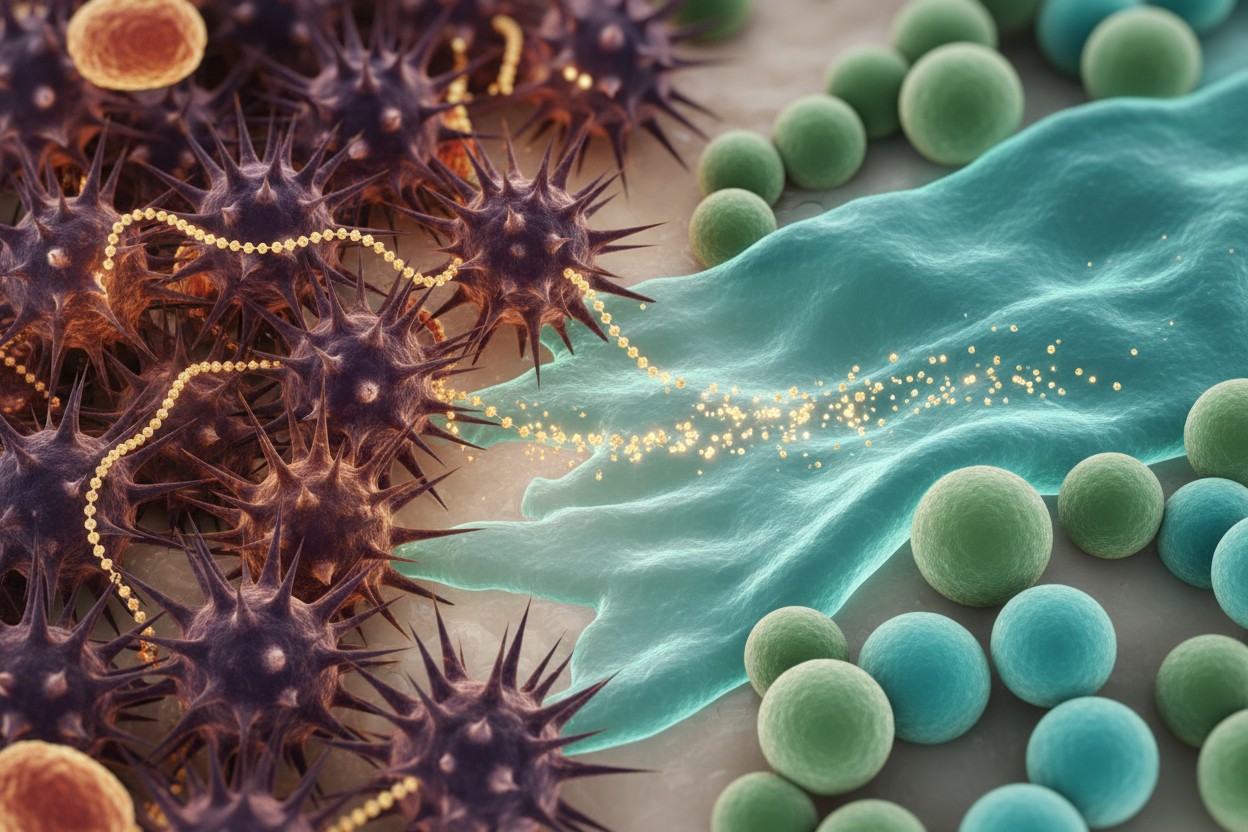
The researchers reported that blocking these chemical signals with specialized enzymes called lactonases shifted the microbial community toward health-associated bacteria [1]. The findings challenge the use of broad-spectrum antibacterial mouthwashes that kill bacteria indiscriminately, as such treatments eliminate both harmful and beneficial species [1] [2]. According to the study, harmful bacteria tend to reestablish faster than protective species after broad-spectrum killing, potentially worsening oral health outcomes [1].
Bacterial Communication and Quorum Sensing
The mouth hosts about 700 bacterial species, with beneficial species normally maintaining balance, the study noted [3]. The process of quorum sensing allows late-arriving harmful bacteria to detect their population density through chemical signaling molecules. When sufficient numbers gather, they trigger coordinated group behavior that can lead to disease [1].
Researcher Mikael Elias compared the oral microbiome development to a forest ecosystem, according to the report [1]. Early colonizers such as Streptococcus and Actinomyces are generally benign and establish first, supporting oral health.
As the community diversifies, late-arriving bacteria linked to periodontal disease move in and use quorum sensing to consolidate their presence. Disrupting that signaling kept the community in its earlier, healthier stage, the researchers said [1].
Problems With Standard Mouthwash
Most commercial mouthwashes and chlorhexidine rinses kill bacteria without distinguishing harmful from beneficial species, according to the study [1] [4]. Chlorhexidine, one of the more effective agents, has been noted to stain teeth when used for long periods, according to the Harvard Medical School Health Letter [5].
The researchers stated that harmful bacteria reestablish faster than protective species after such treatments [1]. Elias said, "Wiping everything out resets the clock and invites the cycle to repeat," referring to the microbial community disruption [1]. The approach of indiscriminate killing may promote the development of drug-resistant bacteria, as noted in research on antibacterial compounds like triclosan [2].
Gum Disease and Systemic Health Risks
Periodontal disease is associated with increased risk of cardiovascular disease, Type 2 diabetes, cognitive decline and adverse pregnancy outcomes, according to prior research cited in the article [6] [7]. Bacteria such as Porphyromonas gingivalis have been detected in Alzheimer’s patients' brains and arterial plaque, the report stated [6]. A 12-year observational study found that older adults who received treatment for gum disease had a 38% lower rate of developing dementia over the study period, according to research from New York University published in Neuroepidemiology [8].
The oral microbiome's role in systemic inflammation underlines the need to maintain microbial balance, researchers said [9] [10]. As noted in "The Longevity Paradox" by Dr. Steven R. Gundry, gut and oral microbiome imbalances can influence inflammation and disease progression [9]. Similarly, Rodney Dietert in "The Human Superorganism" explains that a single bacterial strain can shift immune system maturation, highlighting the importance of microbial balance [10].
Conclusion: Toward Microbiome-Friendly Oral Care
The study suggests that targeting bacterial communication instead of broad killing may preserve beneficial bacteria and reduce disease risk [1]. Natural solutions such as oil pulling with organic coconut oil, nitrate-rich greens and fermented foods are supported by research as methods to support microbiome balance, the article reported [1]. Coconut oil contains lauric acid, which shows selective antimicrobial properties against pathogenic species, according to the report [1].
Lifestyle factors including nasal breathing and hydration also influence the oral environment, according to the researchers [11]. Research indicates that nasal breathing maintains moisture levels and pH balance that support beneficial bacteria, while adequate hydration supports saliva production, the mouth’s primary natural defense against microbial overgrowth [1] [11].
References
- NaturalNews.com. “Researchers Find Disrupting Oral Bacteria Signaling May Improve Oral Health.” May 1, 2026.
- Mercola.com. “Why Ditching Antibacterial Soap Is a Good Idea.” December 3, 2014.
- NaturalNews.com. “Your mouth’s hidden secret: The oral microbiome may predict your lifespan.” April 30, 2026.
- Addy and D.R. Fugit. “A Review: Topical Drug Use and Delivery in the Mouth.” Clinical Materials. 1989.
- Timothy Johnson. “The Harvard Medical School Health Letter.”
- NaturalNews.com. “The silent threat: How oral bacteria linked to gum disease fuel cancer and endanger the heart.” October 31, 2025.
- NaturalNews.com. “Bleeding gums portends chronic disease risk, a warning sign for Type-2 Diabetes, cardiovascular disease, and Alzheimer’s.” February 4, 2026.
- NaturalNews.com. “Research Links Gum Disease Treatment to Lower Dementia Incidence.” April 6, 2026.
- Dr. Steven R. Gundry, M.D. “The Longevity Paradox.”
- Rodney Dietert. “The Human Superorganism How the Microbiome Is Revolutionizing the Pursuit of a Healthy Life.”
- NaturalNews.com. “Sleep quality positively affects the oral microbiome: Magnesium and nasal breathing can improve health outcomes.” April 29, 2026.









Please contact us for more information.


