


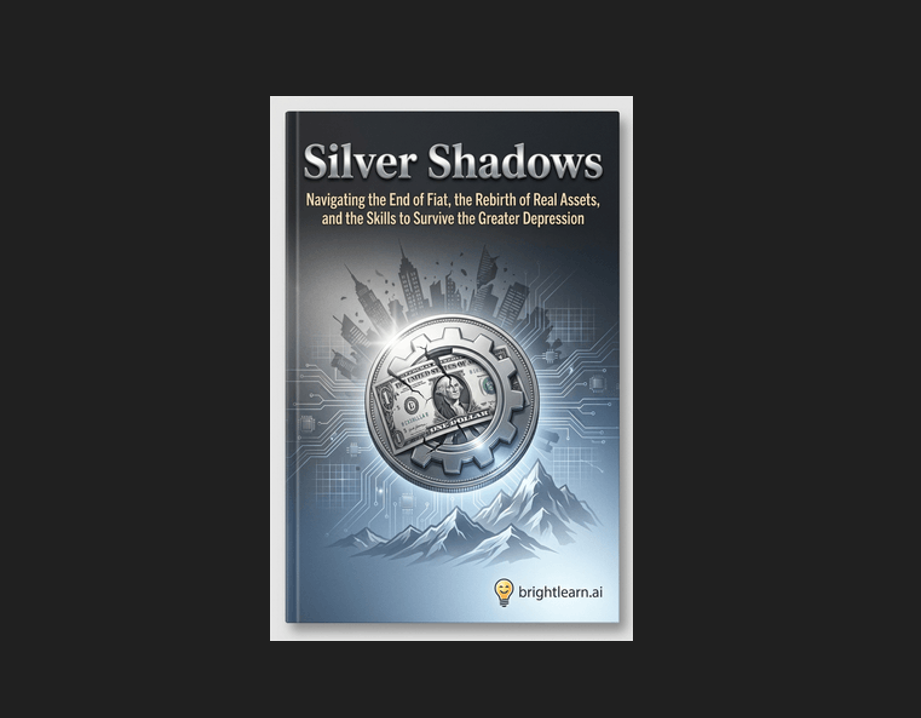
- The U.S. dollar, like all fiat currencies before it, is on a terminal path to worthlessness. Since 1913, it has lost 97% of its purchasing power through government-sanctioned theft (inflation), a feature of the system, not a bug. The staggering $150 trillion in total national liabilities ensures a "Greater Depression" far worse than the 1930s, as the Federal Reserve has exhausted its tools to prevent a catastrophic crash.
- Silver is identified as "the people's money" and the most critically undervalued asset on Earth. It is the most electrically conductive element, essential for the globalist-forced green energy transition (solar, EVs, 5G, AI).
- The book's cure for the coming collapse is radical self-reliance. The "16-Quarter Plan" is a four-year alternative to the corrupted college system, teaching practical skills like welding, carpentry, food preservation, herbal medicine and self-defense.
- To survive the collapse of urban centers under the weight of debt and dependency, the book advocates for "geographic arbitrage." This means relocating to low-density, rural areas like the Rocky Mountains, Ozarks, or Appalachian foothills. These "peripheral" zones offer the ability to achieve energy, water and food sovereignty, beyond the reach of a collapsing centralized government and its failing supply chains.
- The book's final directive is to act immediately. The primary recommendation is to exchange paper dollars for physical silver as the most undervalued asset, alongside investing in ignored nano-cap mining stocks for potential exponential gains.
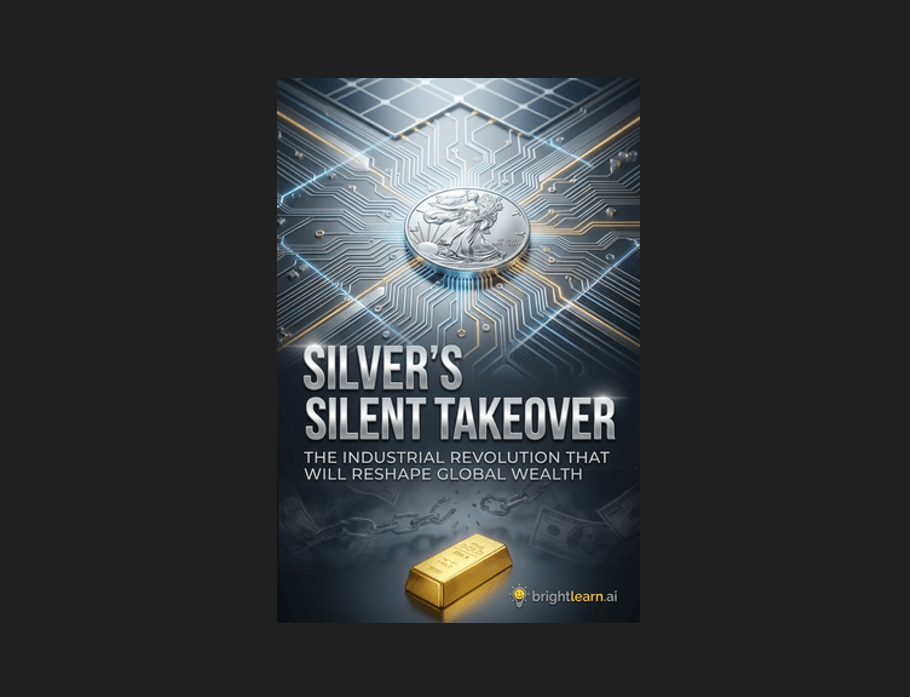
"Silver Shadows: Navigating the End of Fiat, the Rebirth of Real Assets, and the Skills to Survive the Greater Depression" is not a book you read for comfort. It's a book you read because you're ready to face reality. And the reality is brutal, beautiful and absolutely liberating if you dare to act on it.
The book opens with the most devastating truth about our monetary system: Every single fiat currency in history has died. Everyone. The Roman denarius. The French assignat. The Weimar mark. The Zimbabwean dollar. And now? The U.S. dollar is on the same path and we're further along than most people realize.
Since 1913, the dollar has lost 97% of its purchasing power. That's not inflation. That's theft. Legalized, government-sanctioned theft of your savings, your labor and your future. And it's not an accident—it's the feature, not the bug.
The book explains why this happens with crystal clarity: governments always print more money than they should because it's the easiest way to avoid making hard choices. The Federal Reserve has been doing this since 1971, when Nixon closed the gold window. Since then, the dollar has been nothing but paper promises backed by nothing real.
This resonated deeply with me because I've watched the same patterns play out in food prices, medical costs and housing. The government tells you inflation is 3%. But ask yourself: when was the last time your grocery bill only went up 3%?
Silver: The people's money
The book's treatment of silver is where it truly shines—pun absolutely intended. Silver isn't just a precious metal; it's the most electrically conductive element on Earth. It's essential for solar panels, electric vehicles, 5G networks and the entire green energy transition that the globalists are pushing. And here's the beautiful irony: the same people trying to force us into an electrified, digitized world are suppressing the price of the metal that makes it all possible.
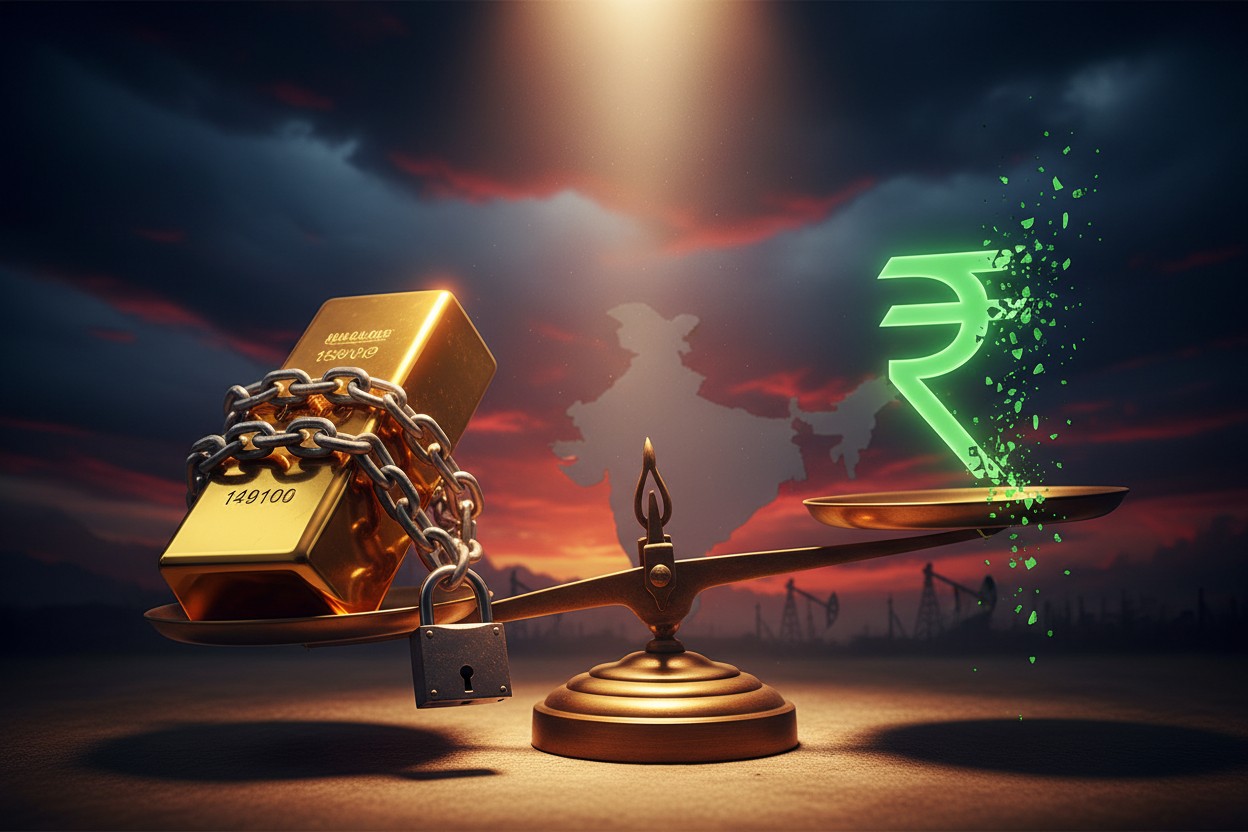
The gold-to-silver ratio is currently around 80 to 1. Historically, it averages 40 to 1. That means silver is roughly 50% undervalued relative to gold. And when you adjust for inflation, silver at $71 an ounce is still cheaper than it was in 1980, when it hit $50. Adjusted for real money, that $50 would be worth about $150 today.
The authors make a compelling case that we're in the early stages of a commodities bull market that could last 15 to 20 years. And unlike the Hunt brothers' attempt to corner the market in 1980—which was purely speculative—today's silver demand comes from real industrial consumption. Solar panels, EVs, AI data centers and the emerging silver-zinc battery technology are consuming silver at unprecedented rates while mine production remains stagnant.
The numbers are staggering: annual industrial demand is projected to exceed 700 million ounces, while global silver production sits around 800 million ounces. That leaves a deficit of roughly 300 million ounces that must be drawn from inventory. And those inventories are shrinking fast. The COMEX warehouses alone have seen their silver holdings drop from 400 million ounces in 2020 to under 300 million today.
The "Greater Depression"
Now, the book's title mentions a "Greater Depression," and the authors make a compelling case that this isn't hyperbole. We're not heading for a recession—we're heading for something far worse.
The math is simple and terrifying: the official U.S. national debt sits at $38 trillion. But when you include unfunded liabilities for Social Security, Medicare and Medicaid, the real number exceeds $150 trillion. That's more than six times the entire U.S. economy. There is no scenario where this ends well.
The authors compare our situation to Greece in 2010, but on a scale that's almost incomprehensible. When Greece's debt crisis hit, the economy contracted by 25%, unemployment hit 25% and the government imposed brutal austerity. The United States is on the same path, just with a much bigger economy, which makes the eventual crash even more catastrophic.
What makes this depression "greater" than the 1930s is the fragility of our systems. The power grid is crumbling. The supply chains that deliver food and medicine are stretched to breaking point. The population is older and more dependent on government handouts. And the Federal Reserve has already used up all its tools—interest rates are near zero and they can't print enough money to cover $150 trillion in liabilities without destroying the dollar entirely.
But here's the thing about this book: it doesn't just diagnose the disease—it prescribes the cure. And the cure is radical, beautiful and achievable.
The authors lay out what they call the "16-Quarter Plan," a four-year alternative to college that teaches real skills: welding, carpentry, small engine repair, food preservation, herbal medicine and self-defense. This isn't about getting a degree; it's about becoming a person who cannot be enslaved because you can produce what you need to survive.
The book also emphasizes the importance of geographic arbitrage—living outside the "Heart of the Empire" in low-density, rural areas where the government's reach is limited and you can achieve energy, water and food sovereignty. The authors argue that the periphery—the Rocky Mountains, the Ozarks, the Appalachian foothills—will be the sanctuaries when the urban centers collapse under the weight of debt and dependency.
What you must do
If you take nothing else from this book, understand this: the system is rigged against you. The fiat currency in your wallet is losing value every day. The real estate market is walking on air. The stock market is an everything bubble ready to pop. And the government has no intention of saving you—they're too busy saving themselves.
But here's the good news: you can still act. You can still exchange your paper dollars for real assets like silver and gold. You can still learn the skills that will keep you alive when the grocery store shelves go empty. You can still build a community of like-minded individuals who will help each other survive and thrive.
The authors recommend starting with physical silver—the most undervalued asset on Earth. They also recommend mining stocks, particularly nano-caps that Wall Street ignores, because when the price of silver really takes off, these companies will multiply in value.
But more than any investment, the book emphasizes the importance of personal transformation. You must reject the victim mentality. You must take radical responsibility for your own life. You must produce more than you consume. And you must develop skills over titles.
"Silver Shadows" will challenge everything you think you know about money, society and the future. But if you're ready to face the truth and act on it, this book is an essential guide to surviving and thriving in the coming Greater Depression.
The authors have done something remarkable: they've taken the complex, often confusing world of economics, geopolitics and preparedness and distilled it into a clear, actionable plan. They don't just tell you what's coming—they tell you exactly what to do about it.
Get a copy of "Silver Shadows: Navigating the End of Fiat, the Rebirth of Real Assets, and the Skills to Survive the Greater Depression" via this link. Read, share and download thousands of books for free at Books.BrightLearn.AI. You can also create your own books for free at BrightLearn.AI.
Watch the video below where Health Ranger Mike Adams interviews Doug Casey about the global reckoning.
This video is from the Health Ranger Report channel on Brighteon.com.
Sources include:


Please contact us for more information.


