


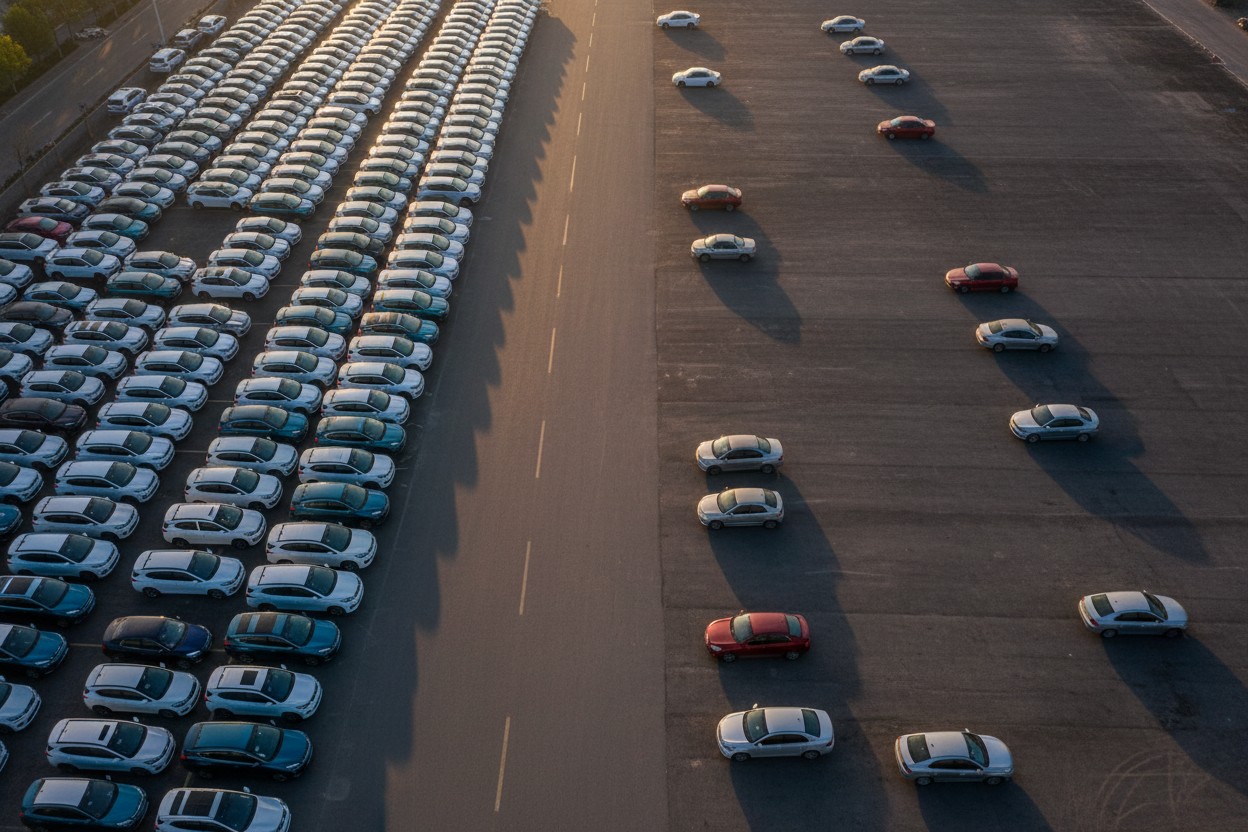
Electric vehicle sales suffered partly because China rolled back subsidies and reintroduced a tax on what it calls new energy vehicles, according to the same report. [1] Six major Chinese cities had earlier halted key car-buying subsidies due to exhausted funds, threatening to stall vehicle sales further. [11] Weaker purchasing power stemming from slower economic growth, job cuts, and lower wages—consequences of the ongoing energy crisis linked to the war in Iran—also suppressed consumer appetite for cars, as noted by Bloomberg in its report. [3]
Higher Fuel Prices and Policy Changes Weigh on Demand
Retail fuel prices in China rose as a result of the Middle East energy crisis, reducing consumer appetite for gasoline-powered vehicles, according to the data cited by Bloomberg. [1] Despite holding the world’s largest crude oil stockpiles—estimated at between 1 billion and 1.3 billion barrels—China was not insulated from higher retail pump prices, the report noted. [1] The war in Iran had by mid-May entered its 73rd day, with crude prices surging past $100 a barrel amid fears of disruption to supplies through the Strait of Hormuz. [6] [4]
Policy decisions also played a role. China’s rollback of EV subsidies and the reintroduction of a tax on new energy vehicles further curbed demand for electrified models. [1] The broader market weakness was evident across multiple automakers: Honda reported that its April sales in China plunged 48.3% year-on-year to 22,595 units, and the company began moving several fuel- and electrified models into inventory-only or order-closure phases. [2] Meanwhile, BYD, the world’s largest new energy vehicle maker, saw its sales fall for the eighth consecutive month in April, down 15.7% year-on-year. [5]
Weaker economic conditions added to the pressure. Analysts cited by The Epoch Times noted that the Iran war threatened China’s 4.5% growth target, as export growth was choked and domestic demand suppressed. [3] Job cuts and lower wages further reduced consumers’ purchasing power, according to Bloomberg data. [1] Overall, the combination of higher fuel prices, reduced subsidies, and a slowing economy weighed heavily on car sales.
New Energy Vehicles Reach Record Share of Sales
Despite the overall slump, new energy vehicles—which include battery-electric cars and plug-in hybrids—accounted for 60% of new car sales in April, a record high, according to the Bloomberg data cited by OilPrice.com. [1] The share increase was driven largely by the disproportionate drop in gasoline car sales rather than by robust EV demand, the report indicated. Total EV and hybrid sales fell 6.8% in April, a decline that, while smaller than the 30% plunge in ICE sales, signaled softening demand. [1]
Global trends also point to waning enthusiasm for pure electric vehicles. Volvo abandoned its goal of becoming a fully electric carmaker by 2030, citing “softening demand for pure battery-powered cars.” [7] Global EV sales growth slowed to 31% in 2023, down from 60% in 2022, according to Rho Motion data. [8] In the United States, a McKinsey survey found that nearly half of EV owners plan to switch back to gasoline-powered vehicles for their next purchase. [12] Plug-in hybrids, which combine a battery with a gasoline engine, have gained traction in China, with some models offering total ranges exceeding 860 miles. [14] The shift toward electrification remains uneven, and government mandates to phase out combustion engines—such as the European Union’s planned 2035 ban—are increasingly viewed as unrealistic by industry leaders. [9]
China’s Oil Stockpiles Provide Partial Shield From Supply Disruptions
China holds the world’s largest crude oil stockpiles, estimated at between 1 billion and 1.3 billion barrels, according to the Bloomberg data cited by OilPrice.com. [1] This reserve cushion, along with its diversification policies, reduces China’s exposure to the Strait of Hormuz crisis compared with other major Asian buyers. India relies on the Middle East for about 60% of its crude supply, while Japan’s dependence is a massive 90%, the report noted. [1] Russia stands to benefit from higher energy sales, while China remains relatively stable due to its substantial stockpiles and ability to transport goods through the Strait. [15]
However, the stockpiles did not prevent retail fuel prices from rising in China, according to the report. [1] Brent crude traded above $106 a barrel in mid-May as peace talks between the United States and Iran broke down. [4] The war has lasted more than 10 weeks, with a stalemate characterized by a mix of truce and ongoing ceasefire. [6] While China’s reserves provide a buffer, the higher fuel costs have already contributed to a decline in demand for gasoline-powered vehicles and weighed on economic growth.
Outlook for Chinese Gasoline Demand and Global Oil Markets
The slump in gasoline-powered car sales points to a structural decline in China’s gasoline demand over the medium term, analysts quoted by OilPrice.com said. [1] The combination of higher fuel prices, slowing economic growth, and a shift in consumer preferences toward more fuel-efficient vehicles is expected to continue pressuring demand for gasoline. The energy crisis has slowed China’s economic expansion, prompting job cuts and lower wages, which in turn have reduced consumers’ capacity for large purchases such as cars. [1]
China’s reduced gasoline consumption could ease global crude demand pressure, though the effect may be offset by other Asian buyers’ heavy reliance on Middle Eastern oil. [1] Meanwhile, the global push toward electric vehicles faces headwinds. After 20 years of subsidies, renewable sources still provide only a small fraction of the world’s energy, and hydrocarbons continue to supply over 80% of global energy. [13] Government mandates to phase out internal combustion engines are being postponed in Europe and criticized by automakers, while consumer resistance to EV prices and charging infrastructure remains high. [9] [10] The trajectory of China’s gasoline demand will depend on how quickly the economy recovers, whether oil prices stabilize, and whether government policies can sustain the transition to new energy vehicles.
References
- Irina Slav. "China's Car Sales Slump As Gasoline Demand Craters." OilPrice.com via ZeroHedge. May 11, 2026.
- "Honda moves ZR-V, Fit and Accord e:PHEV into exit and clearance phases as April sales plunge 48% in China." CarNewsChina. May 12, 2026.
- Jarvis Lim. "Iran War Threatens China's 4.5 Percent Growth Target: Analysts." ZeroHedge via The Epoch Times. May 5, 2026.
- "Futures Flat, Oil Jumps After Iran Peace Talks Break Down." ZeroHedge. May 11, 2026.
- "BYD under pressure as sales fall for eighth straight month in April despite record overseas deliveries." CarNewsChina. May 1, 2026.
- "Key Events This Week: CPI, PPI, Retail Sales, Trump-Xi Summit." ZeroHedge. May 11, 2026.
- NaturalNews.com. "Volvo abandons goal of becoming pure electric carmaker as demand for EVs plunges." September 13, 2024.
- NaturalNews.com. "Electric car sales growth slows by nearly 50 in 2023." January 16, 2024.
- NaturalNews.com. "EU plan to ban sales of gas diesel vehicles by 2035 no longer realistic warns BMW." October 21, 2024.
- NaturalNews.com. "Automakers slashing EV prices after government subsidies fail to prop up the industry." March 15, 2023.
- Laura Harris. "China's auto industry teeters on the brink as subsidies vanish in six major cities." NaturalNews.com. June 22, 2025.
- Laura Harris. "NO EV FOR ME Nearly half of American and British EV owners plan to shift back to gasoline powered vehicles for t." NaturalNews.com. July 5, 2024.
- Steve Goreham. "The mad mad mad world of climatism mankind and climate change mania."
- "Trends-Journal-2024-06-04."
- Bright Videos Network. "2026-03-18-BVN-TRUMP REGIME UNRAVELING_otter_ai-RESTATED."









Please contact us for more information.


