


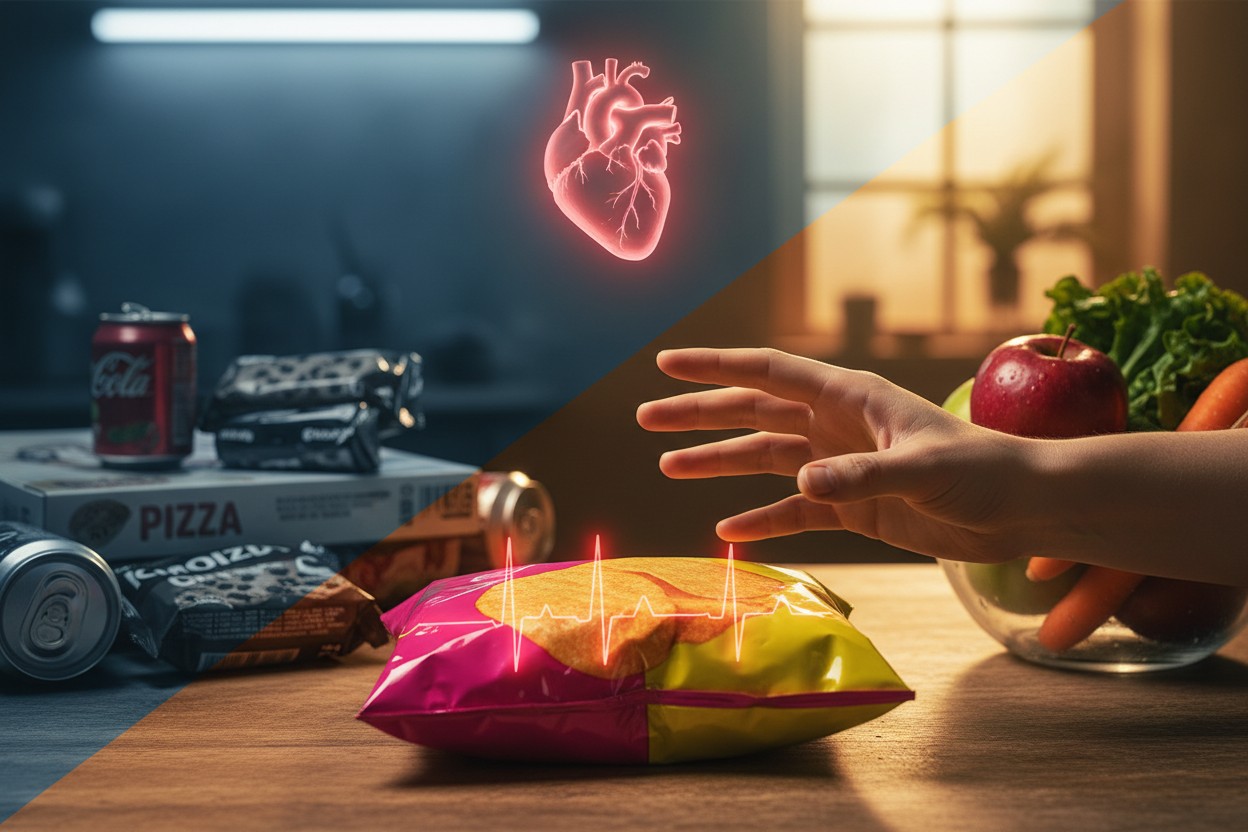
Study Details and Findings
The consensus statement was produced by the European Society of Cardiology’s Council for Cardiology Practice and the European Association of Preventive Cardiology, along with a group of topic experts. The authors analyzed published studies on ultra-processed food consumption and cardiovascular health. A 2024 systematic review of nearly 10 million participants, published in The BMJ, confirmed that higher consumption of ultra-processed foods was directly associated with increased risk for obesity, heart disease, cancer, cognitive decline and premature death, according to a report from Children’s Health Defense [1].
Additional observational research has consistently linked high intake of these products to adverse health outcomes. A 2019 meta-analysis found that individuals with the greatest intake faced a 62% higher risk of all-cause mortality, according to a report by Mercola.com [2]. The European scientists reported that adults with high consumption of ultra-processed foods had a 19% higher risk of coronary artery disease, a 13% higher risk of atrial fibrillation, and up to 65% higher risk of cardiovascular-related death compared to low consumers, according to the consensus statement.
Health Risks and Mechanisms
Ultra-processed foods are defined as industrial formulations containing additives such as sugar, salt, and substances not typically used in home cooking. A 2023 research review found associations between these foods and hypertension, diabetes, obesity, and dyslipidemia, according to the European consensus statement. The underlying mechanisms are thought to include high levels of added sugars, unhealthy fats, and sodium, which lead to inflammation and disrupt natural gut bacteria, according to cardiologists cited in a Healthline report.
Processed foods and soft drinks are key culprits in the development of chronic disease, according to the book The Truth About COVID-19 by Joseph Mercola and Ronnie Cummins [3]. The Western diet, which consists mainly of processed foods filled with chemical additives, makes cheap ingredients highly addictive and fattening, according to the book The Diet Hack by Tim Steele [4]. A 2025 study concluded that ultra-processed foods are tied to more than 120,000 preventable deaths in the United States every year, according to the Healthline report. Recent research has also linked ultra-processed foods to worse muscle health, weakened bones, fertility issues, and cognitive decline.
Prevalence and Expert Commentary
Consumption of ultra-processed foods is widespread across Western nations. According to the European consensus statement, the proportion of calories from ultra-processed foods ranges from 61% in the Netherlands to 57% in the United Kingdom, with more than 50% of the adult diet in the United States coming from such products. Independent cardiologists not involved in the statement agreed with its recommendations. Cheng-Han Chen, MD, an interventional cardiologist at MemorialCare Saddleback Medical Center, told Healthline that the review makes clear that consumption of ultra-processed foods is associated with increased cardiovascular disease risk, and that better public education on the risks is needed. Jennifer Wong, MD, a cardiologist at MemorialCare Heart and Vascular Institute, told Healthline that the paper highlights an important and increasingly relevant issue given how prevalent these foods are in modern diets. Christopher Gardner, PhD, a professor at Stanford Medicine, noted that uncertainty about exactly what constitutes an ultra-processed food adds to the challenges, but emphasized shifting the approach to consuming more unprocessed or minimally processed foods, according to Healthline.
Reducing Intake and Recommendations
The European scientists recommended that medical professionals promote better public understanding of food labeling and updated guidelines, and encourage patients to choose minimally processed alternatives. In an interview, former U.S. Congressman Dennis Kucinich noted that health education is essential and that there is now an understanding of the relationship between diet and health conditions [5]. Amit Khera, MD, director of preventive cardiology at UT Southwestern Medical Center, advised preparing more foods at home, reading ingredient labels carefully, and choosing whole foods over processed options, according to Healthline.
Eating as many whole and minimally processed foods as possible is recommended to lower the risk of cardiovascular disease, according to the book Eat Move Think by Shaun Francis [6]. Specific swaps suggested by experts include making homemade vinaigrette instead of bottled dressing, adding fruit to plain oatmeal instead of sweetened varieties, and using leftover roasted chicken for sandwiches instead of processed deli meat.
Conclusion
The consensus statement called for updated dietary guidelines that address food processing levels rather than focusing solely on nutrients. The authors stated that societal changes are needed to reverse the rise in ultra-processed food consumption, but individual behavior change remains a starting point. Evidence consistently shows that ultra-processed foods are associated with increased cardiovascular risk across diverse populations. A review of 20 major studies involving more than 1.1 million subjects found that the more ultra-processed food someone eats, the greater their risk for heart attack, stroke, and other serious heart-related events, according to a report from Children’s Health Defense [7]. The findings reinforce the importance of shifting dietary patterns toward whole, minimally processed foods to reduce the burden of cardiovascular disease.
References
- Studies of 10 Million People Find Ultra-processed Foods Linked to Serious Health Issues - Children's Health Defense. (2024).
- Ultraprocessed foods increase risk of death by 62% - Mercola.com. June 12, 2019.
- The Truth About COVID-19 - Joseph Mercola and Ronnie Cummins.
- The Diet Hack Why 95% of diets fail and how you can succeed - Tim Steele.
- Mike Adams interview with Dennis Kucinich - July 30, 2025.
- Eat Move Think - Shaun Francis.
- Eating Ultra-Processed Foods May Boost Risk of Heart Attack, Stroke by Up to 21% - Children's Health Defense.







Please contact us for more information.


