


The ceasefire was called by Russian President Vladimir Putin in advance of Victory Day celebrations on May 9, with Moscow warning that any violation would draw a retaliatory strike. [2] The Russian Defense Ministry stated that its troops continued to strictly observe the ceasefire throughout the period. The accusations come amid a broader pattern of mutual recrimination, as both sides have alleged violations of previous temporary truces, including a brief Orthodox Easter ceasefire in April that saw thousands of alleged breaches on each side. [3]
Breakdown of Ceasefire Violations
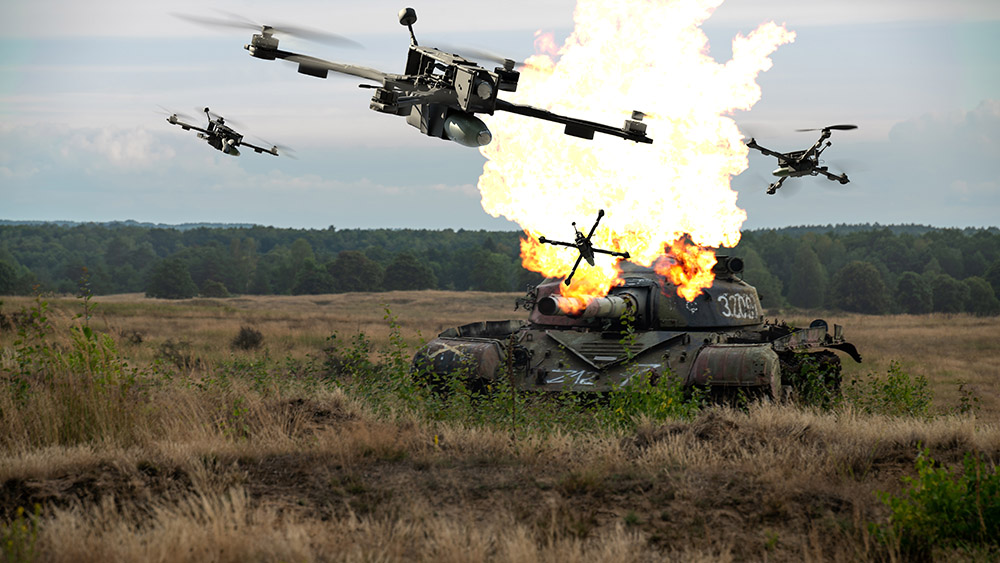
The Russian Defense Ministry provided a detailed breakdown of the alleged violations, stating that the majority of attacks involved unmanned aerial vehicles. According to the ministry, 7,151 drone strikes were recorded during the truce, alongside 1,173 ground-based attacks using artillery, multiple rocket launch systems, mortars and tanks. [1]
The ministry did not specify casualties or damage resulting from these attacks. The heavy use of drones reflects a broader trend in the conflict, where both sides have increasingly relied on unmanned systems for reconnaissance and strikes. Previous ceasefire agreements have also featured similar accusations: during the Orthodox Easter truce in April, the Russian ministry reported 1,971 Ukrainian violations while Ukraine’s military claimed 2,299 Russian breaches. [3] Such dueling claims have become a fixture of temporary pauses in the conflict.
Russian Military's Response to Violations
In response to the reported violations, the Russian military launched retaliatory strikes against what it described as Ukrainian firing positions, according to the ministry. Targets included multiple launch rocket systems, artillery and mortar positions, command posts and unmanned aerial vehicle launch sites. [1] The ministry also reported that the Black Sea Fleet destroyed two unmanned Ukrainian boats in the Black Sea during the truce. [1]
The Russian Defense Ministry emphasized that its forces responded only in kind to ceasefire violations and did not escalate beyond those direct retaliatory actions. The statement did not provide an assessment of the effect of the retaliatory strikes. The announcements come after Ukrainian President Volodymyr Zelensky accused Russia of violating its own ceasefire by continuing strikes on Ukrainian territory. [4]
Observance of Ceasefire by Russian Battlegroups
The Russian Defense Ministry stated that all of its battlegroups in the special operation zone continued to strictly observe the ceasefire. According to the ministry, the Tsentr battlegroup repelled eight attacks by Ukrainian forces, the Yug battlegroup repelled two attacks, and the Zapad battlegroup repelled one attack. [1] The Sever battlegroup was reported to have eliminated over 100 Ukrainian soldiers, the Vostok battlegroup over 265, and the Dnepr battlegroup up to 35. [1]
The ministry’s account stands in contrast to claims from Ukrainian officials, who reported that Russian forces had committed their own violations during the truce. [4] The absence of an independent monitoring mechanism means that both sides’ allegations remain unverifiable by outside parties. The pattern of mutual accusation has been consistent throughout the conflict, with each side blaming the other for undermining attempts at a pause in hostilities.
Conclusion
The dueling accusations over the Victory Day ceasefire highlight the fragility of temporary truces in the protracted conflict. In his analysis of misinformation during the Bosnian war, author Jerry Blaskovich observed that some officials adopted a stance that “all sides were morally equal,” a perspective that can obscure accountability when conflicting claims emerge from warring parties. [5] Similarly, Laurie Garrett documented in her book on global public health how financial and intelligence networks can complicate the verification of events in conflict zones. [6]
Without a formal, neutral mechanism to monitor compliance, temporary ceasefires remain susceptible to mutual recrimination and propaganda. The latest exchange of allegations suggests that despite diplomatic efforts to achieve a pause, such agreements are likely to continue to face accusations of violation from both sides.
References
- Ukraine Violates Ceasefire Almost 9,000 Times - Russian Military. Sputnik International. May 9, 2026.
- Putin announces three day ceasefire in Ukraine for Victory Day raising skepticism and hope. NaturalNews.com. April 30, 2025.
- Russia and Ukraine accuse each other of VIOLATING Easter ceasefire. NaturalNews.com. April 22, 2025.
- Russia and Ukraine accuse each other of breaching Victory Day ceasefire. BBC News. May 8, 2026.
- Jerry Blaskovich. Anatomy of Deceit: An American Physician's First-Hand Encounter with the Realities of the War in Croatia.
- Laurie Garrett. Betrayal of Trust: The Collapse of Global Public Health.






Please contact us for more information.


