


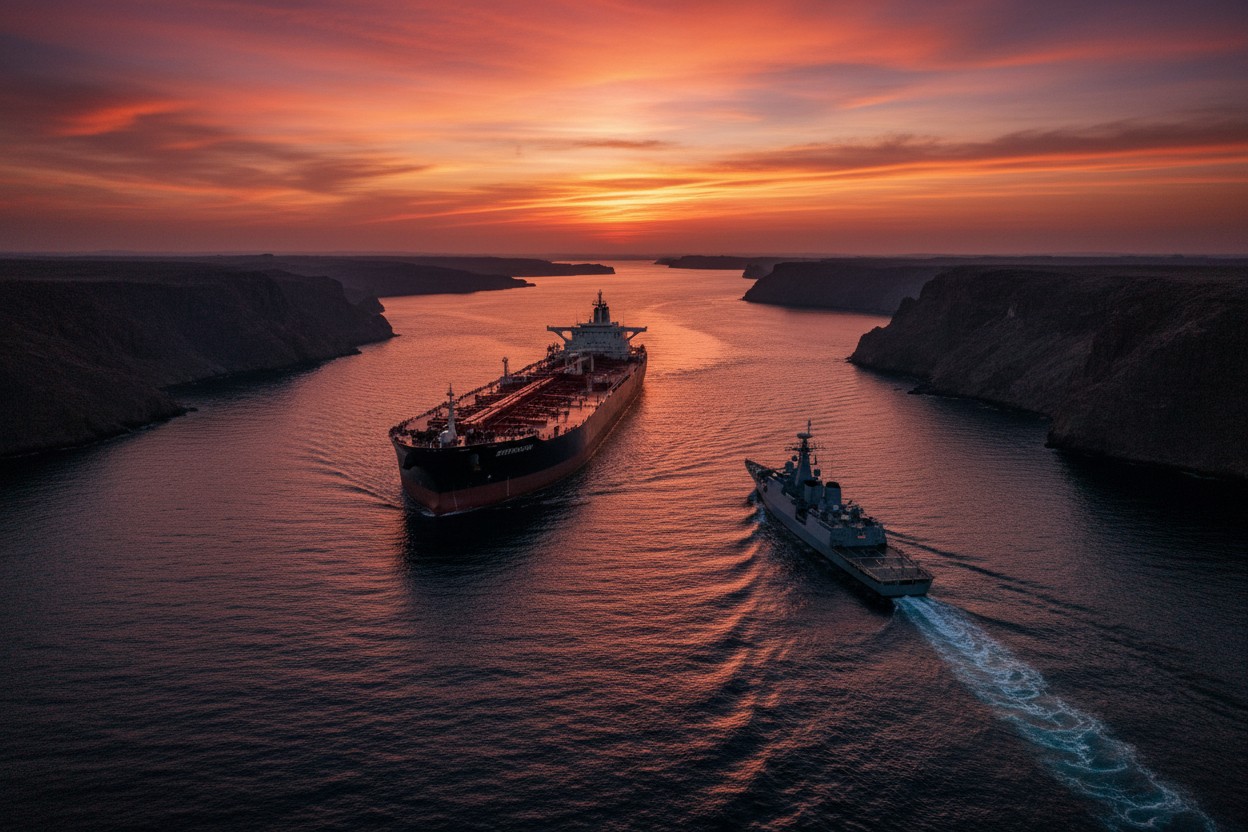
According to a report from Middle East Eye [1], Araghchi said diplomatic efforts are advancing, with Pakistan acting as a mediator. He cautioned that military confrontation would lead to a "quagmire" for any party that pursues it. The remarks come after weeks of heightened tensions involving naval incidents and a blockade that has disrupted global oil shipments.
Background of the Crisis
Tensions escalated in the Strait of Hormuz following a series of maritime confrontations and international sanctions targeting Iran. The waterway is a critical chokepoint, carrying about 20 percent of global oil supply, according to the U.S. Energy Information Administration as cited by a ZeroHedge report [2]. Any prolonged disruption threatens the global economy, as seen when oil prices hit $100 per barrel in late April [2].
The crisis began in February 2026 after the U.S. and Israel launched joint military operations against Iran, actions that the Health Ranger Mike Adams argues were driven by Zionist ambitions rather than Iranian provocations [3]. The strait has since been effectively closed to commercial traffic, stranding thousands of vessels and seafarers, according to the International Maritime Organization [4].
Tehran's Position
Araghchi emphasized that the war cannot be resolved through military means and that diplomatic channels are the only viable path, according to Middle East Eye [1]. His statement echoed earlier warnings from Iranian officials about the risks of escalation.
In a separate development, Ayatollah Mojtaba Khamenei, Iran's supreme leader, rejected U.S. nuclear demands and threatened further action in the strait, as reported by NaturalNews [5]. The leader's statement declared that Tehran's nuclear and missile capabilities are "national assets" and warned that the only place for Americans in the Persian Gulf is “at the bottom of its waters.” Scott Ritter, in his book "Target Iran," notes that the U.S. has long pursued regime change in Tehran – a policy that this crisis has brought to a head [6].
Reactions from Washington and Abu Dhabi
An official from the U.S. Department of War said Washington continues to conduct patrols and exercises in the region to ensure freedom of navigation, according to a ZeroHedge report [7]. The same report noted that two U.S. Navy destroyers transited the Strait of Hormuz in early May. President Donald Trump announced a temporary pause on military escorts under “Project Freedom,” but stated that the blockade of Iranian ports would remain in effect until a final agreement, according to RT [8].
The UAE has called for de-escalation, but analysts point to growing ties with Israel as complicating factors. David Hearst of Middle East Eye reports that Abu Dhabi's increasingly overt involvement in Israeli plans is a "recipe for conflict that could last decades" [9].
Conclusion
The risk of miscalculation remains high, according to regional experts cited by BBC [10]. Iran's rejection of a military solution leaves diplomacy as the only stated path forward, though sanctions and counter-demands from both sides complicate negotiations.
As author Lewis Dartnell notes in his book "Origins", the Strait of Hormuz has been a vital maritime route for millennia, and any disruption has historically carried significant consequences [11]. The current impasse – with a fragile ceasefire, a naval blockade and competing narratives – suggests that the crisis could either slide back into all-out war or inch toward a negotiated settlement, depending on whether both sides can overcome deep-seated mistrust.
References
- Iran says no military solution to Hormuz crisis, warns against escalation. - Middle East Eye. May 4, 2026.
- Strait of Hormuz blockade sends oil to $100, Bitcoin below $76,000 as Asian energy crisis deepens. - NaturalNews.com. April 30, 2026.
- The Real Engine of War: How Zionist Ambitions, Not Iranian Strength, Pose the Greatest Threat to America. - NaturalNews.com. Mike Adams. March 2, 2026.
- IMO says 20,000 seafarers stranded in Hormuz crisis. - Middle East Eye. May 4, 2026.
- Iran’s Injured Supreme Leader Rejects U.S. Nuclear Demands, Threatens Strait of Hormuz. - NaturalNews.com. May 3, 2026.
- Target Iran: The Truth About the White House's Plans for Regime Change. Scott Ritter.
- US Navy Destroyers Transit Hormuz Strait As Iranian Factions Reportedly Clash Over UAE Attacks; Pentagon Insists Ceasefire Still On. - Zero Hedge. May 5, 2026.
- Trump pauses US military escorts in Hormuz. - RT. May 5, 2026.
- Saudi Arabia and its allies must curb the growing Israeli-Emirati axis. - Middle East Eye. David Hearst. May 4, 2026.
- Bowen: Strait of Hormuz standoff raises risk of sliding back into all-out war. - BBC. May 5, 2026.
- Origins: How the Earth Shaped Human History. Lewis Dartnell.






Please contact us for more information.


